In a world of boundless potential, the persistence of poverty stands as a stark reminder of our collective responsibility and human resilience. Despite monumental progress over recent decades, extreme deprivation still shadows the lives of nearly a billion people. This article ventures beyond traditional aid models to explore holistic pathways for empowering communities and crafting enduring change.
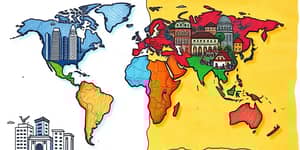
As of 2025, an estimated 808–839 million people live in extreme poverty, representing roughly 1 in 10 people globally surviving on less than $3.00 per day. This figure, revised with the latest 2021 purchasing power parity data, reveals unsettling regional disparities.
Sub-Saharan Africa bears the heaviest burden, with an extreme poverty rate of 46.0 percent, followed by Western and Central Africa at 35.7 percent. The Middle East and North Africa saw poverty rise from 8.5 to 9.4 percent, partly due to new inclusions like Afghanistan and Pakistan.
Over the past 35 years, the number of people in extreme poverty fell from 2.31 billion in 1990 to 808 million by 2025. This equates to an average daily reduction of 118,000 lives lifted from destitution. However, the COVID-19 pandemic triggered the first reversal in decades, adding 50 million people to the ranks of the impoverished between 2019 and 2020.
Progress has resumed but lags behind pre-pandemic momentum. These shifts underscore the fragility of gains and the need for resilient, adaptable strategies that withstand global shocks.
Expanding access to robust education systems stands as one of the most reliable levers for poverty reduction. Initiatives range from comprehensive student-support programs in primary and secondary schools to sector-based workforce training for adults.
Flexible learning environments, such as night classes and mobile training centers, enable working adults to upskill. Partnerships between governments, NGOs, and private enterprises ensure curricula align with emerging labor market demands, creating a bridge from classroom to career.
Sustainable economic expansion is paramount, yet growth alone will not lift every household. A deliberate focus on growth passthrough to marginalized communities involves:
– Investing in infrastructure that connects rural producers to urban markets
– Enhancing digital access for remote areas, unlocking new commerce pathways
– Prioritizing small and medium enterprise support through grants and market access
Equitable policy design, such as progressive taxation and targeted subsidies, fosters a more inclusive prosperity.
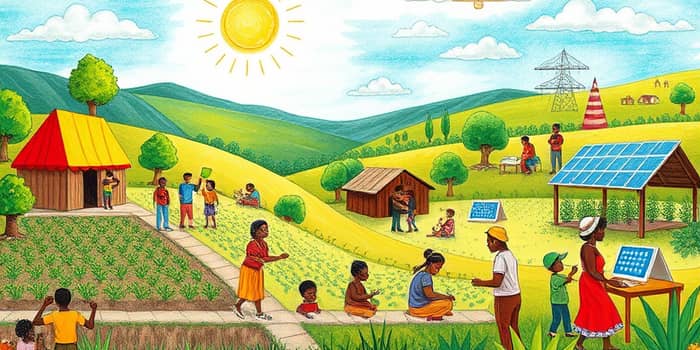
Across continents, grassroots programs demonstrate how tailored support can catalyze transformation. In Kenya, a national Economic Inclusion Program evolved from simple cash transfers into a comprehensive graduation approach with mentorship and digital monitoring, dramatically boosting household resilience.
In Guatemala, women participating in combined financial literacy and entrepreneurship training achieved lasting economic independence, outperforming peers who received aid alone. These examples attest that empowerment stems from capability-building as much as from resources.
Empowering women yields outsized community benefits. Financial literacy, coupled with access to credit, enables women to launch enterprises and reinvest earnings into family health and education. Savings groups create supportive networks for mutual learning and resilience, driving visible transformation at household and community levels.
Eradicating poverty demands robust domestic reforms and global cooperation. Key domestic measures include:
– Instituting comprehensive social protection systems
– Strengthening institutions for transparent fiscal management
– Implementing progressive taxation to finance essential services
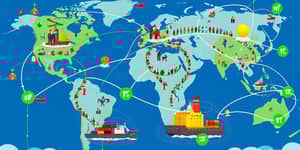
Internationally, debt relief and concessional financing free up resources for development, while private investment aligned with poverty-reduction goals unlocks new avenues for sustainable financing.
The path to ending extreme poverty by 2030 faces formidable obstacles: slow post-pandemic recovery, economic volatility, climate shocks, and persistent regional inequalities. The intertwining of climate and poverty risks intensifies these challenges, requiring integrated solutions that address both environmental and socioeconomic vulnerabilities.
A multi-pronged anti-poverty agenda centered on people’s empowerment rather than mere charity can reshape global outcomes. By combining investments in education, inclusive growth, social support, and individualized barrier removal, we lay the groundwork for self-sustaining progress.
Success stories from diverse geographies prove that when communities gain tools, knowledge, and networks, they transform from aid recipients into architects of their own futures. Through collective will, innovative partnerships, and unwavering commitment, a world free of extreme poverty is not just aspirational—it is attainable.
References