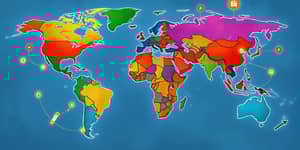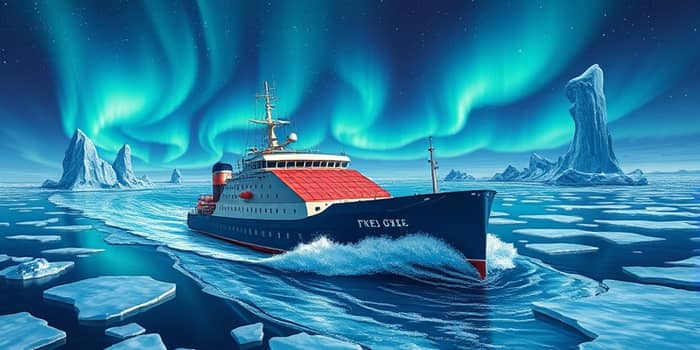
In a world eager to reduce transit times and lower transportation costs, the Arctic has emerged as a focus of unprecedented interest. Diminishing sea ice and strategic investments have given rise to a new network of sea lanes that promise to reshape global commerce. Shipping giants, policymakers, and environmental advocates alike are watching closely as the Northern Sea Route, Northwest Passage, and the future Transpolar Sea Route transform from seasonal curiosities into high-stakes economic transformation.
The Arctic shipping lanes are defined by three primary corridors: the Northern Sea Route (NSR), running along Russia’s Arctic coast from the Kara Sea to the Bering Strait; the Northwest Passage (NWP), threading through the Canadian Arctic archipelago; and the nascent Transpolar Sea Route (TSR), a direct path across the central Arctic Ocean. Each corridor has its own set of opportunities and constraints, driven by ice conditions, geopolitical claims, and the availability of icebreaking support.
In October 2025, the Chinese container ship Istanbul Bridge completed its maiden NSR passage, cutting Asia-Europe transit from 40–50 days via the Suez Canal to just 20 days. This milestone underscored the potential to cut transit times by half when routes are free of heavy ice. Seasonal ice melt has extended the window of navigability, allowing more vessels to exploit year-round navigable passages, while fleet expansions and port investments by Arctic states have bolstered support infrastructure.
At the heart of the Arctic corridor’s allure lie significant savings in distance, time, and fuel costs. The NSR can be 30–50% shorter than traditional routes via the Suez or Cape of Good Hope, translating into up to 40% lower fuel consumption. Shipping lines transporting time-sensitive goods can schedule more voyages per season, translating into higher revenues and more reliable deliveries. Even the NWP offers fuel savings of around $300,000 per trip compared to the Panama Canal, with the added benefit of no tolls, though limited to summer months.
Analysts project that as ice cover continues to wane, the TSR could cut distances by an additional 20% compared to the NSR, opening the door to revolutionary changes in Europe-Asia-North America trade. This route remains largely experimental today, requiring advanced ice-class vessels and substantial capital investment—but its eventual feasibility by 2050 could mark a paradigm shift in maritime logistics.
Beyond direct cost reductions, shorter voyages contribute to cutting emissions through shorter voyages, aligning economic interests with sustainability goals. Faster inventory turnover reduces carrying costs for businesses and unlocks new market opportunities for perishable and high-value goods.
The expansion of Arctic shipping carries inherent risks. Increased vessel traffic threatens a fragile Arctic marine ecosystem already stressed by climate change. Potential oil spills, discharge of black carbon particles, and disturbances to marine wildlife demand rigorous safeguards. The International Maritime Organization’s Polar Code sets standards for design, construction, and operation of ships in polar waters, but enforcement and compliance remain challenging across vast, remote regions.
Effective mitigation strategies include comprehensive environmental impact assessments, investment in spill response infrastructure, and adoption of cleaner fuel technologies. Stakeholders must practice responsible stewardship of these routes to ensure that economic gains do not come at the expense of Arctic ecosystems and the communities that depend on them.
Control and governance of Arctic shipping lanes is a complex geopolitical puzzle. Russia, asserting its authority over the NSR, has invested heavily in an icebreaker fleet and port facilities, charging fees upward of $100,000 for winter escorts. Canada maintains patrols and infrastructure in the NWP, emphasizing sovereignty and environmental protection. Meanwhile, the United States, Norway, and Denmark (via Greenland) are enhancing their capacities to monitor and participate in emerging trade flows.
China, referring to the NSR as the “Arctic Golden Waterway,” has moved swiftly to secure transit rights and invest in Arctic resources. Collaborative initiatives, such as joint scientific research and search-and-rescue agreements, coexist with strategic maneuvering over resources and shipping lanes. Navigating these geopolitical waters requires diplomatic engagement, transparent regulatory frameworks, and a shared commitment to safety and environmental stewardship.
As the Arctic opens, shipping companies, investors, and policymakers face a pivotal moment. Success will hinge on foresight, innovation, and cooperation. Companies can gain a competitive edge by investing in specialized ice-class vessels, real-time ice monitoring technologies, and partnerships with port authorities across the Arctic rim. Insurers and financiers should develop risk models tailored to polar operations, balancing potential rewards against seasonal uncertainties and environmental liabilities.
Governments and intergovernmental bodies should streamline permitting processes, harmonize safety standards, and support research into sustainable shipping fuels. Building resilient infrastructure, such as search-and-rescue stations and port upgrades, will further reduce risks and costs over time. Equally important is the integration of indigenous knowledge in navigation planning and environmental monitoring, ensuring that local communities benefit from and help guide Arctic development.
Ultimately, the promise of the Arctic corridors is vast. By embracing collaboration, innovation, and accelerating global supply chains with respect for ecological limits, stakeholders can chart a course toward a future where the Arctic becomes a model of sustainable maritime transformation. The opportunities to reshape global trade, unlock resource potential, and foster international cooperation are at hand. Now is the time to navigate with vision and responsibility, ensuring that these new passages lead to prosperity for all.
References