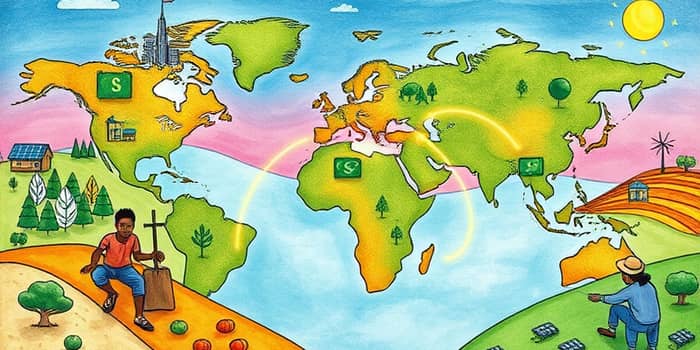
Global capital flows are often described as the international movement of money and financial assets, coursing through economies like lifeblood. They shape national fortunes, ecological outcomes, and the very fabric of communities. In an era of unprecedented connectivity, understanding these streams of finance is essential for individuals, policymakers, and businesses aiming to drive sustainable growth.
At its heart, capital convergence suggests that poorer economies can catch up to wealthier ones through inflows that fund infrastructure, transfer technology, and spur productivity gains. Yet the same flows can be volatile, shifting with market sentiment and risking abrupt crises. This article explores the mechanics, benefits, risks, and human dimension of global capital, offering practical insights to harness its potential for the common good.
Capital crosses borders in several distinct forms, each with unique characteristics and impacts:
Within these categories, distinctions matter. Long-term stakes in enterprises or assets like factories tend to align with national development goals, while short-term speculative capital flows prioritize rapid returns and can undermine ecological stewardship. Recognizing the type and intent behind each transfer is the first step toward guiding capital toward sustainable outcomes.
When channeled responsibly, capital flows can become engines of prosperity and innovation. They facilitate:
Economic theories like the Solow-Swan model predict that, as capital flows into lower-income countries, their returns on each additional dollar of investment remain higher than in capital-rich nations. This dynamic underpins capital convergence and sustainable development, suggesting that balanced inflows can elevate living standards worldwide.
On the ground, capital inflows can unlock transformative projects—from solar power plants in rural areas to modern rail networks connecting cities. Yet they also carry risks:
Conversely, stable remittances and patient FDI often support long-term development, funding education, healthcare, and small enterprises. By aligning investments with local priorities—such as regenerative agriculture or community-owned renewable energy—nations can ensure that global capital becomes a force for ecological restoration and social resilience.
Financial globalization has heightened the speed and volume of cross-border transactions. This interconnectedness breeds both opportunity and fragility. Key volatility drivers include:
Moreover, cognitive biases such as herd behavior and future discounting can steer funds toward short-lived trends rather than lasting positive change. Recognizing these ecological long-termism and stewardship challenges is vital to preventing a climate Minsky moment, where ecological failure triggers financial collapse.
Governments and multilateral institutions have developed tools to manage the tension between openness and stability. Primary levers include:
International bodies like the IMF and OECD emphasize building push and pull factors shaping investments that favor resilience over rapid exit, ensuring that funding supports development goals rather than speculative bubbles. Enhanced data transparency and global coordination can further dampen volatility and foster trust.
Beyond policy, the power of capital ultimately resides with individuals—pension holders, endowments, and retail investors who decide where their money goes. Every dollar invested in sustainable agriculture or green bonds contributes to community well-being and ecological balance. Conversely, funding high-risk carbon ventures can underwrite future crises.
By embracing principles of responsible investing and demanding transparency, individuals and institutions can tilt the scales toward positive outcomes. Capital accumulation and technology transfer need not be abstract macroeconomic concepts; they become stories of schools built, power grids running on clean energy, and farmers gaining access to drought-resistant seeds.
In this light, global capital flows transform from opaque financial currents into conduits of shared prosperity and environmental stewardship. Recognizing the moral weight of investment decisions, citizens everywhere can become architects of convergence—ensuring that the next wave of finance lifts all communities and preserves the planet for generations to come.
References