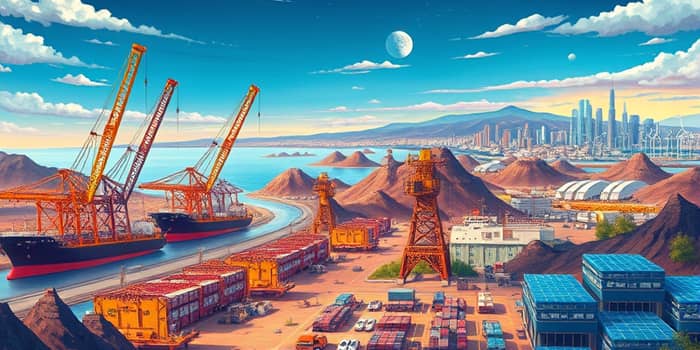
The global economy moves in rhythms, sometimes gentle and familiar, and at other times sweeping and transformative. Few phenomena capture this ebb and flow better than commodity supercycles. These extended booms reshape industries, influence geopolitics, and open doors to new opportunities for investors, policymakers, and communities alike.
In this article, we dive deep into the mechanisms behind these powerful cycles, examine historical precedents, and offer practical guidance on how to navigate the twists and turns of today’s market landscape.
At its core, a commodity supercycle is an extended period lasting 10–30 years during which prices remain well above long-term averages. Unlike typical 3–5 year swings driven by economic growth and contraction, supercycles arise from macroeconomic structural changes—such as rapid industrialization, urbanization, or a global shift in energy policy.
During these eras, supply struggles to keep pace with surging demand, creating sustained price elevation across multiple raw materials. Recognizing the difference between a normal cycle and a supercycle is vital for making informed strategic decisions.
History offers vivid case studies of commodity supercycles that reshaped economies and societies:
Each episode was punctuated by massive investment in mines, refineries, and transport networks—an illustration of the investment surge and capital expenditure boom that accompanies supercycles.
Several fundamental forces converge to spark and sustain supercycles:
Secondary forces—such as loose monetary policy, fiscal stimulus, and geopolitical tensions—can amplify these core drivers.
For investors, executives, and policymakers, early detection of a supercycle can yield significant advantages. Key indicators include:
Tracking urbanization rates, industrial output growth, and institutional flows into commodity-linked assets helps confirm that price moves are structural rather than transitory.
Recent years have offered clear evidence of a looming green-energy supercycle:
These sustained gains reflect the massive scale of investment in renewable infrastructure and electric mobility. Meanwhile, underinvestment in new fossil fuel capacity has further tightened supply.
Supercycles unfold in two distinct phases: an upswing where prices soar and capital pours into new projects, followed by an inevitable downswing as oversupply emerges.
During the boom, mining towns flourish, equipment manufacturers thrive, and lender balance sheets balloon. But as capacity comes online—often five to ten years after the price peak—a painful reversal can occur. Regions dependent on extraction face unemployment spikes, and companies that overextended find themselves in distress.
Whether you’re an institutional investor, corporate executive, or government official, proactive planning is key to harnessing supercycle opportunities while mitigating risks:
1. Diversify Exposure: Balance direct commodity positions with investments in processing, logistics, and renewable energy providers.
2. Embrace Innovation: Companies that invest in recycling, efficiency, and alternative materials may outperform during downturns.
3. Monitor Policy Shifts: Track net-zero commitments, trade policies, and infrastructure spending announcements to anticipate demand trajectories.
4. Stress-Test Portfolios: Use scenario analysis to gauge the impact of both prolonged price rallies and rapid contractions.
The next supercycle will likely be defined by the imperatives of the energy transition and the need for sustainable development. Governments and industries must work together to:
- Encourage responsible mining practices to minimize environmental impact and foster social license to operate.
- Invest in recycling and circular economy models to reduce raw material demand growth.
- Support technologies that unlock new sources of supply with lower carbon footprints.
By aligning economic incentives with environmental stewardship, stakeholders can ride the waves of rising commodity demand while safeguarding the planet for future generations.
Commodity supercycles are powerful, transformative forces that ripple through economies, societies, and geopolitics. Recognizing their drivers, tracking key signals, and adopting well-rounded strategies are essential for turning this volatility into sustainable growth.
As we stand on the cusp of what many call a green-energy supercycle, the lessons of the past—tempered by modern priorities—offer a roadmap to prosperity that is both resilient and responsible. Embrace the cycle, but do so with foresight, balance, and an unwavering commitment to a sustainable future.
References