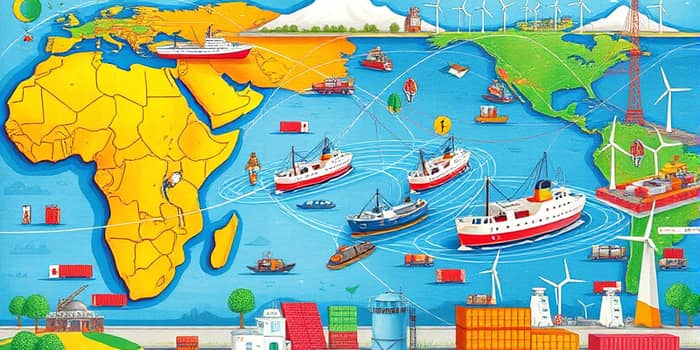
As the world navigates a maze of geopolitical shifts and protectionist pressures, a transformative wave of trade innovation is rising, centered on intra-African collaboration and South-South partnerships.
This new era of commerce is driven by visionary policies, bold infrastructure projects, and technological breakthroughs aimed at creating resilient supply chains and fostering sustainable growth across emerging markets.
In 2026, traditional Western trade dependencies are giving way to diversified networks that emphasize regional synergies. Rising protectionism, exemplified by recent tariffs in the United States and carbon border adjustments in Europe, has prompted nations to explore alternative corridors and partnerships.
At the same time, digital tools and logistics innovations are reshaping the mechanics of cross-border exchange. From AI-driven customs pre-clearance to solar-powered warehousing, stakeholders are embracing new models to reduce costs and carbon footprints.
The African Continental Free Trade Area (AfCFTA) stands at the forefront of this transformation, moving beyond policy discussions into concrete action through the Guided Trade Initiative (GTI). By reducing tariffs on processed foods, chemicals, and manufactured goods, the GTI is unlocking tremendous value within the continent.
Projected impacts include an 81% surge in manufacturing exports among member states and a $450 billion boost to Africa’s income by 2035. This comprises $153 billion from tariff liberalization and $292 billion from streamlined trade facilitation, such as reduced red tape and compliance costs.
Yet, challenges remain. Poor transport infrastructure—like the critical Algiers-Lagos corridor—and lingering non-tariff barriers such as bureaucratic delays can erode potential gains. Initiatives like simplified trade regimes (STRs) offer a lifeline for informal and small-scale traders, enabling quicker clearances and broader participation.
The global trade environment in 2026 is marked by strategic realignments. The African Growth and Opportunity Act (AGOA) has been extended to 2028, but scrutiny over eligibility and political tensions have accelerated a pivot toward South-South alliances with Brazil, India, and China.
Meanwhile, annual reviews of the USMCA (formerly NAFTA) introduce uncertainty for North American corridors. A recent 4.2% dip in the USMCA Corridor index and a $350 million revenue loss for Canadian rail carriers underscore the stakes involved.
At the same time, the European Union’s Carbon Border Adjustment Mechanism (CBAM) penalizes high-emission exports, pushing African producers to invest in cleaner power sources or risk losing market share to greener competitors.
To overcome supply-side constraints—such as unreliable electricity and costly transport—African nations and their partners are deploying creative solutions. Solar-powered cold-storage facilities protect perishable goods along the value chain, while electric trucking fleets reduce dependence on volatile fuel markets.
High-impact projects, like the MCC-backed upgrade of the Port of Cotonou, have doubled capacity and unlocked new corridors for West African exports. In Southern Africa, private participation at Durban Port has accelerated turnaround times, benefiting citrus growers and auto parts exporters alike.
Though these developments are promising, vast regions still lack reliable transport networks. Cities along the Congo River, for example, trade less than 2% of their goods bilaterally due to poor road links and high handling fees.
Amidst challenges, a path forward emerges through strategic collaboration and inclusive policies. Governments, private enterprises, and multilateral institutions must align on three key imperatives:
By focusing on these priorities, stakeholders can unlock the full promise of AfCFTA and related agreements. Public-private partnerships will be crucial for funding and expertise, while regional bodies must push for harmonized regulations to reduce compliance costs.
Beyond policy, grassroots initiatives can amplify impact. Training programs tailored to small and medium enterprises (SMEs) help build capacity for value addition and quality assurance. Local trade associations can broker partnerships and share best practices across borders.
Ultimately, the new era of cross-continental commerce is about more than moving goods—it’s about driving inclusive growth, reducing poverty, and building resilient economies. Success will require vision, cooperation, and sustained investment in infrastructure and people.
As we look beyond 2026, the narrative of global trade is being rewritten. Africa’s rising corridors and South-South alliances are not just alternatives to Western dependencies—they are engines of innovation and hope for billions seeking opportunity through commerce.
References