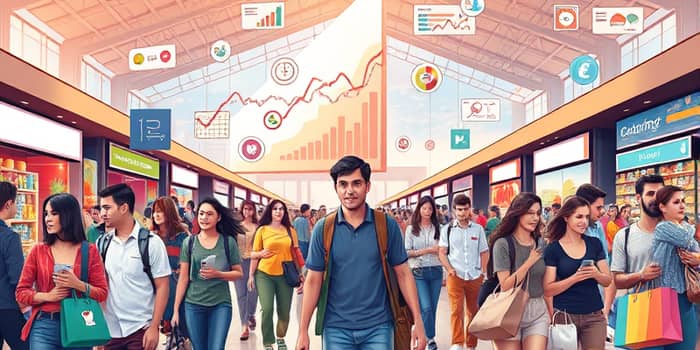
Consumer confidence is more than a number on a report; it’s a lens through which individuals view their economic future.
At its core, consumer confidence reflects perceptions of current economic conditions and expectations about tomorrow. When shoppers feel secure about jobs and incomes, they are willing to open their wallets for everyday purchases and luxuries alike. Conversely, uncertainty can cause households to tighten budgets, delaying travel, dining out, or home improvements.
Beyond day-to-day spending, sentiment also drives decisions around investments, savings, and debt repayment. Even if actual financial circumstances remain unchanged, a shift in confidence can ripple through markets, affecting stock prices, retail sales, and hiring plans.
January 2026 saw a modest uptick in the global consumer confidence index at 49.9, inching above last year’s level after a flat 2025. Emerging markets led optimism, while some developed economies hovered near caution.
This diversity highlights how future expectations and job security vary widely: Southeast Asia and Latin America show robust confidence, while parts of Europe remain tepid.
In February 2026, American sentiment indicators ticked up but stayed well below their peaks. The Conference Board’s overall index rose to 91.2 from 89.0 in January, driven by easing expectations even as present conditions softened slightly. Meanwhile, the University of Michigan’s sentiment measure landed at 56.6, still far below its historical average of 84.65.
Despite this, consumer outlays have remained surprisingly strong. Retail sales held firm in late 2025, and personal consumption expenditures contributed positively to GDP growth. This phenomenon underscores a key insight: resilient actual consumption patterns can persist even when sentiment falters.
Demographics play a role too. Younger cohorts, especially under-35s and Gen Z, report higher optimism, while older age groups maintain a cautious outlook. These generational differences influence how families allocate budgets and plan for the future.
Overall, sentiment and spending form a feedback loop: confidence can lift the economy, but real economic improvements—like wage gains and hiring—are what ultimately sustain optimism.
Understanding these dynamics can help you make informed choices, whether you are managing a household budget or overseeing a portfolio.
Even amid mixed signals, there are concrete steps you can take to safeguard financial well-being and capitalize on emerging opportunities.
By combining strategic planning with measured responses, you can smooth out the effects of sentiment swings and maintain momentum toward your goals.
As we move through 2026, consumer confidence will continue to ebb and flow with economic data, policy developments, and global events. Yet true resilience comes from aligning your personal or business strategy with underlying economic fundamentals rather than the latest survey headline.
Ultimately, consumer sentiment is a powerful barometer, but it doesn’t dictate your financial destiny. By leveraging insights and practical habits, you can navigate uncertainty, harness opportunities, and build lasting security.
Decoding consumer confidence isn’t just about reading charts and indices—it’s about translating sentiment into actionable strategies that empower spending, saving, and investing decisions today and tomorrow.
References