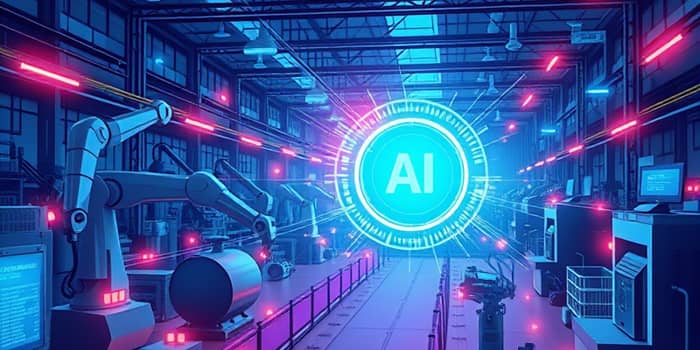
In 2026, digital disruption has evolved from a bold strategy into the very foundation of global business operations. Organizations that fail to adopt digital tools and data-driven models find themselves at an irreversible disadvantage.
The once forward-looking concept of digital transformation is now a structural baseline for global competitiveness, driving innovation across manufacturing, AI infrastructure, and supply chain networks.
Manufacturing is undergoing a profound metamorphosis. Experts predict that discrete manufacturing digital transformation spending will exceed $700 billion by 2027, as companies abandon legacy, siloed systems in favor of end-to-end digital ecosystems.
Digital twins—virtual replicas of physical assets and processes—enable scenario modeling, letting teams anticipate bottlenecks, test production changes, and optimize throughput without halting operations.
This shift empowers teams with real-time operational visibility across teams, reducing downtime and enhancing quality control through continuous monitoring and adaptive workflows.
The backbone of modern industry lies in robust AI infrastructure. As data center power demand grows at multiples of historical rates, organizations race to deploy the compute and cooling capacity necessary for energy-intensive AI workloads.
With the semiconductor industry experiencing an unprecedented capacity expansion in history, manufacturers are transitioning from passive consumers to active enablers of AI-driven innovation and economic growth.
The rise of automation and robotics is reshaping the global workforce. In 2024 alone, factories installed 542,000 industrial robots—more than double the figure from a decade earlier. This surge addresses aging labor pools and persistent skills gaps, positioning robots as partners rather than mere cost-cutting tools.
Simultaneously, organizations are investing heavily in reskilling initiatives, equipping employees with advanced manufacturing competencies, data literacy, and AI collaboration skills. By automating repetitive tasks—which can yield up to 50% in cost savings—human workers are liberated to focus on creative, strategic, and supervisory roles.
Emerging agentic AI agents are poised to further enhance human-machine collaboration, ingesting unstructured data, executing complex analyses, and offering contextualized recommendations without explicit commands, thereby redefining workplace dynamics.
Collaboration between industry, academia, and government is essential to build robust reskilling ecosystems. Partnerships are fostering specialized training programs, apprenticeships, and certification pathways that align with evolving industry needs.
As digital integration deepens, security and resilience have become central strategic concerns. Today’s manufacturers face an average of 1,585 cyberattack attempts per week, a 30% increase over the previous year. Ransomware, industrial espionage, and supply chain attacks represent persistent threats.
In response, companies are embedding security considerations into system design, creating unified frameworks that integrate cybersecurity, supply chain risk assessment, and financial stability. Advanced threat detection systems, zero-trust architectures, and digital twins of critical processes enable organizations to model vulnerabilities and enact contingency plans before disruptions occur.
Advanced analytics and scenario planning tools equip organizations to simulate supply chain disruptions—such as geopolitical shifts or natural disasters—ensuring rapid response and minimal downtime.
Digital platforms and domestically deliverable services are reshaping global trade. Services now represent 27% of global trade and grew by 9% in 2025, outpacing traditional goods. Digitally deliverable services account for 56% of services exports overall.
This disparity underscores a widening digital divide. Access to digital infrastructure and digital skills determines national competitiveness, influencing economic resilience and long-term growth trajectories.
Organizations and policymakers must adopt a holistic approach to navigate the digital-first era:
By transforming disruption into opportunity, companies can secure market leadership and contribute to a more resilient, inclusive global economy.
In an era defined by the convergence of supply chain volatility, workforce evolution, regulatory shifts, and AI-driven acceleration, digital transformation is no longer optional—it is the path to sustainable growth and industrial reinvention.
References