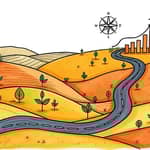
Imagine an expansive landscape where the dunes shift with every technological breakthrough and policy change. This is the world economy in 2026: a vast sea of sand sculpted by AI, data infrastructure, trade tensions, and regional strengths.
Like travelers crossing an unforgiving desert, businesses, governments, and individuals must learn to read the winds of innovation and adaptation. At the heart of this journey lies shifting sands of technology-driven economy, constantly reshaped by investments, regulations, and consumer behavior.
As we chart our path through these digital dunes as metaphor for growth, we discover both fertile oases of opportunity and treacherous valleys of risk. Join us on an inspiring trek through the forces shaping global GDP forecasts, towering tech investments, and the strategies that will carry us forward.
Analysts converge on a consensus range of 2.7% to 3.3% global growth in 2026, fueled largely by technology spending, especially in AI and data infrastructure. While this sits below pre-pandemic levels, the promise of innovation offers new avenues for resilience.
Below is an overview of leading forecasts, highlighting how each institution views the balance between hope and headwinds.
This uneven global recovery and trade tensions serve as both constraint and catalyst. In some regions, the winds blow favorably toward innovation; in others, barriers loom large.
The United States stands as a steady anchor, forecast to grow between 2.0% and 2.6% in 2026. Core drivers include surging investments in AI, data centers, and R&D tax incentives. Electricity demand from tech infrastructure is climbing, yet consumer resilience remains high across income brackets.
With unemployment near 4.4%, the economy benefits from AI-fueled resilience anchoring global growth. Still, risks such as an AI stock correction or fiscal gridlock could precipitate a downturn if unchecked.
In China, growth moderates to roughly 4.5%. A property market downturn and export tariffs impose headwinds, but a tech stock boom—HK-listed firms up 200% in 2025—and Alibaba’s $52 billion AI commitment underscore a fierce innovation drive.
Smart cities, high-speed rail projects, and deepening ties with emerging markets help offset policy challenges. Yet the specter of overinvestment correction and AI bubble risks reminds us that even oases can dry up.
India shines as the high-growth outlier, posting 7.5–7.8% GDP expansion in FY25–26. Fueled by consumption, capital expenditure, and a booming services sector, the nation exemplifies resilient consumer spending across income brackets.
Mexico, benefiting from nearshoring trends and the USMCA review, is poised for a 1.6% recovery. Agricultural resilience and a thriving services sector paint a picture of steady, if modest, expansion.
Meanwhile, many countries in the Global South wrestle with debt burdens and climate vulnerabilities. Their potential remains immense, but only if financing and policy frameworks keep pace with their ambitions.
No journey through these digital dunes is without peril. Key threats include bubbles in AI valuations, escalating tariffs between major economies, and fiscal strains in both advanced and developing nations.
Balancing optimism with caution remains critical as we navigate these uncertain contours.
To thrive amid these dynamic conditions, stakeholders must adopt multifaceted strategies that blend technology, policy, and human capital. Collaboration between public and private sectors will be essential.
By embracing these measures, nations and businesses can transform potential pitfalls into stepping stones toward prosperity.
As we press forward into 2026 and beyond, the metaphor of digital dunes offers both caution and inspiration. Every grain of sand represents data, every wind gust an emerging technology or policy change.
Our challenge is to read this landscape with foresight and courage. When we harness the power of AI responsibly, invest in robust infrastructures, and engage in thoughtful policy dialogue, we sow the seeds of a thriving global economy.
In this ever-shifting world, let us be both explorers and architects, building bridges across dunes and forging paths to shared prosperity.
References