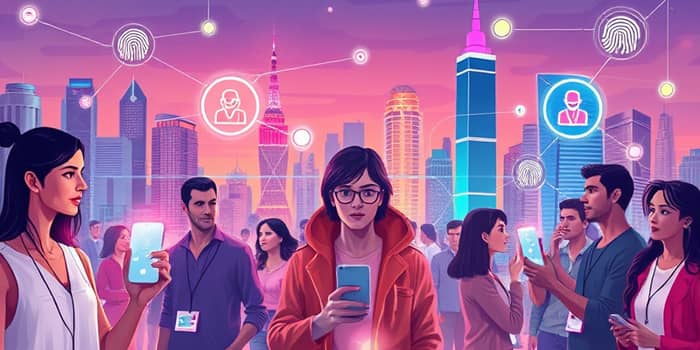
In our digital age, identity verification has become the backbone of secure online interactions, powering everything from financial services to e-government initiatives. As individuals and businesses increasingly operate in virtual spaces, the way we establish and protect our digital selves directly influences economic growth and personal well-being.
This article explores the dramatic expansion of digital identity markets, the real-world benefits of a strong online presence, and the challenges posed by fraud. More importantly, it offers practical guidance to harness digital identity for sustainable success.
The digital identity market is projected to exceed $53 billion globally by 2026, doubling from $26 billion in 2021. Alternative forecasts even suggest values soaring to $73.26 billion in 2026 and as high as $158 billion by 2032 at a robust 13.5% CAGR. This surge is fueled by investments in verification services, centralized schemes, and third-party civic apps.
Verification spending alone is expected to surpass $16 billion by 2026, driven by the need for speedy digital onboarding and fraud prevention. From banking and healthcare to e-commerce, organizations are racing to implement seamless identity checks that satisfy both regulators and end users.
Beyond the identity sector itself, the broader internet economy generates immense value. In the United States, direct e-commerce and advertising revenues exceed $175 billion, while the multiplier effect pushes total economic impact to $444 billion. This supports over 3 million jobs and accounts for 2% of GDP.
Small and microbusinesses, which make up 75% of domain name sites, have demonstrated remarkable resilience in crises. Metropolitan areas with higher domain density saw lower unemployment, increased median incomes, and faster recoveries after the 2008 financial downturn.
Individual benefits are clear: internet access leads to an 8.1% higher employment likelihood and an average annual income gain of $2,202. Financial literacy and online engagement go hand in hand, with digitally connected communities enjoying 85% more interaction with financial tools than their offline peers.
However, the path is not without obstacles. Synthetic identity fraud in the United States inflicts $30–35 billion in annual losses, and forecasts estimate losses could reach $23 billion by 2030. Overall identity fraud cost consumers $27.2 billion in 2024, up 19% year over year.
Financial institutions face an average revenue loss near 9.8% from fraud, while merchants in e-commerce encounter rates as high as 19.2%. AI-enabled attacks are on the rise, with expected losses of $40 billion by 2027 and cybercrime damage reaching $10.5 trillion annually.
Building a trustworthy digital identity framework requires a multi-layered approach. Organizations and individuals alike can adopt the following strategies to maximize value and mitigate risk:
By integrating these measures, businesses can streamline onboarding processes, reduce fraud-related costs, and foster lasting customer trust. Individuals benefit from faster access to services, enhanced privacy controls, and the freedom to manage their personal data securely.
The next decade will be defined by increasing demand for digital wallets, self-sovereign identity models, and decentralized finance applications. Governments are exploring national digital identity ecosystems, offering eKYC, single sign-on, and digital payments within unified platforms.
Key trends to watch include:
Industry analysts predict that adopting “good digital ID” frameworks could unlock 3% of GDP in mature economies and 6% in emerging markets by 2030. For businesses and citizens, this means truly unprecedented economic opportunities and a more secure, connected future.
Our online identities are no longer mere conveniences; they have become critical assets that power transactions, communities, and innovation. By understanding the economic value of digital identity and taking practical steps to enhance security and trust, we can build resilient systems that benefit everyone.
Together, we stand at the threshold of a new digital economy—one where secure identity underpins growth, inclusion, and prosperity. Embrace these advances, navigate the challenges with foresight, and unlock the full potential of your digital presence.
References