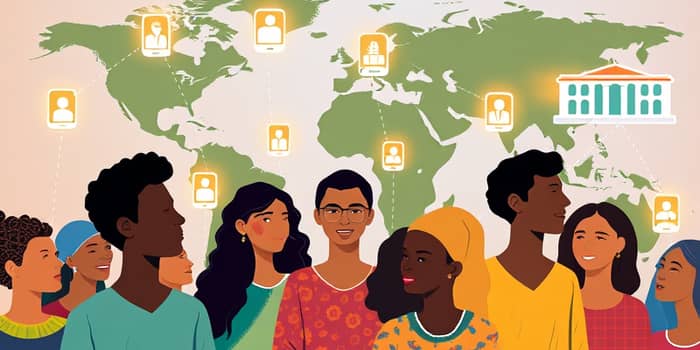
In a world rapidly moving online, the economic potential of a robust digital identity framework cannot be overstated. By 2030, this potential could equal up to 13% of global GDP, unlocking new possibilities for individuals, businesses, and governments. This article explores how digital identities can drive growth, reduce fraud, and expand opportunity across every sector of society.
Digital identities serve as the backbone for secure, seamless interactions in an increasingly connected ecosystem. From ePassports to mobile driving licenses, they provide a trusted way to verify who we are and grant access to critical services. Governments and private enterprises alike are investing heavily in these solutions to ensure citizens and customers can engage without barriers.
At the heart of this transformation is the vision of access to essential services at scale. With more than a billion people currently unverified, the rollout of reliable digital ID systems promises to bring healthcare, finance, education, and voting within reach for millions who have long been excluded.
For individuals, digital identities mean more than just convenience—they represent empowerment. A verified identity can unlock bank accounts, streamline employment verification, and even enhance agricultural productivity by allowing farmers to access credit and market data.
These benefits combine to improve quality of life, boosting productivity and personal well-being. In regions where traditional infrastructure is weak, digital identity can leapfrog legacy systems and create entirely new economic pathways.
Enterprises across banking, fintech, e-commerce, telecom, and gaming are reaping rewards from more reliable identity verification. By integrating advanced authentication—such as biometrics, blockchain anchors, and AI-driven continuous assurance—they can significantly reduce identity fraud and compliance costs.
As a result, businesses gain market share, improve customer trust, and accelerate sales. The cumulative effect translates into higher labor productivity and greater tax revenues for governments.
Industry analysts forecast explosive growth for the digital identity market over the next decade. Fueled by regulation, technological innovation, and rising cyber threats, this sector is on track to expand from tens of billions today to hundreds of billions by 2035.
North America leads with over 35% market share, while Asia-Pacific is the fastest-growing region, driven by massive rollouts in China and India. Regulatory frameworks like the EU Digital Wallet and UK self-sovereign identity pilots will further accelerate adoption.
Multiple forces are converging to propel digital identity forward. Regulations such as GDPR and EUDI Wallet create compliance requirements that favor standardized digital credentials. Meanwhile, rapid advances in biometrics, AI, and blockchain deliver more secure, user-friendly solutions.
Another crucial driver is the shift to innovating with biometric, AI, and blockchain solutions. These technologies enable continuous authentication, thwarting deepfake and synthetic-identity attacks while preserving privacy.
Despite the promise, public skepticism remains a hurdle. Concerns around data privacy, interoperability, and accessibility must be addressed head-on. Designing systems that respect user choice and deliver clear benefits will be essential for widespread acceptance.
Educational campaigns, transparent governance frameworks, and open standards can build confidence. By prioritizing user control, nations and companies can establish self-sovereign identity and data control models that empower individuals.
Together, these actions can ensure that digital identity systems are inclusive, resilient, and future-proof.
By harnessing the power of digital identities, we stand at the threshold of an economic revolution. Unlocking unprecedented economic value for millions is not just a forecast—it is a tangible opportunity to reshape how we live, work, and interact. Embracing this transformation today will determine who prospers in the digital age of tomorrow.
References