As the world economy stands at a crossroads, forecasts for 2026 range widely, reflecting shifting policies, technological breakthroughs, and evolving trade dynamics. Decision makers, investors, and communities must navigate these projections to seize emerging opportunities. By synthesizing data from leading institutions, we can illuminate actionable paths and foster momentum toward sustainable prosperity.
Institutions forecast global growth between 2.6% and 3.3%, driven by policy choices, innovation, and regional resilience. From Goldman Sachs’s optimistic 2.8% to the IMF’s robust 3.3%, analysts weigh tariffs, fiscal budgets, and capital flows. Amid this uncertainty, one constant remains clear: varied growth projections across institutions demand adaptive strategies that balance risk with ambition.
Despite divergent baselines, many forecasts emphasize the role of investment in technology and policy support. UNCTAD and UN DESA offer more cautious views at 2.6%–2.7%, while Deloitte’s baseline at 1.9% could rise under a brighter scenario. PwC’s 2.7% outlook underscores AI uptake and public spending. Collectively, these perspectives highlight resilient policy and technology investments as vital levers for global expansion.
The United States faces a rebound in early 2026, fueled by targeted tax cuts driving consumption, eased financial conditions, and diminished tariff headwinds. Labor markets are softening, yet fiscal stimulus and AI adoption may sustain growth near 2.0%–2.6%. Policymakers must monitor immigration trends and job creation to maintain momentum.
China’s growth is anchored by manufacturing exports but hampered by a housing slump. Overcapacity sectors are consolidating, and property investment drags on expansion. In this context, manufacturing strength against property downturn will define China’s 4.5%–4.8% trajectory, even as deeper fiscal measures become necessary to lift domestic demand.
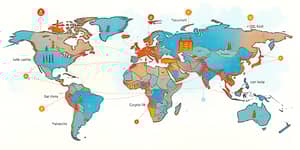
Across Europe and Central Asia, growth hovers around 1.3%–2.4%, supported by German stimulus, Spain’s consumer resilience, and steady expansion in emerging markets. South Asia leads with 5.6%, Africa with 4.0%, and Latin America around 2.3%. These figures reveal a mosaic of performances shaped by demographics, energy costs, and regional policy frameworks.
Artificial intelligence will drive the next wave of productivity, though benefits will materialize unevenly across sectors. Early adopters in manufacturing, logistics, and professional services will gain a competitive edge. Over the medium term, robust AI-driven productivity gains could add significant percentage points to global GDP, contingent on skills development and regulatory frameworks.
Meanwhile, companies and governments are embracing nearshoring to strengthen resilience. Shifting supply chains closer to end markets reduces risks while shortening delivery times. By strengthening supply chains through nearshoring, firms can mitigate tariff impacts and build more sustainable logistics networks, creating hubs of innovation in Mexico, Central Europe, and Southeast Asia.
Organizations, investors, and policymakers must align on clear priorities to capitalize on emerging growth frontiers. Consider the following strategic pillars:
By pursuing these coordinated actions, stakeholders can bridge the gap between forecasts and outcomes, ensuring that growth is both inclusive and sustainable.
Despite promising avenues, several headwinds could cap expansion. Inflation may persist as central banks navigate rate adjustments and evolving tariff effects. Labor markets in many advanced economies are constrained by demographics and migration trends. Structural weaknesses such as high debt loads, geopolitical tensions, and underinvestment in public goods also pose threats.
Effective decision-making requires proactive risk management and planning. Scenario analysis, stress testing supply chains, and maintaining fiscal buffers will help institutions weather potential downturns. Transparent communication and contingency frameworks can reduce market volatility and sustain investor confidence.
No single actor can drive growth alone. Public institutions, private corporations, academia, and civil society must coalesce around shared objectives. Collaborative research initiatives, cross-border investment agreements, and multi-stakeholder task forces can accelerate innovation diffusion. By pooling resources and expertise, these alliances will unlock synergies across technology, infrastructure, and human capital development.
Moreover, regional cooperation on trade facilitation, regulatory harmonization, and climate resilience will reinforce growth trajectories. Platforms such as transnational corridors and digital trade alliances can amplify the benefits of nearshoring and AI adoption, spreading prosperity across borders.
As 2026 approaches, the global economy stands at an inflection point. Divergent forecasts underscore uncertainty, but they also highlight abundant opportunities. By embracing innovation, reinforcing supply chains, and fostering collaborative frameworks, stakeholders can chart a course toward sustained expansion.
Ultimately, navigating these new growth frontiers demands both vision and pragmatism. With strategic investments, adaptive policies, and collective resolve, we can transform today’s projections into tomorrow’s achievements.
References