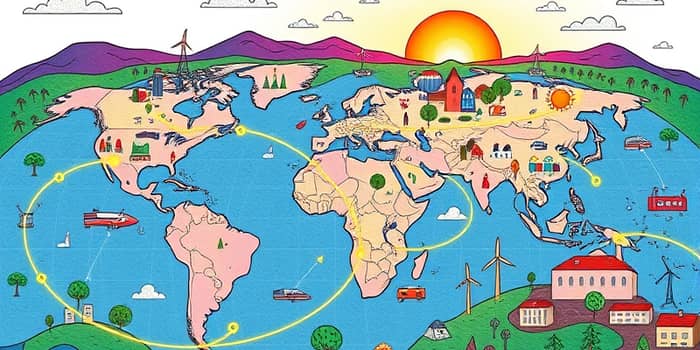
In an era defined by shifting markets, climate extremes, and geopolitical tensions, the capacity to recover and thrive after disruptive events has become more crucial than ever. Economic resilience is not simply about survival; it is about cultivating the agility to transform setbacks into opportunities for growth and inclusion. In this article, we explore the evolution of resilience thinking, the pillars that hold up a resilient economy, and practical strategies for both long-term stability and rapid recovery in a globalized world.
At its core, economic resilience is the capacity of regions, economies, and financial systems to anticipate, withstand, absorb disruptions, and recover from shocks and stressors. Over time, this concept has evolved into what experts now call Resilience 2.0, a proactive transformative paradigm that emphasizes preparing for the unfamiliar and even the unimaginable. Rather than merely returning to a status quo, Resilience 2.0 seeks to leverage disruptions as catalysts for innovation, equitable growth, and sustainable development.
By embracing transformative and anticipatory planning models, communities can shift from reactive crisis management toward long-term strategic thinking. This evolution recognizes that economic shocks—whether pandemics, cyberattacks, or extreme weather events—are not isolated incidents but symptoms of interconnected global systems. To build resilience, policymakers and stakeholders must integrate social, environmental, and technological dimensions into comprehensive recovery frameworks.
A robust resilience framework rests on four interconnected pillars that guide coordinated action across sectors:
These pillars form a comprehensive national resilience strategy that aligns public, private, and community efforts toward shared goals. When each pillar is strengthened, ripple effects enhance overall stability, creating a safety net that cushions against future shocks.
To move beyond stabilization, economies must adopt three strategic investment approaches:
By balancing these investment types, policymakers can sow the seeds for transformational recovery, ensuring that economies not only bounce back but emerge stronger and more inclusive.
Steady-state initiatives focus on building resilience before a crisis strikes. Examples include:
Underpinning these efforts is the use of geographic information systems linked with business data, enabling stakeholders to track development, forecast vulnerabilities, and prioritize investments where they are most needed.
When disruptions occur, swift and coordinated action can significantly shorten recovery times. Responsive measures include:
These initiatives are designed to complement steady-state efforts, forming a two-pronged implementation approach that addresses both prevention and post-event response.
Supply chains are the lifeblood of modern economies. Investing in diverse, secure, and sustainable supply networks ensures uninterrupted access to vital resources. Organizations are now embracing a cost of resilience mindset, balancing competitiveness with agility. Cybersecurity measures, vendor diversity, and transparent procurement practices collectively safeguard against cascading failures.
Interdependencies across systems demand cascading reliance and redundancy. By building redundancies—alternative suppliers, backup facilities, and emergency protocols—decision-makers create safety nets that reduce vulnerabilities and generate positive spillover effects throughout the economy.
As of 2025, global growth shows modest momentum despite lingering uncertainties. Future forecasts provide guideposts for resilience planning:
Although recession risks remain low, fluctuating consumer demand and evolving fiscal policy signal the need for agile strategies. Business leaders emphasize the importance of dynamic leadership and organizational agility strategies to navigate uncertainty and seize opportunities as markets shift.
Economic resilience must integrate climate and environmental considerations into every decision. From flood-resistant infrastructure to drought-tolerant agriculture, adaptive solutions safeguard communities and ecosystems. Inclusive governance ensures that marginalized voices are heard, fostering trust and shared ownership of recovery efforts.
Innovations in technology—from secure broadband networks to data-driven risk assessments—fuel progress. By championing research and innovation across sectors, societies can scale successful models, transfer best practices, and remain nimble in the face of emerging threats.
True economic resilience transcends sectoral boundaries and political cycles. It is a continuous journey of learning, adaptation, and collaboration. By aligning steady-state planning with rapid response mechanisms, investing in critical success factors, and embedding principles of inclusion and sustainability, communities can transform adversity into opportunity.
Ultimately, resilience is not a destination but a shared commitment to safeguard prosperity, equity, and well-being for present and future generations. Together, we can build economies that not only endure disruptions but emerge stronger, more connected, and more hopeful in a globalized world.
References