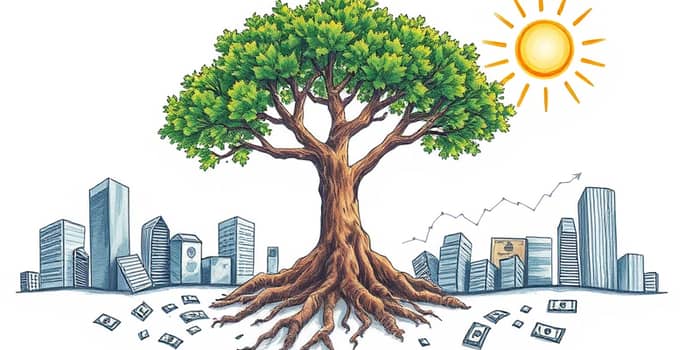
Economic cycles of prosperity and downturn have shaped societies for centuries. Understanding how to navigate these shifts can safeguard livelihoods and foster lasting resilience.
Every economy moves through phases: expansion, contraction, and recovery. During expansions, growth is strong and optimism runs high. Contractions follow when excesses accumulate.
Easy access to cheap capital often fuels exuberant investment, leading to inflated asset prices. When confidence fades, markets reverse sharply, triggering widespread losses.
Historical patterns reveal striking similarities across decades. From the 1929 crash to the Great Recession of 2008, excessive leverage and speculative bubbles preceded each collapse.
Outlined below are key cycles since 1929, illustrating how policy decisions and external shocks intertwine:
Although policies vary, the underlying mechanics remain constant: credit cycles drive both growth and vulnerabilities.
Two core forces precipitate downturns: overinvestment and panic selling. When borrowing is inexpensive, investors chase high returns, piling into assets until valuations detach from reality.
Mal-investment in overvalued assets builds a hidden risk. Once markets peak, sentiment shifts. Even a modest decline can spark a cascade of sell orders, amplifying losses.
These dynamics reinforce one another, plunging economies into recessions that can last years.
Central banks wield monetary policy as a primary tool. During downturns, they cut interest rates and inject liquidity to restore stability. Fiscal measures, like public spending and subsidies, complement these efforts.
Targeted stimulus programs—such as infrastructure investments or direct support to households—can accelerate recoveries and mitigate social impacts.
However, policymakers must balance short-term relief with long-term discipline to avoid sowing seeds of the next downturn.
Personal financial resilience begins with prudent planning. Building emergency reserves and crafting minimal budgets provide a buffer when incomes shrink.
Key steps include:
Preparedness through sound budgeting transforms uncertainty into manageable risk, empowering individuals to navigate downturns confidently.
For companies, resilience hinges on efficient operations and adaptive leadership. Embracing austerity as a guiding principle ensures that costs remain aligned with revenue, rather than an ad-hoc response.
Effective strategies include:
Proactive risk management frameworks enable organizations to adjust swiftly, preserving jobs and market share even during contractions.
Economic cycles are inevitable, but their severity can be mitigated through informed policy, disciplined spending, and strategic planning. By learning from past mistakes, we can design systems that promote steady, inclusive growth.
Collective efforts—from policymakers to households—form the foundation of a more resilient economy. Strengthening regulations to curb speculative lending, alongside robust social safety nets, ensures that prosperity is broadly shared.
Long-term stability emerges when we couple innovation with prudence, ensuring that future generations inherit a more secure financial landscape.
As we move forward, remembering that boom and bust are two sides of the same coin empowers us to harness economic cycles for lasting progress. With foresight and cooperation, we can transform the lessons of history into pathways for a brighter tomorrow.
References