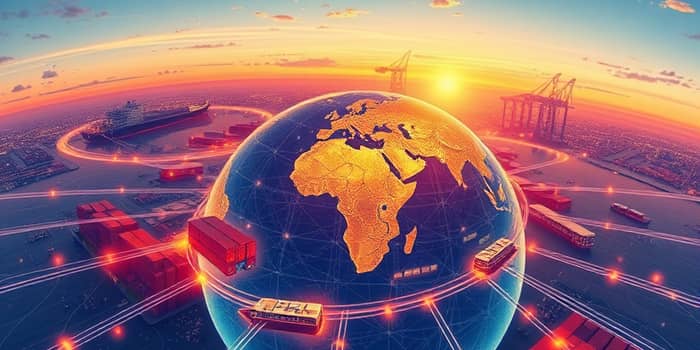
In an era of unprecedented change, supply chains have evolved from simple local networks into complex global ecosystems full of opportunity and challenge. As businesses strive to deliver products faster, cheaper, and more sustainably, the journey to optimization has become both a strategic imperative and a source of profound inspiration. This article explores the transformative trends reshaping supply chains in 2026, offering actionable insights and stirring stories that will empower leaders to chart a course from local agility to global excellence.
Artificial intelligence and automation have moved from buzzwords to cornerstones of modern logistics. Companies embracing agentic AI systems for automated decision are reporting unprecedented efficiency gains. Yet despite massive investments, a reality gap remains as data quality and integration hurdles slow ROI realization.
When properly deployed, AI extends beyond simple forecasting to power:
These innovations have enabled some organizations to reduce stockouts by up to 50 percent while trimming overall costs. The challenge now is forging seamless connections between legacy platforms and next generation tools to unlock full potential.
As uncertainties in trade and economics persist, cost management has surged to the top of every executive agenda. Advanced network modeling is key to balancing competing imperatives of service, agility, and expense. By leveraging sophisticated simulation tools, companies can identify optimal facility locations, transportation lanes, and capacity configurations.
Embedded cost to serve analyses examine every expense from procurement to last mile. Firms that conduct rigorous reviews often consolidate underutilized plants and reconfigure their distribution footprints. This approach drives leaner, more resilient end to end networks and trims excess capacity without sacrificing customer satisfaction.
Global supply chains of the past are being reimagined as regional networks that respond swiftly to local demand. As more than half of all companies pivot toward localized sourcing, the benefits are clear:
For industries like automotive and manufacturing, nearshoring marries just in time principles with nimble replenishment. This shift not only strengthens competitiveness but also fosters deeper connections between producers and the markets they serve.
Imagine a mirror world where supply chains can be stress tested, redesigned, and optimized without real world disruption. Digital twins provide precisely this capability, creating virtual replicas that simulate disruptions, test new routes, and forecast capacity requirements. By enabling decision makers to experiment in a risk free environment, companies avoid costly missteps and accelerate innovation.
Predictive simulation allows teams to anticipate bottlenecks before they arise, ensure robust contingency plans, and refine operations on the fly. This foresight has become indispensable for businesses navigating volatile markets and unprecedented demand swings.
Inventory is no longer a static asset tucked away in a warehouse. It has become a dynamic resource positioned strategically to meet demand where it occurs. Segmented safety stock models for critical SKUs ensure high service levels in industries like healthcare and construction. Meanwhile, micro fulfillment centers placed close to urban hubs deliver rapid delivery without burdening the last mile.
By adopting real time inventory placement strategies that leverage consumption data and predictive forecasts, organizations achieve agile omnichannel networks capable of responding instantly to consumer expectations.
Visibility is the lifeblood of efficiency. Centralized control towers unify data streams from suppliers, carriers, warehouses, and customers into a single pane of glass. With real time dashboards, planners can detect delays, manage exceptions, and reroute shipments proactively.
These platforms enhance collaboration across the ecosystem, turning reactive firefighting into proactive orchestration. The result is a more reliable operation and stronger customer relationships built on trust and transparency.
Eco consciousness is no longer optional. Consumers, investors, and regulators demand responsible practices that minimize environmental impact. Companies are optimizing packaging to reduce freight weight, consolidating shipments, and selecting eco friendly materials. Combined with green routing algorithms, these measures can lower CO2 emissions dramatically.
Integrating ESG into every stage of the supply chain— from ethical sourcing to waste reduction— not only protects the planet but also strengthens brand loyalty and long term profitability.
A wave of emerging tools is redefining what supply chains can achieve. Consider these innovations:
When combined, these technologies create an ecosystem capable of self optimizing performance at machine speed.
Each sector brings its own nuances to supply chain optimization. Retailers refine omnichannel networks to balance in store and online demand. Manufacturers leverage nearshoring to streamline just in time production. Food and beverage companies invest heavily in refrigerated logistics and traceability to maintain quality. Understanding these target state blueprints enables firms to adopt best practices tailored to their unique challenges.
Freight rates are forecast to recover modestly in 2026, with contract truckload lanes firming first. Capacity tightening will occur in regions experiencing construction and manufacturing booms. Simultaneously, labor markets remain tight, pushing organizations to invest in both automation and workforce development. Strategic planning must account for these dynamics to secure space, manage costs, and maintain service levels.
Organizations face a critical speed gap between manual processes and market demands. Closing this divide requires targeted capital investments in practical automation, modern WMS and TMS platforms, and AI orchestration. By focusing on solutions that support rather than replace the workforce, companies can accelerate transformation while preserving institutional knowledge and employee engagement.
The most successful supply chains will be those that blend human creativity with machine precision, forging a partnership that propels them from local operations to a resilient global presence.
The journey from local to global supply chain optimization is complex, demanding, and exhilarating. By embracing AI, regional strategies, advanced simulations, and sustainable practices, organizations can build networks that are both agile and robust. The path forward challenges leaders to think boldly, invest wisely, and collaborate relentlessly. In doing so, they will not only meet the demands of tomorrow’s markets but also shape a future where supply chains are engines of innovation, resilience, and positive global impact.
References