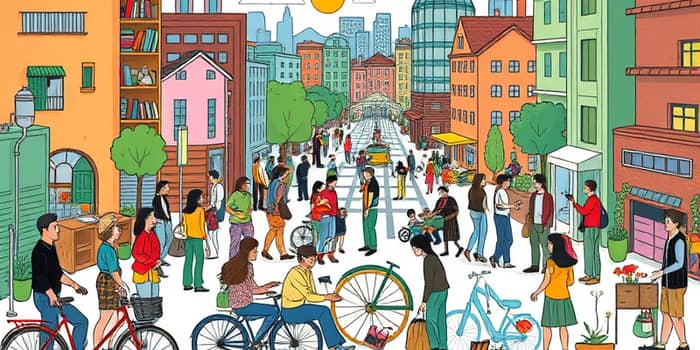
Consumption practices have transformed dramatically over centuries, shaped by technology, culture and environmental pressures. Today’s shift toward sharing and leasing reflects a profound rethinking of value, community and our planet’s limits.
In the pre-industrial world, communities relied on subsistence-based exchanges to meet survival needs. Craftspeople produced durable, locally sourced goods that lasted generations, and surplus wares were shared among neighbors in tight-knit villages. Ownership was minimal, with possessions reflecting functional necessity rather than individual status.
With the 19th-century Industrial Revolution, mass production and urban migration gave rise to a new consumer class. Factories could churn out identical items at scale, fueling a culture of non-essential purchases and an emerging desire for social distinction. The idea of social mobility through consumption took hold, and goods became symbols of progress and modernity.
After World War II, economic prosperity and credit availability unleashed a “throw-away” society. Advertisers tapped psychology to equate happiness with the latest appliance or automobile, while planned obsolescence ensured continual turnover. The resulting work-and-spend cycle decoupled consumption from income and entrenched the belief that personal fulfillment stemmed from owning more and newer things.
Over time, motivations evolved through a combination of biology, conditioning and cognition. Advertising became adept at creating new desires, fueling an escalator of endless wants. Yet research shows diminishing welfare returns: each new gadget adds less joy than the one before, signaling that material abundance can undermine well-being.
Meanwhile, the linear “take-make-dispose” approach has led to resource depletion, biodiversity loss and climate instability. Experts warn that without radical change, we risk overwhelming the very ecosystems that sustain us. This moment demands a pivot from ownership toward access-based consumption models that decouple our quality of life from the volume of goods we own.
Shifting toward sharing and leasing doesn’t require waiting for big policy changes. People can take immediate steps to reduce waste and build community resilience.
Innovations in technology and business are enabling novel access services that redefine convenience and community.
Embracing access over ownership can yield multiple benefits: less waste, deeper social bonds and more resilient local economies. By imagining abundance in terms of experiences and shared resources rather than personal accumulation, individuals reclaim the original purpose of consumption—enhancing human flourishing.
As we stand at the crossroads of ecological limits and technological possibility, the choice is ours. Will we continue down the path of disposability, or will we pioneer a world defined by collaboration and sustainability? Every decision to borrow, lease or share brings us closer to a future where consumption empowers communities and protects the planet.
Together, we can transform the very meaning of value, proving that true wealth lies not in how much we own, but in how wisely and kindly we use the abundance around us.
References