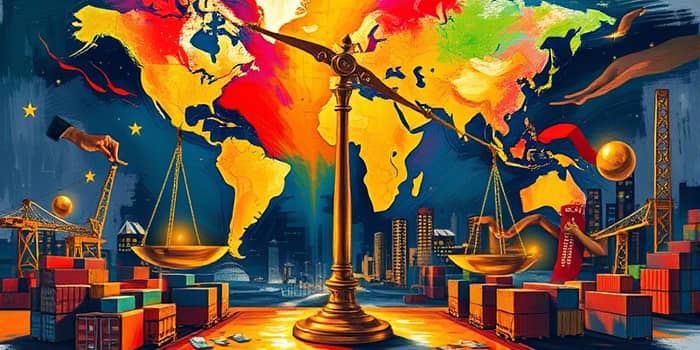
In an interconnected world, the use of economic measures to pursue foreign policy goals has become both more sophisticated and more contested. Nations large and small deploy an array of financial, regulatory, and trading instruments to influence behavior abroad, deter aggression, or reward cooperation. Understanding these tools is essential for policymakers, scholars, and citizens alike, as the global landscape continually shifts under trade wars, geopolitical rivalries, and emerging alliances.
Economic statecraft operates at the intersection of finance and diplomacy, combining hard-edged pressure with strategic incentives. When wielded effectively, these instruments can avert conflict, encourage reform, or bolster allies. When misapplied, they risk economic blowback, humanitarian harm, or erosion of credibility. This article offers a deep dive into the frameworks, data, and best practices that underpin modern economic statecraft, illustrating how sanctions and incentives together form a nuanced toolkit for achieving national objectives.
At its core, economic statecraft refers to the intentional application of financial tools by one state to influence the policies, behavior, or stability of another. It spans a spectrum from punitive measures designed to coerce compliance to positive inducements aimed at encouraging cooperation. Over time, scholars have refined the classification of these instruments, distinguishing among negative sanctions, positive rewards, and broader regulatory constraints.
These tools can be wielded unilaterally by a single country or multilaterally in coordination with allies. The choice between these approaches often hinges on the desired impact, legal frameworks, and the political will of partner states.
Sanctions are not monolithic; they can be sorted into three primary categories based on targets and mechanisms. Each category carries distinct implications for economic impact, humanitarian considerations, and political signaling.
Whether imposed singly or jointly, these measures serve both symbolic and coercive functions. Scholars note that sanctions often act as signals of resolve, even if their coercive bite is moderate. Achieving genuine behavior change, however, may require precise calibration of costs and benefits.
Empirical research on sanctions yields a mosaic of success rates and conditions. While some studies report modest achievements, others find limited long-term impact. Across 115 cases from World War I through 1990, only 35% achieved partial success, illustrating the complex interplay of factors that shape outcomes.
These figures underscore that economic coercion seldom guarantees victory. Instead, its power often lies in shaping negotiation dynamics and signaling intent. Moreover, research highlights that positive inducements—such as aid suspensions or investment guarantees—can outperform purely punitive measures, achieving more durable policy shifts in some contexts.
Punitive measures impose real costs on both target and sanctioning states. Comprehensive UN embargoes can shave off up to 5% of a nation’s GDP annually, with effects persisting for a decade, while unilateral U.S. sanctions typically reduce target GDP growth by 0.5–0.9% per year over seven years. At the same time, sanctions cost the originating country $15–19 billion in exports each year, translating to 200,000 plus jobs lost in the export sector.
Understanding this balance is critical. Sanctions that inflict high costs on a target yet impose minimal pain on the sender—and that are implemented swiftly—tend to be most effective. When the economic burden on the target reaches approximately 2.4% of its GNP, success rates rise appreciably.
These strategic elements, when combined, create a coherent policy framework that leverages economic measures alongside other instruments of national power.
North Korea’s asset freeze at Banco Delta Asia in 2005 illustrates how targeted financial measures can prompt negotiations on nuclear facilities. While attribution of causality is never absolute, that episode contributed to a temporary freeze of Yongbyon operations.
In Iran, the Trump administration’s maximum-pressure campaign showcased the role of diplomatic outreach to third-party states. Coordination with Gulf partners, European allies, and even China strengthened the sanctions regime, demonstrating the multifaceted nature of modern economic statecraft.
More recently, sanctions against Russia have aimed to isolate its financial institutions, disrupt energy exports, and impose broad technology bans. Projections suggest coordinated Western sanctions could contract Russia’s economy by up to 6% in certain years, underscoring the potency of joint action.
Economic tools rarely operate in a vacuum. They are most persuasive when embedded within a wider diplomatic strategy—one that combines incentives, pressure, and dialogue. Symbolism matters: sanctions signal resolve, positive rewards convey openness, and multilateral backing enhances legitimacy.
True mastery of economic statecraft requires ongoing analysis, adaptive policymaking, and a willingness to adjust instruments as circumstances evolve. Policymakers must weigh costs, anticipate countermeasures, and deploy measures in concert with allies.
Ultimately, from punitive embargoes to investment guarantees, the tools of economic statecraft form a versatile arsenal. When employed thoughtfully and responsibly, they can deter conflict, advance human rights, and foster global stability. This evolving discipline challenges us to balance hard power with prudence, craft strategy with compassion, and pursue national interests hand-in-hand with shared prosperity.
References