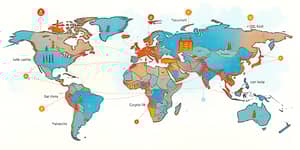
The unprecedented pace of medical cost inflation, demographic shifts, and technological breakthroughs has thrust global healthcare spending into the spotlight. Analyzing these trends reveals not only the direct impact on individual well-being but also how health investments shape the broader economy.
As nations allocate greater resources to hospitals, therapies, and innovative treatments, they also fuel job creation, productivity, and national output. Yet beyond the numbers, each percentage point reflects choices about the future of workforces, families, and societies.
Recent surveys of 346 insurers across 82 countries project a global average medical cost increase of 10.3% in 2026, with slight variations. Aon’s alternative forecast predicts a modest drop to 9.8%, marking the first single-digit rise in three years. In the United States, spending is expected to climb 9.6% in 2026, bringing total national outlays to $4.9 trillion in 2023.
Meanwhile, 55% of insurers anticipate cost pressures persisting beyond three years, driven by specialties like oncology and cardiovascular care, as well as structural factors such as drug pricing and outpatient volume. Employers and governments alike are bracing for prolonged budgetary challenges.
This acceleration is most pronounced in Asia Pacific and Latin America, where emerging economies face rising inflationary pressures and expanding middle-class demand for care.
Spending on health care behaves like a precise economic barometer of growth. Cross-country data shows a strong positive correlation between per-capita income and healthcare expenditures, both as a share of GDP and in absolute terms. As household wealth rises, people demand better services, driving government and private payers to invest more in advanced treatments and preventive care.
However, the impact on economic growth is non-linear relationship between spending and growth. Econometric models suggest per-capita GDP growth can be expressed as 0.4772 + 0.2197h – 0.0291h², where h equals health spending as a percentage of GDP. Growth peaks at an optimal threshold at 7.55% of GDP, yielding roughly 3% annual growth. Below that, increased health investments stimulate economic performance; above it, they can crowd out other productive uses of capital.
With the OECD average still around 5.48% of GDP on health, many economies have room to boost spending toward that inflection point before facing diminishing returns.
Taken together, these factors create a compound effect. As societies grow wealthier, they not only demand more care but also adopt costly new therapies and diagnostics, further escalating budgets.
While high-income nations spend the largest share of GDP on health, outlier behaviors reveal policy choices and market structures at work. The United States, for instance, allocates roughly 18% of its GDP to healthcare—far above other OECD members—yet does not always achieve commensurate quality or access outcomes.
In contrast, many European systems maintain spending closer to 9% of GDP, relying on cost controls and universal coverage models. Emerging markets in Asia Pacific and Latin America, with double-digit spending growth rates, are grappling with how to expand coverage without triggering unsustainable fiscal deficits.
Understanding health spending as an economic barometer provides actionable insights for policymakers, employers, and financial planners:
Ultimately, investments in health are investments in human capital and economic resilience. By monitoring spending trends and understanding their broader effects, stakeholders can ensure that health budgets serve as levers for sustainable growth rather than unmanageable liabilities.
As the world looks ahead, the challenge lies not in rejecting higher health spending but in channeling it toward innovations and policies that promote equity, productivity, and long-term prosperity. When aligned with strategic goals, healthcare investment becomes a catalyst for healthier populations and more robust economies worldwide.
References