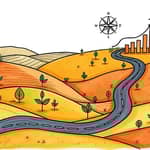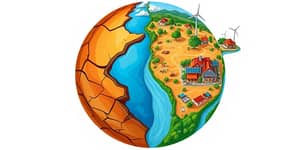
Across continents and communities, infrastructure investment is more than a financial strategy—it is a catalyst for transformation. As governments, businesses, and citizens unite, the choices we make today will shape economies, environments, and societies for decades to come.
With global foreign direct investment reaching $1.6 trillion in 2025 and an infrastructure investment supercycle requiring up to $3 trillion by 2030, the stage is set for unprecedented growth. Yet, real impact demands strategic vision and collaborative action.
The global infrastructure sector faces both opportunity and complexity. While financial flows surged, much of the activity remained within financial centers, highlighting the gap between capital availability and productive deployment. Construction costs, geopolitical tensions, and regulatory uncertainty can cloud prospects, but they also underscore the need for thoughtful, resilient design.
In this environment, data centers stand out: accounting for more than one-fifth of greenfield project values in 2025, with over $270 billion announced investment. Nearly 100 GW of new capacity will double global data center footprint by 2030, creating $1.2 trillion in asset value and driving up to $2 trillion in equipment spending.
To navigate this landscape, six interrelated transformation themes guide decision-makers toward sustainable, inclusive growth:
Each theme represents both a challenge and an opportunity. Integrated strategies that bridge sectors, blend public and private funding, and prioritize environmental and social outcomes will yield the greatest returns.
Different regions offer unique prospects, depending on maturity, policy frameworks, and demographic trends. While France, the United States, and the Republic of Korea led as hosts for major projects, emerging markets such as Brazil, India, Thailand, and Malaysia are attracting record capital inflows.
APAC’s data center capacity is set to grow from 32 GW to 57 GW by 2030 (12% CAGR), with colocation leading growth at 19%. In EMEA, a 10% CAGR is driven by sovereign AI clouds and government support, concentrating 13 GW of new supply in Europe and the Middle East. North America focuses on gas pipeline expansions for new gas-fired plants to stabilize grids and power AI hubs.
Not all sectors expand at the same pace. Traditional infrastructure projects have declined—the number of deals down 12% and project finance value down 16%. Renewable energy investments faced a pullback amid revenue and regulatory uncertainties, contributing to a 10% fall in international projects.
Meanwhile, utilities enjoy unprecedented regulated earnings growth as grids expand and smart technologies enhance reliability. Listed infrastructure delivered double-digit returns in 2025, led by utilities meeting AI-driven power demand that is set to grow at 22% annually to 2030, reaching $49 billion per year in data center construction spending.
To translate capital into impact, stakeholders can adopt practical approaches that balance opportunity with risk:
These strategies can be tailored to local contexts—whether a sprawling metro seeking mass transit upgrades or a developing region building water and sanitation networks from scratch.
Beyond metrics and balance sheets, infrastructure investment is about people. It’s the morning commute made safer by upgraded bridges, the family tapping into reliable clean energy, the entrepreneur leveraging high-speed connectivity to launch a startup. It’s the sense of possibility when a new airport terminal opens, connecting remote communities to global markets.
Each project has a human face and a story. When we view infrastructure as a collective endeavor—powered by innovation, guided by sustainability, and grounded in equity—we unlock its greatest potential. We build not just structures, but trust and resilience for generations to come.
Today’s decisions will echo into the future. By embracing a holistic approach, aligning the six transformation themes, and forging strong partnerships, we can turn the supercycle into a legacy of shared prosperity and environmental stewardship.
Let us seize this moment. Together, we can pave the way for a world where infrastructure empowers every person, elevates every community, and sustains every ecosystem. The foundation we lay now will support the dreams of tomorrow.
References