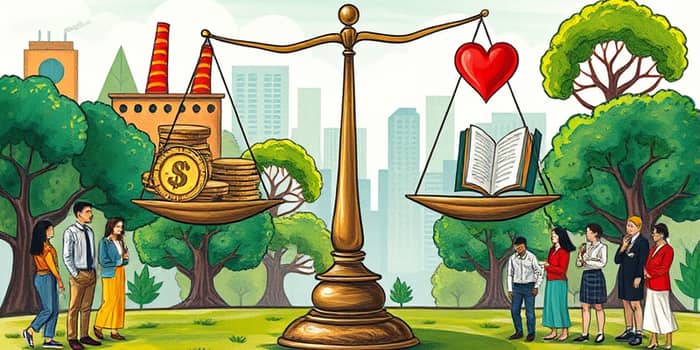
Gross Domestic Product (GDP) has long been the go-to measure of national progress, yet its narrow focus on monetary transactions misses core aspects of societal well-being. As we face mounting environmental crises, rising inequality, and shifting social values, it is time to embrace broader metrics. By exploring complementary frameworks and practical steps for adoption, governments and communities can chart a more holistic and sustainable path forward.
GDP captures total national spending on final goods but treats all activity equally, whether planting trees or cleaning up oil spills. It fails to account for environmental sustainability and social capital, forcing dangerous trade-offs between short-term growth and long-term resilience.
Moreover, GDP excludes critical dimensions like unpaid labor, health outcomes, and subjective experiences. Nations have doubled GDP since 1970 while resource extraction tripled, signaling a disconnect between economic figures and real human welfare. To craft policy that truly serves citizens, we must look beyond aggregate output and embrace measures that value quality of life.
Researchers and policymakers have proposed numerous frameworks that integrate environmental and social costs or adopt a multidimensional lens. Some of the most influential include:
Each metric addresses different shortcomings of GDP. The table below highlights their core features, adoption examples, strengths and limitations.
By capture holistic economic health, these indicators foster balanced policy decisions that align prosperity with sustainability and social equity.
Across the globe, cities, states, and nations are experimenting with new metrics to guide policy. Santa Monica’s Wellbeing Index blends resident surveys and social data to optimize community investments. New Zealand’s Living Standards Framework embeds well-being into budget decisions, ensuring environmental and cultural values shape fiscal choices.
Internationally, the OECD’s Better Life Initiative and the EU’s Beyond GDP program advocate for official integration of alternative metrics. Meanwhile, dozens of C40 cities collaborate on urban progress indicators, sharing best practices in reducing inequality and carbon emissions without sacrificing quality of life.
Despite growing interest, alternative measures face hurdles. Data gaps, lack of standardization, and the complexity of subjective variables hinder cross-country comparisons. Some metrics risk favoring consumerism or disadvantaging resource-exporting economies.
To overcome these obstacles, experts recommend a suite approach: pairing GDP with a Wellbeing Index and an Ecological Footprint measure. This mixed model leverages the strengths of each while align with sustainable consumption goals and fostering predictable policy outcomes.
Cities and states can serve as incubators for innovation, accelerating the shift to comprehensive economic metrics. By publishing regular reports, they maintain transparency and encourage public engagement. Embedding new indicators into budget and planning cycles ensures resource allocation reflects community priorities.
Such actions empower citizens, promote accountability, and build momentum for broader policy reform.
Transitioning from a GDP-centric model to a multidimensional framework redefines progress. It values arts, culture, and community cohesion alongside economic output. As more governments embrace these alternatives, we can expect policies that foster equitable growth, environmental stewardship, and resilient societies.
By championing metrics that reflect true human welfare, decision-makers unlock new opportunities for innovation and collaboration. Citizens benefit from improved health, stronger social bonds, and a cleaner planet. Together, we can measure what truly matters and build an economy that sustains people and the planet for generations to come.
References