Global inequality has reached staggering extremes, fragmenting societies and endangering progress. This article delves into the data, consequences, and solutions needed to bridge the divide.
Over the past two hundred years, the world has witnessed an unprecedented surge in overall prosperity. Advances in technology, medicine, and trade lifted billions out of extreme poverty, creating what some historians call a two-hundred-year rise in average income/output. Yet these gains have not been shared equally across the global population.
Since the 1980s, economic policies, financial liberalization, and a wave of globalization have accelerated productivity but also favored those with capital. The result: while average GDP per capita nearly quadrupled, the middle 40% of adults saw incomes stagnate. This polarization since the 1980s set the stage for today’s crisis of concentration.
Current data reveal a stark picture. The top 10% of adults now receive more than half of global income. Specifically, top 10% receive 53% of global income, while the bottom half shares just 8%. Wealth disparities are even more extreme: the top 10% own 75% of global wealth; the bottom 50% hold barely 2%. The ultra-rich have surged ahead, with the top 1% controlling 37%, and the top 0.001% owning more than the bottom half combined.
This table underscores that the same forces driving income disparity also shape access to basic services like education, with gaps as dramatic as 40 to 1 between regions.
Inequality is not just about dollars and cents; it permeates every dimension of human life. Consider gender: globally, women earn only 61% of men’s paid hourly wages and just 32% when unpaid labor is included. Persisting gender gaps perpetuate unjust economic outcomes rob societies of half their potential.
The climate crisis adds another layer. The wealthiest 10% of people account for 77% of private capital emissions, while the poorest half produce a mere 3%. This top 10% drive 77% of emissions, deepening environmental harm for the most vulnerable communities.
Education spending reveals the same pattern. Where high-income regions invest up to €9,000 per child annually, Sub-Saharan Africa manages under €200. Such disparities lock in disadvantage from birth, fueling a vicious cycle of poverty and underdevelopment.
Extreme inequality undermines social cohesion and trust. In many countries, political systems tilt toward the wealthy, as super-rich individuals funnel resources into campaigns and media. This erosion of democratic norms leaves middle classes feeling excluded and fuels polarization.
Financial flows exacerbate these trends. Approximately 1% of global GDP shifts each year from poor to rich countries through returns on investments and interest payments—three times the volume of official aid. These persistent outflows drain resources from communities that can least afford them.
Tackling such entrenched inequality demands bold, coordinated action. Economists and advocates have highlighted several transformative measures. At the top of the list is a minimum wealth tax on ultra-billionaires, designed to reclaim a share of assets that expanded dramatically during recent market booms.
Beyond taxation, investments in human capital and green infrastructure can yield long-term dividends. Prioritizing universal early childhood education, free public healthcare, and renewable energy projects not only narrows opportunity gaps but also builds resilience against economic and environmental shocks.
Accurate, disaggregated data are essential to design and evaluate policies. The World Inequality Report 2026, produced by over 200 researchers, provides a blueprint with region- and gender-specific analyses. National governments and international organizations should adopt these findings to tailor local strategies.
Multilateral cooperation is equally vital. Wealth and capital flow across borders, and so must solutions. A reformed United Nations forum or a dedicated G20 subcommittee could coordinate cross-border tax agreements, climate finance, and equitable trade rules to ensure that no nation is left behind.
Above all, public engagement and grassroots movements play an indispensable role. The surge of citizen campaigns demanding fair taxation, living wages, and climate justice demonstrates that collective voice can bend policy toward equity. By amplifying those voices, we can challenge the structures that perpetuate extreme concentrations of wealth.
Inequality is neither inevitable nor immutable. It is the product of choices—political, economic, and social—that can be reshaped through collective action and visionary leadership. Bridging the gap is not only a moral imperative but a necessity for sustainable, peaceful societies.
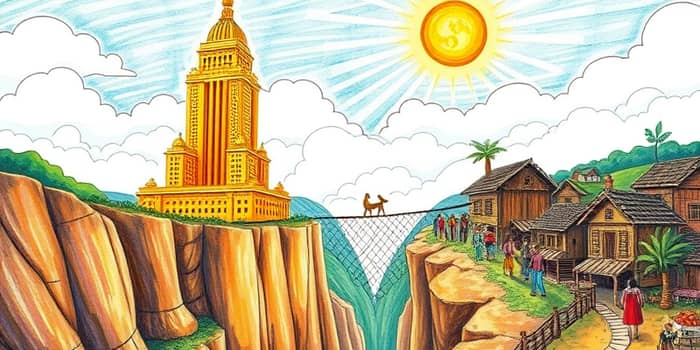
We stand at a crossroads. Will we allow the chasm to widen, or will we build the ladders that enable every person to climb? By embracing bold policy reforms, investing in human potential, and fostering global solidarity, we can ensure that the story of our era is one of shared prosperity, not deeper divides.
References