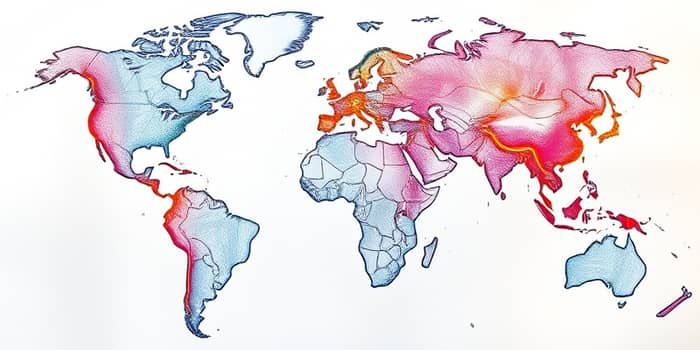
Infrastructure underpins every aspect of modern life: from the roads that connect us to the power grids that light our homes and the digital networks that keep us in touch. Yet, beneath this veneer of progress lies a stark reality: an enormous chasm between what communities need and what is being built.
Across continents, the promise of safe drinking water, reliable electricity, high-speed internet, and efficient transportation remains unfulfilled for billions. At stake is not only economic growth but the health, wellbeing, and opportunity of entire populations.
In this article, we explore the factors driving this divide, the human stories behind the statistics, and the practical steps that can bridge the gap—transforming ambition into action on a global scale.
Global estimates of infrastructure requirements paint a compelling picture of urgency. Leading analyses indicate a cumulative global needs of $106 trillion by 2040 to build, upgrade, and maintain roads, power plants, data centers, and social facilities.
Even conservative estimates highlight a shortfall of $94 trillion over the same period, underscoring a widening gap as emerging needs from AI and digital transformation are folded into forecasts. In low and middle-income countries, the financing gap represents roughly 4.5% of GDP, or about $1.5 trillion each year.
This underinvestment manifests in stark statistics: 666 million people without electricity; 2.1 billion lacking safe drinking water; more than 3.4 billion without basic sanitation; and 2.6 billion left unconnected to the digital age. These figures translate into lost productivity, deepened inequality, and stunted human potential.
In high-income nations, aging networks and deferred maintenance carry their own risks. The United States alone faces a $2.9 trillion deficit in the coming decade, even under optimistic investment scenarios. Europe requires €12 trillion by 2040, with €3.6 trillion earmarked solely for modernizing building stock.
The infrastructure gap is not a simple funding shortfall; it is the product of interlocking global trends. Four megatrends stand out as critical drivers that amplify demand and expose systemic weaknesses.
These dynamics compete for finite resources, increasing the complexity of financing, planning, and executing critical projects. Moreover, extreme weather events and cybersecurity threats compound the risk profile of aging and underfunded systems.
While the scale of needs is global, regional contexts vary dramatically. In sub-Saharan Africa, low public revenues and limited access to private finance constrain the rollout of basic infrastructure, leaving rural communities disconnected and cities struggling to expand services.
In Asia, rapid economic growth has driven remarkable achievements. India’s digital infrastructure push aims to connect over 600,000 villages by the end of 2024, while China continues to invest heavily in high-speed rail and renewable energy. Yet, these advances contrast sharply with persistent gaps in other parts of the region.
Developed markets face their own challenges. The United States, despite high GDP, must tackle an estimated $15.2 trillion requirement by 2043, balancing fiscal constraints with calls for new highways, broadband expansion, and power grid upgrades.
Europe’s quest for decarbonization has propelled investments in offshore wind and smart grids, but the scale of transformation ahead demands sustained policy support and innovative financing to meet the €12 trillion target by 2040.
When infrastructure fails or is lacking, the impacts ripple through economies and communities. Businesses face higher operating costs, workers lose valuable time in traffic gridlock, and opportunities for growth shrink.
Social outcomes suffer as well. Studies link inadequate water and sanitation services to increased childhood morbidity and mortality. In some regions, a 10% rise in access inequality correlates with a one-year drop in life expectancy.
The vulnerability of critical systems to cyberattacks and extreme climate events further raises the stakes, with power outages and network disruptions threatening public safety and economic stability.
Bridging this vast gap will require creative financing and public-private cooperation. Institutional investors currently allocate less than 1% of assets under management to infrastructure, despite its potential for stable, long-term returns.
Targeted public funding, through infrastructure banks and co-investment vehicles, also plays a vital role in de-risking projects and demonstrating feasibility to private investors.
The path to a more equitable and resilient global infrastructure system hinges on collaboration and sustained commitment. Governments must prioritize clear, long-term strategies that align incentives, foster innovation, and uphold environmental and social standards.
Investors, both public and private, need to look beyond short-term yields and recognize the transformative impact of infrastructure on societies. By adopting green technologies and resilience planning, they can secure sustainable returns while supporting climate goals.
Local communities and civil society groups should be empowered to shape infrastructure agendas, ensuring that projects meet real needs and deliver inclusive benefits. This participatory approach builds trust and strengthens project outcomes.
Ultimately, bridging the infrastructure gap is more than a funding challenge; it is a moral imperative to connect people, power economies, and safeguard the planet. With bold vision and coordinated efforts, we can create a foundation for shared prosperity and a truly interconnected world.
References