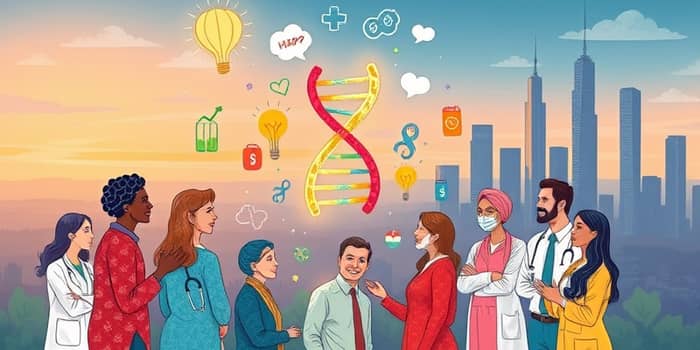
Healthcare stands at a crossroads where rising costs and patient expectations meet scientific breakthroughs. Personalized medicine offers a beacon of hope, promising to tailor treatments to individual needs while reducing unnecessary spending. This comprehensive exploration examines how precision approaches can reshape the economics of care, deliver better outcomes, and foster a more equitable future.
With global markets skyrocketing and real-world data confirming cost savings, stakeholders from providers to policymakers can leverage this momentum to build more sustainable systems. Below, we dive into market trends, savings potential, practical examples, analyses, barriers, and actionable steps for the journey ahead.
In 2022, the personalized medicine market reached a valuation of $35.7 billion USD, with projections indicating a 270% increase by 2027. Precision therapeutics spending exceeded $32 billion globally that same year, expected to surpass $124 billion by 2027.
Broader segments—including nutrition, wellness, diagnostics, and therapeutics—have nearly doubled from $1,280 billion in 2015 to $2,770 billion in 2022. The overall global personalized healthcare market hit $512 billion in 2022 and is forecasted to exceed $1,104 billion by 2032, with an acceleration phase toward the end of the decade.
Asia-Pacific stands out as a region poised for dramatic growth. Over the next ten years, precision therapies could drive $450 billion in economic investment, create 1.2 million jobs, and generate $1.6 trillion in total economic growth through multiplier effects. Meanwhile, treatment costs in North America already average nearly $300,000 per patient, underscoring the urgent need for targeted strategies that improve value.
One of the most compelling economic advantages of personalized medicine lies in drug development. Targeted approaches can cut research and development costs by an estimated 17% worldwide, amounting to roughly $26 billion in annual savings. This efficiency gains stem from more precise patient selection and optimized trial designs, reducing the frequency of failed late-stage trials.
Precision molecular diagnostics have shown the potential to cut disease incidence by at least 10% over fifty years across conditions like cancer, diabetes, and cardiovascular disease. The resulting health improvements translate to an economic value between $33 billion and $114 billion.
Within the $300 billion annual U.S. retail prescription drug expenditure, tens of billions are often spent on ineffective treatments. By pairing therapies with biomarkers and genetic profiles, targeted therapies reduce waste and improve patient outcomes, lowering overall spending on avoidable complications.
Economists and health systems rely on cost-utility studies to inform coverage and treatment guidelines. Between 1998 and 2011, a review of 59 studies found:
Additional targeted analyses reveal:
Such data equip decision-makers with evidence to allocate resources wisely, emphasizing long-term economic transformation over immediate expense.
Addressing these challenges requires coordinated efforts among governments, industry, and advocacy groups. Policy innovations—such as value-based pricing and risk-sharing agreements—can lower financial barriers, while robust data governance frameworks can build public trust.
To fully realize the transformative power of personalized medicine, stakeholders must embrace collaborative strategies that span disciplines and sectors. Below are actionable steps to foster a sustainable and inclusive ecosystem:
By prioritizing shared value over short-term gains, the healthcare community can unlock a future where treatments align with individual biology, costs are contained, and health outcomes soar. The economic potential is immense, but its realization depends on bold leadership, ethical stewardship, and unwavering commitment to patient-centered innovation.
Ultimately, personalized medicine is not just a scientific endeavor; it is a promise—a promise of more precise treatments, more efficient systems, and a healthier society. As we stand on the brink of this new era, every stakeholder has a role to play in ensuring that the benefits ripple across communities and generations.
Together, through innovation and compassion, we can reshape the economic foundations of healthcare to prioritize human dignity and lasting societal benefits.
References