The strategic importance of rare earth elements and critical minerals has never been greater. From powering defense systems to driving the green energy transition, these resources shape the future of technology and national security.
Rare earth elements (REEs) and critical minerals like lithium, graphite, and tungsten are vital for defense, electronics, and energy. They enable advanced weaponry, electric vehicles, robotics, and clean power generation. As demand soars, nations scramble to secure reliable sources.
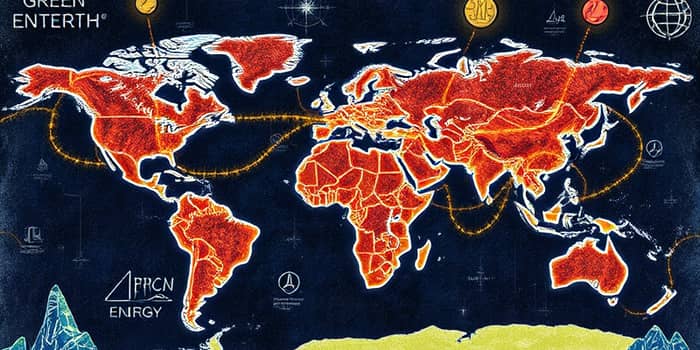
Global dependence on a handful of suppliers creates vulnerability. In 2024, China controlled up to 90% of REE processing capacity and 79% of graphite production. That dominance allowed Beijing to impose export curbs in 2023, disrupting automotive supply chains and raising prices worldwide.
To navigate this landscape, stakeholders must embrace diversified supply chain resilience and foster innovation in extraction and recycling technologies. By understanding market dynamics, businesses and governments can anticipate disruptions and capitalize on emerging opportunities.
Beijing’s ascent in the rare earth sector traces back to the 1990s, when targeted policies prioritized mineral processing. Deng Xiaoping’s 1992 remark—"The Middle East has oil; China has rare earth elements"—underscored a long-term vision that fused resource security with economic growth.
Today, China uses a suite of tools to defend its position: export quotas, stockpiling, domestic exploration incentives, and the 2020 Export Control Law. These measures ensure steady domestic supply and price stability while limiting foreign access to critical inputs.
By leveraging its market share, China has also forged offtake agreements and invested in overseas deposits. From Greenland to Africa, these partnerships cement Beijing’s influence and create potential leverage points in future trade disputes.
In response to growing supply risks, the United States has redefined minerals security as a national security priority. The Trump Administration (2025–2026) pursued aggressive initiatives, including price floors, equity stakes, and strategic partnerships to accelerate domestic production.
Despite these measures, Western output remains insufficient to displace China’s market position. New facilities face long lead times, and private miners often prefer selling to established buyers rather than investing in complex supply chains.
To overcome these hurdles, stakeholders must forge long-term strategic partnerships and alliances, support critical minerals research, and streamline permitting processes for new projects.
The Minerals Security Partnership (MSP), launched under the Biden administration, gathers 14 allied nations to build non-Chinese value chains. By combining financing, political backing, and technical expertise, MSP aims to reduce global dependence on a single supplier.
In the Arctic, Greenland’s Tanbreez deposit holds vital heavy REEs. Yet development stalls amid environmental concerns, infrastructure gaps, and community opposition. The US and EU are increasing engagement to ensure responsible resource development with respect to local and indigenous communities.
Supply chain volatility remains a pressing risk. The 2023 Chinese export restrictions underscored how quickly shortages can ripple through automotive, defense, and tech sectors. With the US-China trade deal expiring in late 2026, markets brace for renewed uncertainty.
To prepare, companies and policymakers can adopt proactive measures:
By integrating these approaches, stakeholders can transform a precarious market into an arena of innovation and collaboration. The race for critical minerals is not merely a contest of extraction, but an opportunity to foster sustainable, resilient supply networks worldwide.
Rare earths and critical minerals sit at the nexus of geopolitics, technology, and environmental stewardship. China’s dominant position has catalyzed a global response that blends national security with economic strategy.
As 2026 unfolds, success will hinge on cooperation across governments, industry, and communities. By embracing innovative policies and shared commitments, the world can secure a future where clean energy, advanced manufacturing, and defense systems thrive on reliable, responsibly sourced minerals.
References