In modern economies, Gross Domestic Product has stood as the ultimate yardstick of success, guiding policy decisions and shaping public discourse. Yet when GDP climbs, citizens do not always feel better off; in fact, rising figures can mask social and environmental strains.
Consider a nation that clears forests for timber exports: GDP swells, but soil erodes, biodiversity vanishes, and local communities lose vital resources. By focusing on transactional flows, GDP neglects the very foundations that sustain economic life.
To forge a more inclusive vision of progress, we must embrace frameworks that reflect environmental stewardship and social cohesion. This article explores how integrating diverse forms of "wealth" can transform our understanding of prosperity.
Since its inception in the 1930s, GDP has been commended for its simplicity and comparability. However, its narrow focus on market transactions results in false indicators of economic health. GDP fails to distinguish between activities that enhance welfare and those that undermine it.
For example, expenditures on pollution cleanup or increased prison spending register as positive growth, disguising underlying harms. Meanwhile, essential activities like childcare, elder care, and volunteer work remain invisible despite their profound social value, often referred to as unpaid labor and community contributions.
This reliance on GDP can lead policymakers to prioritize output over outcomes, encouraging resource depletion, higher carbon emissions, and rising inequality. By ignoring the health of underlying resource bases and intangible capacities, GDP overlooks long-term capital stocks and their regeneration. In an era of climate crisis and social unrest, these blind spots pose grave risks to long-term well-being.
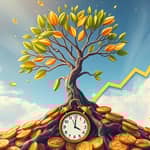
A robust alternative is the concept of comprehensive wealth, which aggregates five distinct yet interdependent capitals. This approach shifts the focus from short-lived economic activity to the accumulation and preservation of assets that underpin future prosperity.
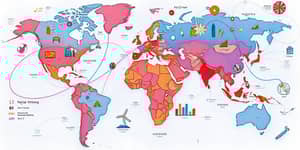
Global studies illustrate the power of this framework. In Ethiopia and Indonesia, wealth accounts reveal that natural capital often constitutes the largest share of total assets, implying that deforestation and land degradation translate into real losses of inherited wealth and resource depletion. Similarly, in Trinidad and Tobago, fluctuations in petroleum revenues starkly affect national financial capital, underscoring the volatility of relying on nonrenewable resources.
The World Bank’s Changing Wealth of Nations report underscores how countries with rising GDP can concurrently see declines in comprehensive wealth, signaling unsustainable trajectories. Household-level applications of these ideas—using asset indices derived from Demographic and Health Surveys—offer granular insights into socioeconomic inequalities across urban and rural divides.
To operationalize comprehensive wealth ideas, various metrics have emerged, each emphasizing complementary dimensions of progress.
Well-Being Focused indices like Bhutan’s Gross National Happiness employ over 140 survey questions to capture psychological, cultural, and environmental factors. The United Nations’ Human Development Index combines life expectancy, education attainment, and per capita income to evaluate capabilities rather than just consumption. Meanwhile, subjective well-being surveys inform the annual World Happiness Report, correlating self-reported life satisfaction with policy environments.
Economic Welfare Adjustments attempt to refine GDP by accounting for non-market contributions and environmental costs. The Genuine Progress Indicator adds values for volunteerism and household labor, then subtracts penalties for pollution, crime, and resource depletion. Green GDP adjusts national accounts for carbon emissions and ecosystem damage, guiding nations like China and India in assessing environmental sustainability.
Multidimensional Frameworks bring together social, economic, and ecological data into coherent dashboards. The OECD’s Better Life Index allows citizens to weigh dimensions such as housing, health, and civic engagement. New Zealand’s Living Standards Framework integrates cultural and community values, demonstrating how policymaking can systematically prioritize well-being over mere output.
Momentum is building worldwide as governments, cities, and international organizations translate theory into practice.
These efforts demonstrate that integrating broader metrics can reshape budgeting, investment priorities, and public dialogues, paving the way for resilient economies that respect ecological limits and social needs.
Despite growing interest, obstacles remain. Data inconsistency across nations and surveys hampers the creation of unified dashboards. Divergent valuation methods can produce conflicting rankings, potentially undermining credibility.
Translating complex wealth accounts into actionable policy demands policy translation for real-world decisions and capacity-building in statistical agencies. Bridging the urban-rural gap in asset surveys is vital to ensure that metrics reflect diverse livelihoods and contexts.
Moreover, subjective components—like those in well-being surveys—face critiques regarding comparability and cultural bias. Balancing objective and subjective measures requires transparent methodologies and stakeholder engagement to build trust.
Nevertheless, adopting complementary metrics alongside GDP allows countries to maintain familiar benchmarks while enriching their statistical toolkit. By fostering dialogue among economists, ecologists, and community leaders, we can co-create systems that support equitable growth and environmental resilience.
Redefining wealth is not a mere academic exercise; it is a transformative journey toward long-term sustainability and human flourishing. By valuing natural, human, social, produced, and financial capitals, we can chart policies that build robust societies and nurture healthy ecosystems.
As global challenges intensify—from climate change to inequality—embracing a multidimensional understanding of prosperity becomes imperative. Let us champion innovative metrics for durable progress, ensuring that future generations inherit a world of opportunity, equity, and resilience.
References