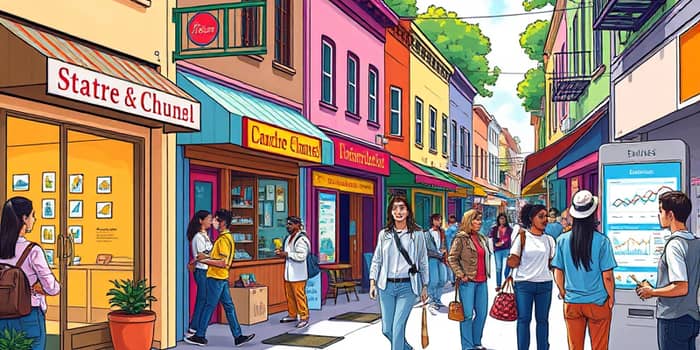
Across cities, towns, and rural backroads, small businesses form the beating heart of America’s economy. From corner cafes to cutting-edge consultancies, these enterprises weave together innovation, community, and opportunity. Yet despite their undeniable contributions, entrepreneurs often face headwinds that threaten their resilience and growth. In this article, we explore the remarkable scale of small business impact, the barriers they confront, and the policy pathways that can unlock their full potential.
Small businesses represent one of the nation’s most dynamic sectors. Today, there are 36.2 million small businesses operating in the U.S., a testament to the entrepreneurial spirit that drives local economies. Monthly business formations have surged to a record 478,800 business formations per month in 2025, reflecting an inspiring climb of over 435% since 2004.
These enterprises employ 62.3 million Americans—62.3 million Americans employed across diverse industries—accounting for nearly 46% of the workforce. Between March 2023 and March 2024, small firms generated 1.2 million net job increases, representing almost 89% of all net job growth nationwide. Such figures underscore the vital role of small businesses in stabilizing communities and driving opportunity.
Behind each statistic lies a story of ambition and creativity. In urban centers, technology startups are transforming professional services, while family-run bodegas adopt digital tools to reach new customers. Rural communities see local artisans selling handcrafted goods online, bridging geographic divides and expanding market reach. Minority entrepreneurs are launching ventures in transportation and warehousing, challenging traditional barriers and redefining success.
Similarly, women-owned businesses—nearly half of all small enterprises—have generated $411.6 billion in receipts across 12.7 million non-employer ventures. These ventures not only strengthen economic diversity but also model the power of inclusive growth. Their achievements remind us that opportunity flourishes where talent and support converge.
Despite this vigor, financial challenges persist. Many small businesses carry significant debt burdens, with 39% owing more than $100,000. The average SBA loan amount reached $479,685 in 2023, yet even well-capitalized firms struggle with uneven cash flows and rising costs.
Moreover, tightening credit standards create barriers for many, especially Latino-owned businesses that already face disproportionate obstacles in securing financing. Inflation concerns have also reached record highs, with 58% of small business owners citing it as a major worry—casting uncertainty over future revenue and investment.
To sustain and amplify small business growth, targeted policies must address capital access, regulatory burdens, and skills development. By weaving together incentives, support programs, and streamlined compliance, policymakers can foster an environment where entrepreneurs thrive.
Small businesses are more than economic units—they are the lifeblood of communities, the incubators of innovation, and the architects of the American dream. By enacting policies that lower barriers, expand opportunity, and foster resiliency, we can ensure that the next generation of entrepreneurs not only survives but soars.
When governments, institutions, and communities unite to champion small enterprises, we spark a virtuous cycle of investment, jobs, and social impact. Now is the moment to translate data into action, to transform policies into progress, and to celebrate every local venture that dares to dream big.
References