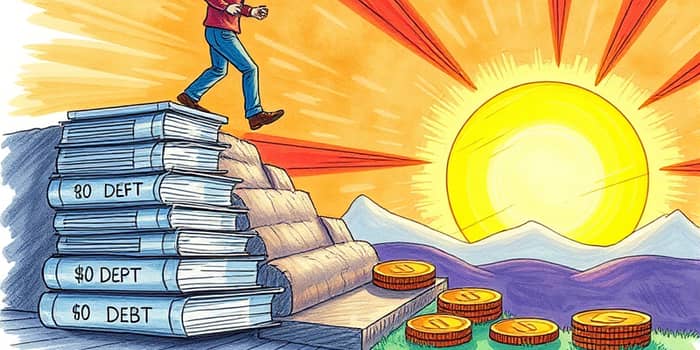
Household debt in the United States has surged to unprecedented levels, presenting both challenges and opportunities for millions of families. By the end of 2025, total consumer obligations approached $18.20 trillion according to Equifax, while the New York Federal Reserve recorded a slightly higher figure of $18.8 trillion in Q4. As delinquencies begin easing from peak pandemic highs, now is the moment to seize control of personal finances and transform liabilities into platforms for growth.
Consumer debt encompasses multiple categories—from mortgages to credit cards to student loans—and each segment carries its own trends and challenges. Mortgages remain the largest bucket at $13.17 trillion, growing steadily yet sustaining stable delinquency rates. Credit cards balance between $1.12 and $1.28 trillion, with utilization hovering around 21.2% and overall delinquencies at 3.03%. Auto loans reach $1.67 trillion, student loans around $1.66 trillion, and home equity lines of credit total $434 billion.
Despite the scale, overall delinquency (60+ days past due) has receded to 5.7%, down from a pandemic-era peak of 6.8%. Subprime borrowers, however, still face elevated stress, and projections for 2026 anticipate flat or slightly higher delinquency rates across key product lines. Understanding these macro trends is the first step toward crafting a resilient debt management plan.
Debt payoff requires both discipline and momentum. By selecting a structured approach, you can enjoy early victories, maintain motivation, and ultimately free up resources for saving and investing. Below are the most widely recognized methods:
Beyond payoff techniques, a robust budget is essential. The classic 50/30/20 rule allocates 50% of income to needs, 30% to wants, and 20% to savings or debt. Reclassify debt payments as a "need," trim discretionary expenses, and automate transfers to ensure consistent progress.
Debt often carries an emotional burden—stress, guilt, or fear. Confronting these feelings directly can transform liabilities into opportunities for growth. Start by listing every debt with its balance, rate, and minimum payment. Reflect on how each obligation affects your mental well-being and daily choices.
Next, set one to three concrete goals. Perhaps you aim to halve credit card balances, build that $5,000 cushion, or maximize your 401(k). Assign timelines and micro-goals (e.g., $500 saved per month) using an app or planner. Celebrate milestones, whether it’s paying off your first card or hitting your emergency fund target.
Maintaining discipline means avoiding new debt. Switch to a cash-only system for non-essential purchases, remove stored payment information from online retailers, and periodically review your progress. A sustainable reset includes reevaluating subscriptions, downsizing expenses, and staying informed on interest rate trends.
As we move through 2026, the consumer credit environment remains dynamic. TransUnion forecasts credit card balances will climb to $1.18 trillion, with delinquencies flat at around 2.57%. Auto loan delinquencies may inch higher by three basis points, while mortgage serious delinquencies could rise by 11 basis points.
Macro factors—inflation, potential tariff shifts, and uneven job growth—will shape the debt landscape. Subprime segments warrant close monitoring, as muted stress signals may mask emerging vulnerabilities. Internationally, the OECD Global Debt Report due in March 2026 will offer comparative insight into US resilience.
For many, the achievable payoff timelines on DMPs or structured methods range from two to five years, depending on extra contributions and income stability. By combining proven tactics with unwavering commitment, you can navigate these headwinds and emerge more financially secure.
Managing debt is about more than numbers—it’s a journey of empowerment, resilience, and strategic planning. Whether you choose the snowball method to harness psychological wins or the avalanche approach to minimize interest costs, every step forward matters. Embrace the tools, technologies, and mindset shifts outlined here, and watch as creditors become a catalyst for growth rather than a burden. The road to financial freedom is paved by informed decisions, consistent actions, and an unwavering belief that today’s liability can become tomorrow’s opportunity.
References