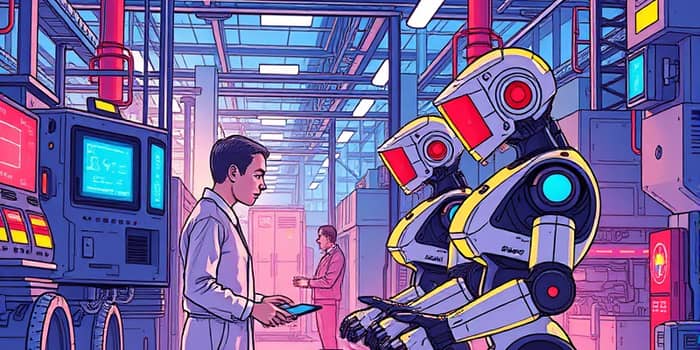
In today’s rapidly evolving industrial landscape, manufacturers stand at a crossroads between traditional methods and the cutting edge of intelligent production. From sprawling assembly lines to precise quality control stations, automation promises both remarkable efficiencies and complex workforce transformations. Embracing this revolution requires vision, strategy, and a commitment to continuous learning.
Despite an overwhelming 98% of manufacturers exploring AI-driven automation, only one in five feels prepared to deploy these systems at scale. This readiness gap underscores a deeper challenge: how to move from pilot projects to fully integrated, end-to-end automated operations.
Investments in operational, engineering, and information technology have surged, yet most plants remain stuck in mid-level maturity. Core processes—such as exception handling and critical data transfer—reflect persistent bottlenecks.
Overcoming these hurdles demands a holistic approach—connecting islands of automation into a unified fabric that enables real-time responsiveness.
After two flat years, 2026 marks a cautious resurgence in industrial automation spending. Analysts project growth rates between 6% and 9% through 2030, driven largely by modernization of existing facilities rather than greenfield expansions.
Government incentives further accelerate adoption. The CHIPS and Science Act commits $50 billion to domestic semiconductor innovation, while the Inflation Reduction Act rewards U.S. manufacturing of clean-energy components.
Manufacturers that can transform raw data into insights will unlock productivity and resilience unmatched by siloed processes.
Automation’s dual nature brings both displacement risks and new opportunities. The World Economic Forum forecasts 92 million jobs lost to automation by 2030, counterbalanced by 170 million new roles—yielding a net gain of 78 million positions globally.
In the U.S., employment is projected to grow by 3.1% through 2034, adding over 5 million jobs. Yet sectors like manufacturing remain vulnerable, with 20 million roles at risk of robotization.
AI already can replace 11.7% of the U.S. workforce’s tasks, and nearly half of all roles can see a quarter of their duties automated. Balancing automation with augmentation is crucial to bridge the automation readiness gap and sustain healthy labor markets.
By 2030, 60% of occupations may feel AI’s impact, though half of jobs will remain safe from full automation. The mid-2030s could see up to 30% of roles automatable with advanced agents and robotics.
Positive outgrowths arise in technical and development domains. Mechanical and industrial engineers are poised for double-digit growth, while computer and mathematical occupations thrive on AI integration. Vocational programs and apprenticeships gain new appeal, highlighting the value of hands-on expertise.
Organizations must invest in training programs that empower the workforce of tomorrow, equipping employees with cross-disciplinary skills in analytics, robotics maintenance, and collaborative problem-solving.
Resilient factories of the future will be those that embrace a strategic orchestration of operations, breaking down silos and forging partnerships with technology suppliers. These collaborations guide capital allocation, ROI assessments, and change-management strategies.
Key success factors include:
Ultimately, the goal is to cultivate resilient, adaptable factories that can pivot swiftly while maintaining sustainability and competitiveness.
Automation is not merely a technological upgrade—it is a catalyst for reimagining production and workforce models. By thoughtfully integrating AI and robotics, manufacturers can overcome current challenges, seize new market opportunities, and foster a future where technology amplifies human potential.
As we navigate this transformation, the companies that flourish will be those that pair cutting-edge innovation with a deep commitment to their people—ensuring that productivity gains go hand in hand with meaningful career growth and societal progress.
References