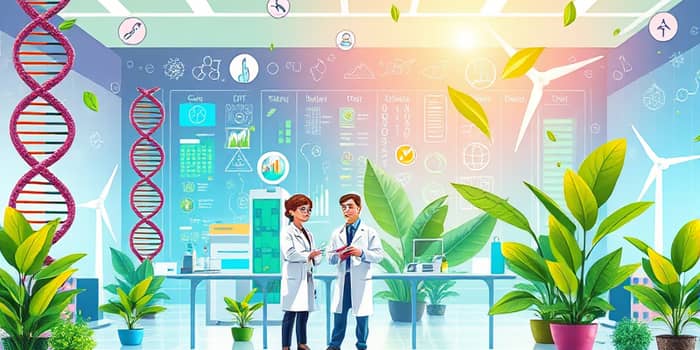
The dawn of a new era in life sciences is unfolding as the global bioeconomy accelerates with unprecedented support from government agencies and private investors alike. From bioenergy to advanced therapies, this transformation promises to redefine healthcare, sustainability, and economic growth.
With projections soaring into the trillions of dollars and a surge of innovation across every sector, stakeholders worldwide stand at the threshold of transformative potential across multiple industries. This article explores the landscape, identifies key drivers, and equips you with strategies to navigate and capitalize on this exciting frontier.
The term “bioeconomy” encompasses biotechnology, bioenergy, biomanufacturing, and related life science fields. In 2025, global bioenergy alone was valued at USD 156.16 billion, rising to USD 168.18 billion in 2026, and projected to reach USD 318.50 billion by 2035 at a 7.39% CAGR. Meanwhile, the biotechnology market is set to expand from USD 2.45 trillion in 2026 to USD 9.06 trillion by 2035, growing at a remarkable 13.97% annually.
In the United States, bioeconomy activities contributed $210.4 billion to GDP in 2023, supporting over 643,000 jobs. India’s bioeconomy skyrocketed from $10 billion in 2014 to $166 billion in 2024. These figures underscore the renewable and efficient bioenergy solutions and innovative cell and gene therapies driving global momentum.
Several factors are propelling the bioeconomy to new heights:
These drivers have created a robust pipeline with over 4,418 gene, cell, and RNA therapies under development, including 80 new gene therapy trials just in Q2 of 2025.
As we look ahead, several trends will define the trajectory of the bioeconomy:
Together, these trends will shape a bioeconomy that is more efficient, patient-centric, and responsive to global challenges.
North America currently dominates both bioenergy and biotechnology, capturing nearly 46% of global biotech revenues in 2024. Europe and Asia-Pacific follow closely, driven by strong healthcare infrastructure and green manufacturing initiatives.
In Europe, tariff uncertainties are encouraging companies to shift production to the U.S., while Asia-Pacific’s 28.99% market share reflects rapid growth in biopharma demand. Biopharma executives in Europe and Asia express 90% optimism for 2026, compared to 56% in North America, highlighting regional variations in outlook and investment appetite.
Despite its promise, the bioeconomy faces headwinds: geopolitical tensions, pricing pressures, complex regulations, and the high cost of drug development, averaging over $2 billion per new therapy. To navigate these challenges, stakeholders should consider the following recommendations:
By aligning scientific objectives with operational excellence, companies can build resilient and adaptable supply chains and foster diverse partnerships accelerate pipeline growth.
The bioeconomy offers more than financial growth; it holds the key to solving global health crises, reducing carbon emissions, and creating millions of high-quality jobs. Whether you are an entrepreneur, policymaker, or researcher, your role is vital in shaping this transformative landscape.
Embrace innovation, collaborate across sectors, and drive forward with a commitment to sustainability and health. The decisions we make today will determine the legacy of life sciences for generations to come.
Now is the time to act—harness the power of the bioeconomy and contribute to a future where science, sustainability, and society thrive together.
References