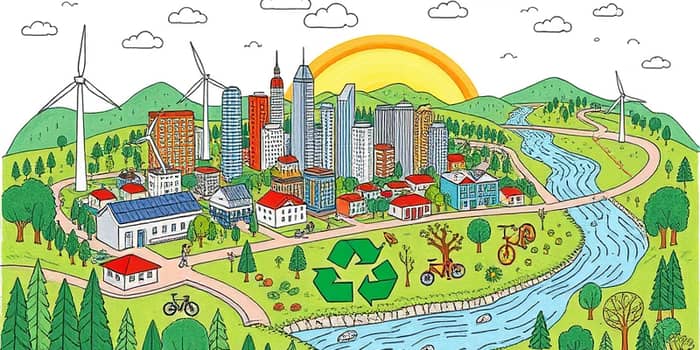
In an era defined by climate change, resource depletion, and escalating waste, the concept of the circular economy emerges as a beacon of hope. By reimagining production and consumption systems, we can foster resilience, innovation, and environmental restoration. This model invites us to shift from a linear take, make, dispose pattern to one that embraces renewal, regeneration, and shared prosperity.
The circular economy is restorative or regenerative by intention and design. Unlike traditional models that emphasize extraction, consumption, and disposal, it seeks to keep materials in use and restore natural capital. At its core, it aims to decouple prosperity from finite resource consumption, enabling economic growth that does not compromise planetary boundaries.
First popularized by the Ellen MacArthur Foundation, circularity invites businesses, governments, and communities to collaborate across value chains. By doing so, we can unlock new opportunities while addressing the global waste crisis and climate emergency.
By moving beyond the extractive mindset, organizations can foster collaboration across sectors, unlocking value from byproducts and unused assets. This holistic perspective generates new revenue streams, conserves resources, and nurtures resilience against external shocks.
The circular economy rests on three interlinked pillars:
Together, these principles guide stakeholders toward designing out waste, maintaining product performance, and nurturing ecological systems.
Adopting circular strategies can drastically reduce global waste, easing the burden on landfills and waste management infrastructures. By keeping products and materials in continuous cycles, we minimize pollution, lower greenhouse gas emissions, and protect biodiversity from the impacts of resource extraction.
A landmark study by the Ellen MacArthur Foundation suggests that circular economy pathways could halve carbon dioxide emissions by 2030 relative to 2018 levels. Innovations such as renewable energy integration, extended product lifespans, and industrial symbiosis collectively contribute to these gains. Such progress is vital for meeting international climate targets and safeguarding ecosystems for future generations.
By implementing closed-loop water systems, industries can achieve significant water conservation and pollution control, reducing freshwater withdrawals and minimizing hazardous effluents. Circular practices also encourage the substitution of toxic materials with safer alternatives, further safeguarding soil and waterways from contamination.
Beyond environmental benefits, the circular economy offers compelling financial incentives. Companies that optimize material flows can achieve up to 70% material savings potential compared to conventional extraction-based methods. This translates into lower production costs, reduced exposure to price volatility, and enhanced profitability.
Startups and established firms alike are discovering that circularity can drive brand differentiation. Consumers increasingly seek out companies that demonstrate innovative service models and sustainable offerings. Those who pivot early can capture market share and build enduring loyalty.
Across the world, cities and companies are pioneering circular solutions that blend ecological stewardship with economic prosperity.
In South Korea, smart waste bins with RFID technology measure food waste, charging households emissions-based fees that cut landfill contribution by nearly 47,000 tonnes over six years.
These examples underscore the versatility of circular approaches and their capacity to drive positive change in diverse sectors.
Despite its promise, the transition to a circular economy faces challenges. Regulatory frameworks may lag behind innovative practices, and upfront investments in new technologies can strain budgets. Cultural habits and consumer mindsets also need to evolve toward valuing longevity over disposability.
Financial barriers can be mitigated through green financing mechanisms and circularity-focused investment funds. Meanwhile, technological barriers are addressed via research collaborations and open-source innovation networks that accelerate the diffusion of circular technologies.
To embark on a circular journey, stakeholders can start by conducting material flow audits to identify waste hotspots and design targeted interventions. Engaging in collaborative platforms enables the sharing of resources, byproducts, and best practices across industries. Investing in modular product designs simplifies repair, upgrades, and recycling processes, reducing end-of-life waste. Educating consumers about sustainable consumption, emphasizing the value of durability and repair, helps shift demand toward circular products.
This comparison illustrates how a shift toward circularity can transform systemic impacts and foster resilience.
The circular economy represents more than an abstract ideal—it is a tangible, scalable pathway to a regenerative world. By adopting lasting planetary stewardship and intergenerational equity, we honor our responsibility to the planet and to one another. Every decision, from design choices to consumer purchases, holds the power to catalyze change.
As businesses innovate, governments legislate, and communities mobilize, we move closer to a future where growth and sustainability walk hand in hand. Now is the moment to act decisively, to reimagine our economic relationships with nature, and to build a legacy of resilience for generations to come.
References