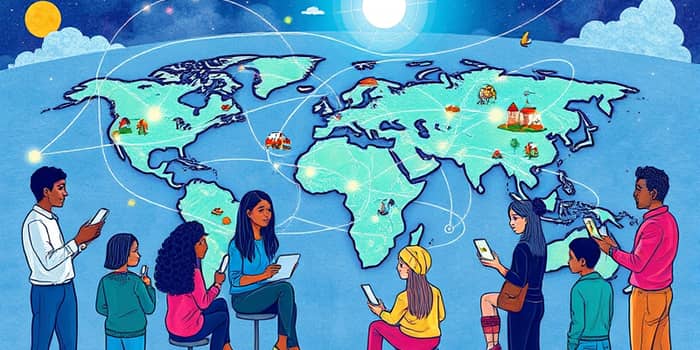
In an era defined by connectivity, millions remain on the wrong side of the digital fence. This article explores how we can join forces to ensure that no community is left behind.
As of 2025, roughly six billion people—about three-quarters of the global population—are online. Yet an estimated 2.2 to 2.6 billion individuals still lack basic access, representing a vast offline population that spans every continent.
High-income nations boast over 90 percent internet adoption, whereas low-income countries lag near 27 percent. While progress in 2024 connected an additional 100–400 million people, growth rates are slowing. The challenge now is to reach those in remote, rural, and underserved urban areas.
This divide is not only measured by physical infrastructure but also by the quality of use. Consider these core dimensions:
These figures highlight that owning a device or having a network in place does not guarantee meaningful digital engagement.
Even in areas with reliable broadband, digital usage disparities persist. Households with higher income and education levels use technology more effectively, deepening socioeconomic inequalities.
Low digital literacy can hinder access to online services, job opportunities, and civic engagement. In this sense, connectivity alone does not translate into empowerment.
Switzerland’s leadership reflects strong public investment, robust broadband infrastructure, and low disaster risk. By contrast, India’s low score highlights the urgent need for resilient networks amid high natural disaster vulnerability.
Bridging the digital divide requires coordinated action by governments, businesses, and communities. These practical strategies can drive change:
Rwanda has pioneered community mesh networks that deliver broadband to remote villages, while Brazil’s Digital Inclusion Plan has created public telecenters offering free internet and training. In parts of Southeast Asia, mobile banking initiatives have empowered farmers to access microloans and market data via basic phones.
These examples demonstrate that with vision and investment, digital transformation can uplift entire communities.
Every stakeholder has a role to play. Policymakers must enact universal service regulations and subsidize rural connectivity. Tech companies can share infrastructure and support open-source platforms. NGOs should tailor training programs to local languages and cultures. Citizens can advocate for affordable broadband and digital literacy in their neighborhoods.
By uniting these efforts, we can build a world where every individual has the tools to learn, work, and participate fully in the digital age. Bridging this divide is not only a moral imperative but also an economic opportunity—when more people connect, societies grow stronger, more resilient, and more prosperous for everyone.
References