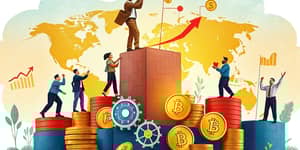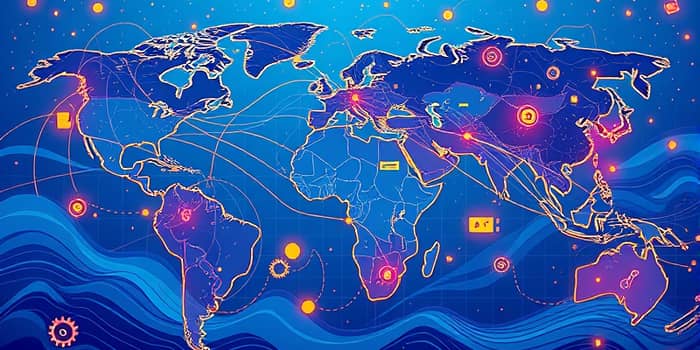
As global forecasts for 2026 articulate a world in flux, economies more than ever must embrace the art of adaptability. Nations are contending with shifting trade policies, geopolitical tensions and rapid technological change. This article unpacks how resilience and adaptability amid trade policy shifts can chart a course through headwinds and empower stakeholders at every level. By synthesizing projections, risks and policy insights, we offer a path toward a more dynamic and stable global growth narrative.
Steady but subdued growth compared to pre-pandemic averages underscores the need for nimble responses. With global expansion projected around 2.6–3.3 percent, variability across regions will test each economy’s ability to pivot. Private enterprises, governments and communities alike will find that private sector flexibility and policy easing are central to offsetting persistent inflation and mounting debt pressures. This narrative explores the contours of that adaptability and highlights actionable strategies.
Leading institutions diverge slightly in their outlooks, reflecting different assumptions on trade impacts, policy responses and technological investments. The IMF expects 3.3 percent growth in 2026, followed by the World Bank’s 2.6 percent forecast. The UN estimates 2.7 percent, while Goldman Sachs and Morgan Stanley sit at 2.9 and 3.2 percent respectively. These figures represent growth projected as steady but subdued, yet they obscure the regional contrasts and sectoral shifts that will define the next phase.
The disparity in projections illustrates how policy choices and innovation trajectories can tilt outcomes. While tariffs attempt to shield domestic industries, they also spur rerouting of supply chains and investment flows. This dynamic environment demands constant recalibration, ensuring that economies can capture gains from both traditional sectors and emerging fields like artificial intelligence.
These projections are set against a backdrop of the 2020s emerging as the weakest growth decade since the 1960s. Advanced economies have already surpassed pre-pandemic per capita incomes, yet many developing nations labour under persistent challenges like high debt levels and widening inequality. Recognizing this historical context underscores why sustained adaptability and targeted support for vulnerable regions are crucial to prevent long-lasting divergence in living standards.
Headline inflation is easing across major economies, though unevenly. The IMF projects a gradual return to target levels in the United States, while the World Bank anticipates global inflation near 2.6 percent in 2026. The UN flags lingering pressures from supply bottlenecks, climate-related disruptions and geopolitical risks. These dynamics illustrate why easing financial conditions and monetary loosening are vital to sustain momentum without igniting fresh price surges.
Central banks face a delicate balancing act. They must withdraw emergency support without choking off growth and reignite consumer confidence. In advanced economies, lower interest rates can bolster investment, yet emerging markets with high debt burdens risk renewed vulnerabilities if global funding conditions tighten unexpectedly.
Growth will remain uneven, shaped by the interplay of demographics, policy measures and external demand. Some regions will outperform the global average, while others struggle to regain lost ground. Policymakers must harness swift readjustments across global supply chains to capture new opportunities and mitigate vulnerabilities.
Adaptability emerges from the synergy of multiple factors. Businesses, governments and international institutions must align incentives to harness these drivers and build momentum.
Policymakers can amplify adaptability by enacting targeted measures that enhance flexibility and resilience over time. Constructive collaboration between public and private sectors is essential to sustain the cycle of innovation and growth.
In the face of 2026’s complex challenges, adaptability is not optional—it is imperative. By cultivating aggressive reflation measures and structural reforms, stakeholders can navigate uncertainty and harness potential growth. The narrative ahead will be written by those who anticipate change, pivot swiftly and collaborate across borders. A fluid global economy does not forsake stability; it secures it through versatility, foresight and shared commitment. As economic conditions evolve, continuous dialogue among policymakers, businesses and civil society will sustain momentum. By aligning public policy with private ingenuity, we can forge a resilient ecosystem that thrives on change rather than resists it.
As we step into a world defined by rapid shifts, the question is no longer whether we will adapt, but how swiftly and effectively each actor will respond. Look back on this period and the successful adaptation stories will shine as testaments to human ingenuity and cooperative spirit. The future is fluid, and it belongs to those prepared to flow, adjust and flourish.
References