As global demands rise and environmental pressures intensify, agriculture is undergoing a profound transformation. Innovations across biology, robotics, AI, and supply chain management are converging to build a more resilient, efficient, and sustainable food system.
In 2026, biologicals are moving from niche to mainstream. Growers and distributors are no longer reliant on one-size-fits-all chemistries. Instead, they adopt designed for specific crops, soils, and stress conditions formulas that boost yields and support soil health.
Market studies project a 10–14% annual growth in biologicals, and 86% of distributors plan to expand offerings. Innovations in biostimulants, biological fertilizers, and biocontrols are integrated into digital agronomy platforms, creating holistic nutrient programs that deliver consistent performance under variable conditions.
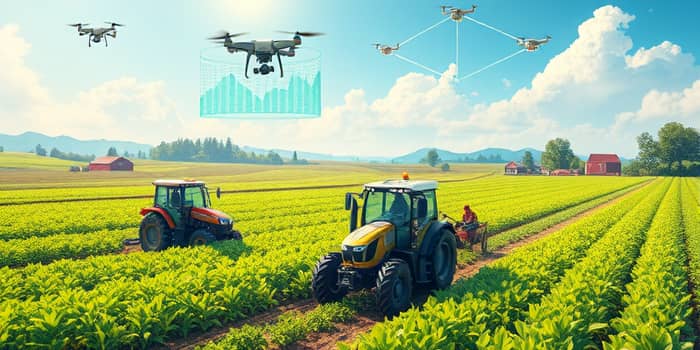
Farm machinery is evolving into smart robots. From autonomous tractors to crop-specific harvesters, field robotics have reached commercial adoption of autonomous platforms. Major players are consolidating expertise to scale machines built for orchards, vineyards, high-value vegetables, and broadacre operations.
These robots integrate effortlessly with variable-rate systems and AI scouting tools, reducing labor needs and minimizing waste. Precision sprayers can now target individual weeds, while robotic harvesters pick fruit at optimal ripeness. As automation spreads, farmers gain time to focus on strategic decisions and farm stewardship.
Artificial intelligence has become the connective layer across the production cycle. Growers are layering AI-driven forecasting and scouting onto existing GPS, autosteer, and sensor networks to obtain real-time, field-specific recommendations. Satellite imagery, plant stress signatures, and microclimate models work together to guide every decision.
AI tools detect nutrient deficiencies, predict disease outbreaks before symptoms appear, and suggest precise application timings. The result is real-time, field-specific recommendations that drive predictable yields, even under volatile weather. By 2026, these platforms are fundamental—linking machinery, inputs, and sustainability goals into one ecosystem.
With heat spikes, drought cycles, and unpredictable rainfall becoming daily realities, technologies that optimize water use are essential. A a true climate-resilience stack combines real-time moisture sensors, temperature-extreme genetics, and precision fertigation to model water availability weeks ahead.
Growers deploy irrigation systems that adjust on the fly, preventing overwatering and conserving resources. Genetic advances yield crops that tolerate heat and drought. Together, these tools help avoid catastrophic yield losses and ensure stable production in the face of climatic extremes.
Soil health has shifted from long-term vision to operational necessity. Engineered microbiomes, once experimental, are now deployed commercially. These tailored microbial communities improve nutrient cycling, suppress pathogens, and enhance root development.
By integrating targeted microbes into planting protocols, farmers build resilient soils that recover quickly from stress. This approach reduces dependence on chemical interventions and promotes operational necessity rather than long-term investment mindsets, ensuring every season remains productive.
Innovation doesn’t stop at the farm gate. The supply chain is embracing transparency, automation, and resilience through digital traceability and AI forecasting.
These advances enable food companies to monitor origin, validate sustainable practices, and quickly respond to disruptions—from weather events to logistics bottlenecks. Ultimately, consumers gain confidence in product quality and ethical sourcing.
Farmers face mounting pressure from labor scarcity, rising input costs, and tighter margins. Technology adoption criteria have sharpened: only solutions that reduce workloads and improve decisions survive.
Engagement from lenders and corporate partners is increasing, with blended finance and carbon-linked incentives lowering adoption barriers. The principle is clear: technology succeeds when farmers can access it easily, not when it merely exists on paper.
Beyond the fields, generative AI revolutionizes food product development and supply chain logistics. AI models predict consumer preferences, optimize recipe formulations, and accelerate innovation cycles.
In operations, AI drives predictive maintenance on machinery and refines labor scheduling. Models decode crop behavior across thousands of varieties and geographies, empowering agronomists to fine-tune practices for maximum resilience and profitability.
As we innovate, balancing carbon goals with food affordability is paramount. Regenerative agriculture practices, backed by AI measurement tools, allow farmers to enhance soil carbon while maintaining yields and cost structures.
Social inclusion is also rising. Initiatives support female farmers, celebrating their leadership and contributions, while youth engagement programs aim to inspire the next generation of stewards. By fostering community-driven approaches, the industry ensures that innovation benefits all stakeholders.
From laboratories to large-scale farms and global supply networks, the future of food hinges on integrated ecosystems, smart connectivity, and measurable impact. As technologies mature and collaborate, our global food system will become more resilient, transparent, and sustainable—nourishing people and planet alike.
References