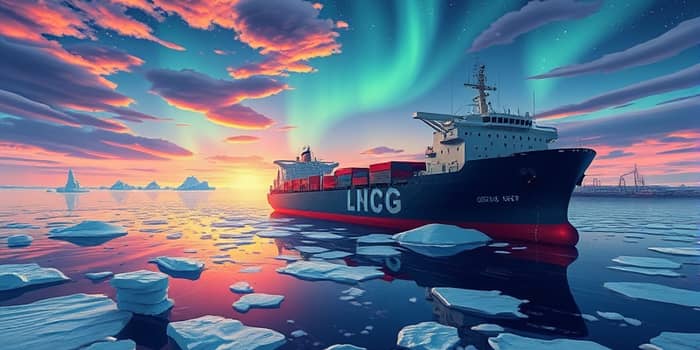
As the polar ice recedes under the pressure of rising temperatures, a profound shift is underway in the world of maritime logistics. What was once an unforgiving frontier is opening to commercial vessels, redefining the map of global trade. Navigators, policymakers, and business leaders stand on the cusp of a new era, one where the ebb and flow of ice charts a course toward opportunity and challenge alike.
In this evolving landscape, understanding the dynamics of Arctic passages and their wider impact on established corridors is essential. From substantial fuel savings to fresh prospects for remote communities, the Arctic offers a narrative of transformation.
The Arctic seaway now features three major Arctic corridors linking the Atlantic and Pacific basins. The Northeast Passage (NSR) skirts Russia’s polar coast, the Northwest Passage (NWP) threads through Canada’s Arctic archipelago, and the Transpolar Sea Route (TSR) cuts directly across the polar ice cap when conditions permit. Today, the NSR serves as the busiest due to relatively manageable ice conditions and robust Russian infrastructure, while the NWP and TSR remain seasonal windows of opportunity.
Maritime operators gain a strategic edge by navigating these paths, but only with careful coordination and specialized vessels designed for cold climates.
By steering north of traditional lanes, carriers can achieve substantial fuel cost savings and reduce voyage lengths by up to 40 percent versus the Suez route. Every nautical mile bypassed translates directly into fewer days at sea, lower bunker consumption, and enhanced scheduling flexibility.
In 2021, Chinese shipping operators reported savings in the tens of thousands of tons of fuel on Arctic crossings. These reductions not only bolster profit margins but also support carbon reduction goals, making the Arctic an appealing option for companies committed to cutting emissions.
Arctic shipping volume has climbed steadily. In 2011, 33 vessels carried 850,000 tons of cargo along the NSR during the brief summer season. By mid-decade, experts projected a surge to 1.5 million tons the following year. Looking toward 2030, two percent of global shipping could be rerouted north, rising to five percent by 2050.
Exponential cargo volume increases will depend heavily on port development. Potential hubs include deep-water and strategically placed facilities:
Current accessibility is fleeting: most routes open only in August and September. Climate models predict the NSR and NWP will enjoy full-month windows by 2030, extending to two or three months by 2060. The TSR, largely blocked today, may emerge as a viable corridor within three decades.
Whether the Arctic blooms into a trade thoroughfare hinges on a web of factors and obstacles. Complex geopolitical dynamics at play include climate change trajectories, shifting global trade flows, transit fee structures, and natural resource developments along coastal states. Each variable can accelerate or stymie shipping growth.
Additional challenges like unpredictable weather, multi-year ice patches, and narrow seasonal windows demand robust risk management and specialized crews.
Two nations have staked early claims to Arctic opportunity. Russia, which controls the NSR, leverages tariffs and icebreaker fleets to regulate traffic. Its economy remains closely tied to exporting oil and gas from the polar north. Meanwhile, China pursues an ambitious Arctic development agenda, financing LNG projects, commissioning icebreakers, and operating dual-direction bulk carriers.
China’s observer status in the Arctic Council, combined with its investments in Siberian LNG terminals, cements its role as both customer and enabler. This partnership aligns Russia’s coastal control with China’s capital and shipping capacity.
Despite the allure of the north, the Suez Canal and Panama route will remain indispensable for containerized traffic and year-round service. Expanded logistical resilience and security define the Arctic’s strategic value: it offers piracy-free passages, avoids canal congestion, and mitigates the macro-economic risk of single-route dependency.
The Arctic won’t replace existing corridors but will serve as a complementary artery, particularly for bulk commodities and energy exports.
As ships chart new polar corridors, remote coastal towns stand to gain jobs, infrastructure, and access to global markets. Fishing fleets, tourism operators, and resource developers can harness improved connectivity for year-round commerce. Careful planning can ensure that growth is inclusive, environmentally responsible, and driven by local needs.
Our collective journey into an Arctic-enabled future demands vision, collaboration, and innovation. From policymakers crafting adaptive regulations to shipping companies outfitting vessels for cold-climate operations, every stakeholder has a role to play. By integrating detailed ice forecasts, investing in resilient infrastructure, and nurturing community partnerships, we can chart a course that balances profit with stewardship.
Strong leadership and clear strategy will transform the Arctic into not just a passageway, but a model for sustainable, inclusive global trade. Let us seize this moment to pioneer charting a sustainable future on the world’s newest maritime frontier.
References