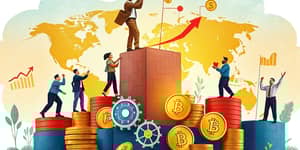
Global economics can be envisioned as an immense chessboard where nations engage in calculated actions and countermoves. Each decision in trade, monetary policy, or technological investment shifts the balance of power and influences asset prices, currencies, and supply chains.
By framing global dynamics as a strategic game, we gain clarity on how the United States, China, and other leading economies align their resources and policy tools to secure an edge. This perspective highlights both the tactical exchanges and the broader, long-term objectives that shape our economic future.
The term geoeconomic chessboard underscores the intricate interplay of trade, technology, and policy as nations vie for supremacy. Unlike a traditional board game, however, players can reshape the rules by introducing new tariffs, sanctions, or digital currencies.
In this setting, headquarters of corporations, diplomatic back channels, and central banks become key strategic outposts. Decisions made in boardrooms in Tokyo or Beijing resonate on trading floors in London and Chicago, triggering ripple effects through financial markets.
At the heart of this contest lie two primary blocs:
Each bloc wields unique advantages. The West commands a global reserve currency, established alliances, and cultural soft power, while China orchestrates vast infrastructure projects, holds strategic commodity reserves, and advances in artificial intelligence.
Nations employ a suite of tactics to fortify positions or challenge opponents. These moves reflect both reactive and proactive strategies, often unfolding simultaneously across multiple fronts.
Central banks serve as powerful pieces in this grand contest. Since 2009, cycles of quantitative easing have driven down yields and inflated risk asset valuations, prompting other banks to respond in turn. This tug-of-war reveals a pattern: a weaker currency in one region compels another to ease policy.
With real rates lingering in negative territory, many governments embrace Modern Monetary Theory principles—deficits are no barrier when the national currency is sovereign. Yet this approach carries risks of future inflationary pressure or asset bubbles. Investors seeking refuge turn to digital alternatives, viewing Bitcoin as a secure digital gold refuge.
Beyond tariffs and interest rates, the race for technological leadership has become a decisive battlefield. Advances in artificial intelligence, high-performance computing, and semiconductor fabrication determine who will dominate the next industrial revolution.
The United States and China channel massive funding into research and development, forging alliances with private firms and academic institutions. Securing supply chains for critical components—such as rare earth minerals and cutting-edge chips—ensures that no side gains an unassailable advantage.
The interplay of geoeconomic tactics creates a complex environment for market participants. With yields suppressed and liquidity abundant, equities and alternative assets often thrive, yet volatility can surge when strategic risks materialize.
To navigate these conditions, investors focus on the diversification and localization of supply chains and adopt stress-testing scenarios. Understanding policy crossroads—where central banks and ministries align or diverge—unlocks potential alpha opportunities.
By mapping these moves against asset classes and currency pairs, professionals can anticipate shifts in market sentiment and adjust their portfolios accordingly. Regions sensitive to export demand or commodity flows become critical barometers of broader trends.
As the geoeconomic chessboard continues to evolve, no player remains static. New alliances form, policy stances shift, and unforeseen events—such as pandemics or cyber-attacks—alter trajectories. Embracing a strategic mindset, organizations can harness scenario planning and resilient supply chain management to stay ahead.
Ultimately, success in this arena demands both tactical acumen and long-term vision. By understanding the motives and tools of each major actor, decision-makers can craft responses that safeguard interests, capture emerging opportunities, and contribute to a stable global economy.
References