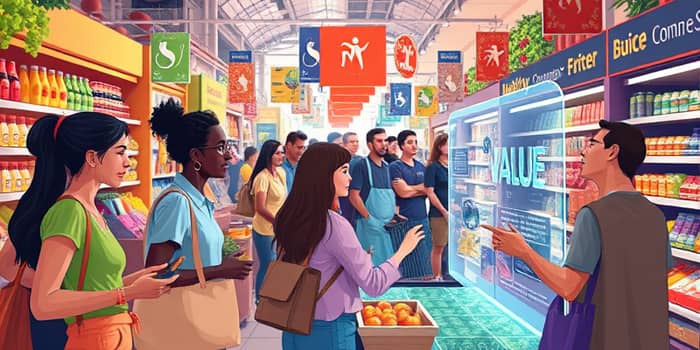
In 2026, global consumers navigate a complex landscape defined by an ever-widening income divide, unprecedented technological innovation, and a renewed emphasis on health, wellness, and authentic experiences. Shoppers are no longer passive recipients of marketing messages; they demand personalized value-driven experiences that reflect their unique priorities and budgets. This article examines the shifting preferences that are reshaping industries, the emerging market dynamics favoring scale-driven players, and the strategic paths that businesses must forge to thrive.
As inflation pressures persist and economic bifurcation intensifies, consumers at every income level seek data-driven solutions to balance cost, convenience, and values. From the rise of autonomous AI agents offering tailor-made promotions to the resonance of functional foods in post-pandemic lifestyles, the modern shopper’s journey is an interplay of digital engagement, health consciousness, and experiential cravings.
The global economic divide has deepened, with high-income consumers sustaining discretionary spending through wage growth and wealth effects, while lower-income households face a steady erosion of purchasing power. In markets such as the UK, households in the bottom quintile have experienced year-over-year declines in disposable income, driving a dramatic shift toward private label and discount brands.
Across the US, UK, and Australia, price reigns supreme as the top purchase driver. Approximately 70% of US shoppers actively seek deals, and 71% are willing to switch brands for better prices. This behavior translates into a 67% increase in deal-seeking year over year, illustrating the rising dominance of cost-conscious decision making.
Inflation and tariffs compound these trends: US retail prices have surged by 4.9%, with imports climbing 6% and domestically produced goods up 4.3%. Categories like apparel and furniture bear the brunt, forcing low-income families toward lower-priced substitutes and fueling the rise of value-centric consumption across regions.
Technology has become the linchpin of modern retail strategies, empowering businesses to deliver hyper-personalized shopping journeys at scale. Agentic AI—self-directed software agents—now analyze consumer intents in real time, crafting individualized offers, cross-selling opportunities, and upsells that boost basket sizes and foster deeper loyalty.
Simultaneously, social commerce is reshaping the e-commerce landscape. By 2026, an estimated 17% of online sales will occur via social platforms, with US livestream shopping alone approaching $70 billion in revenue. Millennials and Gen Z lead this frictionless buying revolution, favoring live demonstrations, interactive content, and instant purchasing capabilities embedded within social feeds.
These technological advances offer a double-edged sword: while large retailers harness data networks and AI to cement their market dominance, smaller players must innovate rapidly or face consolidation pressures. Scale-driven efficiency and digital reach have never been more critical in capturing consumer attention and spending.
The post-pandemic emphasis on well-being persists, with roughly 49% of US adults prioritizing health and wellness above all else. Functional foods—fortified with probiotics, adaptogens, or enhanced nutrients—are surging in popularity, while low- and no-alcohol beverages address the growing moderation trend among younger drinkers.
Experiences now eclipse product ownership, as travel, dining, and entertainment outpace traditional retail growth. Platforms like Airbnb report 491 million nights booked, generating over $82 billion in value. Consumers, particularly Gen Z and millennials, value unique flavors, immersive events, and meaningful connections that transcend material goods.
Flavor innovation fuels product differentiation, with over 50% of shoppers willing to switch brands for novel tastes. This quest for novelty intersects with health priorities, driving demand for plant-based alternatives, reduced sugar formulations, and convenient wellness solutions suitable for busy lifestyles.
While overarching trends shape the global marketplace, regional and demographic variations demand tailored strategies. Understanding local behaviors and cultural preferences is essential for brands seeking resonance and relevance.
In North America and Europe, the tug-of-war between premium aspirations and price sensitivity manifests in premium brand trade-downs. In markets across Asia, digital natives embrace social commerce accelerators, making livestream shopping a mainstream channel. Adapting to these localized nuances, brands can forge deeper consumer connections and unlock new growth avenues.
In this fluid landscape, agility and innovation trump incremental optimization. Businesses must harness emerging trends, deploy data-driven tactics, and pivot swiftly to maintain relevance. The following strategic imperatives can guide leaders toward sustainable growth:
Retailers with robust media networks can monetize consumer attention through targeted ad placements, while CPG companies must revisit R&D and flavor pipelines to sustain engagement. Smaller firms can differentiate by championing local values, niche personalization, and hyper-responsive customer service.
Ultimately, the winners in 2026 will be those who synthesize scale-driven efficiencies with purpose-led storytelling, forging emotional bonds that stand resilient against economic pressures. By aligning product innovation, pricing strategy, and digital engagement with evolving consumer preferences, businesses can not only survive but thrive in an era of relentless change.
As the global consumer’s priorities continue to shift, the imperative for brands is clear: deliver authentic value, embrace technological empowerment, and craft experiences that resonate on both pragmatic and emotional levels. In doing so, they will unlock new frontiers of growth and forge lasting loyalty in the marketplace of tomorrow.
References