In an era of rising tensions and shifting alliances, the global economy remains a testament to human ingenuity and cooperation. By understanding its patterns, we can chart a path toward shared prosperity.
Globalization today stands at a record high of 25% on a 0–100 scale, covering 180 countries and encompassing 99.6% of world GDP and 99.0% of the global population. This expansion is based on more than nine million data points across 14 distinct flow types, demonstrating a resilient, intricate network of trade that weaves nations together.
Despite a decline in the U.S.-China trade share—from a 3.6% peak in 2015 to 2.0% in 2025—87% of global imports and 91% of exports bypass the U.S. altogether. This signifies an unprecedented degree of connectivity that transcends bilateral tensions, underscoring the breadth of modern supply chains.
Behind the headline figures lies a confluence of forces shaping the future of global trade, investment, and migration:
These trends illustrate how technology and adaptability offset headwinds, enabling sustained expansion even amid tariff hikes and geopolitical uncertainty.
Forecasts from leading institutions paint a picture of steady, if uneven, growth over the next several years:
Even with a modest slowdown in 2026 driven by tariffs, the global economy is projected to grow at an average annual rate of 2.6% through 2029—mirroring the pace of the past decade.
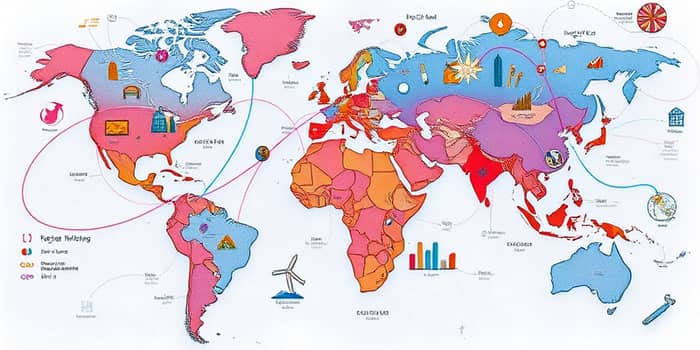
The geography of globalization reveals both leaders and laggards. Europe tops the regional rankings, followed by North America and the Middle East & North Africa. Yet individual country standings highlight remarkable diversity:
Meanwhile, emerging markets face headwinds from debt burdens and climate-related shocks, even as the UAE records its largest globalization gains since 2001.
Volatile geopolitics and fiscal strains pose clear threats, yet the data show limited fragmentation: only 4–6% of flows have shifted between rival blocs over the past decade. As John Pearson, CEO of DHL Express, affirms, “Globalization is holding its ground – and that alone speaks volumes about its value.”
To safeguard progress, stakeholders must champion:
Such measures will help mitigate downside risks—ranging from renewed tariff wars to climate extremes—and lay foundations for inclusive growth.
Steven Altman of NYU Stern reminds us, “The politics and policy surrounding globalization are much more volatile than the actual flows.” For businesses, this means diversifying supply chains, embracing digital transformation, and forging cross-border alliances.
For individuals, the era of mobility offers opportunities to build global networks, acquire sought-after skills, and foster cultural fluency. By leveraging innovative financial and data flows, we can drive solutions to poverty, climate change, and inequality.
The global economy is a living tapestry—rich in diversity, dynamic in movement, and resilient in design. As we navigate uncertainties, our collective creativity and collaboration will determine the patterns we weave next.
Now is the time to embrace our shared future, weaving strands of technology, sustainability, and compassion into the world’s most ambitious masterpiece.
References