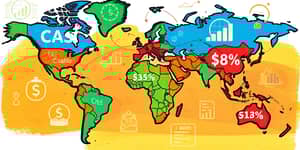
Economic growth is the tapestry that weaves together prosperity, opportunity, and shared progress. As global forecasts fluctuate, nations and communities must come together to place each piece of the jigsaw in its right position.
This article explores the current landscape, regional dynamics, trade and investment patterns, inflation pressures, and the policy pathways that can unlock a brighter future for all.
Forecasts for 2026 suggest AI-driven capital spending fueling pockets of dynamic expansion in select markets, even as overall growth is projected at 2.7%, slightly below the 2.8% estimated for 2025. The IMF’s upward revision to 3.3% and Goldman Sachs’s 2.8% estimate highlight the variance in outlooks.
Despite these pockets of strength, subdued investment in many regions and persistent uncertainty from geopolitical tensions temper enthusiasm. Easing inflation and monetary loosening provide relief, but structural headwinds remain.
Economic momentum is shaped by engines of innovation, policy support, and consumer confidence, yet it is held back by debt burdens, tight fiscal space, and trade barriers.
Growth trajectories vary widely across regions, driven by domestic policy, external demand, and unique challenges. Advanced economies face slower expansions, while some emerging markets accelerate on consumption and investment.
These figures underscore that advanced economies may remain below pre-pandemic growth averages, while several developing regions leverage resilience and public investment to outpace global trends. Policymakers must address persistent uncertainty from geopolitical tensions to sustain momentum.
Global trade rebounded by 3.8% in 2025 as firms front-loaded shipments ahead of new tariffs, yet is expected to slow to 2.2% in 2026 as temporary boosts wane. Investment growth remains subdued, although pockets of AI-related capital spending emerge in large markets.
Inflation, having peaked at 4.0% in 2024 and easing to 3.4% in 2025, is projected to slow further to 3.1% in 2026. Still, high prices for food, energy, and housing continue to squeeze real incomes, especially for low-income households.
Beyond macro tools, targeted social measures to protect vulnerable groups will be crucial for maintaining social cohesion and preventing long-term scarring.
Meeting the challenges of muted investment, high debt, and climate shocks requires deliberate, collaborative action. Policymakers should restore fiscal buffers through credible medium-term plans and prudent debt management.
Rebuilding trust in a rules-based multilateral trading system is vital. Renewed commitment to open markets, transparency, and cooperation can mitigate fragmentation risks and support cross-border flows of goods and capital.
Development finance must be scaled up, guided by frameworks like the Sevilla Commitment, to reform the international financial architecture, expand concessional financing, and improve debt workout modalities.
Crucially, a renewed commitment to sustainable development goals can guide investments toward renewable energy, resilient infrastructure, and social protection schemes, aligning growth with equity and environmental stewardship.
Assembling the global jigsaw demands vision, solidarity, and pragmatic action. Each policymaker, business leader, and community stakeholder holds a piece of the puzzle. By pooling resources, sharing knowledge, and prioritizing inclusive outcomes, we can navigate today’s uncertainties and build a more resilient tomorrow.
The path forward lies in blending innovation, coordinated policy, and unwavering commitment to shared prosperity. Together, we can turn the scattered fragments of growth into a coherent mosaic that uplifts all nations and secures a sustainable future for generations to come.
References