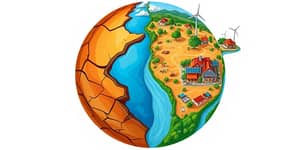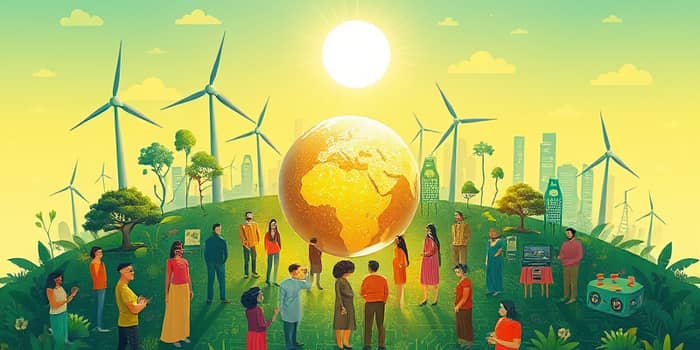
The aftermath of COVID-19 unveiled deep structural weaknesses, inspiring visionaries to propose the Great Reset as an economic recovery plan to revitalize societies across the globe.
By advocating for coordinated global leadership, this bold agenda aims to usher in an era of purposeful growth, resilience, and shared prosperity.
First articulated by Klaus Schwab and his colleagues at the World Economic Forum in June 2020, the Great Reset borrows its name from Richard Florida’s research on transformative societal shifts.
Florida described resets as periods of paradigm-shifting systemic innovation that historically emerge after deep economic contractions, such as the Long Depression and the Great Depression.
These epochs of innovation laid the groundwork for modern welfare states, public health systems, and industrial standards that define today’s societies.
Critics argue that past reset efforts sometimes favored elites, highlighting the need for transparency, inclusive dialogue, and accountability mechanisms to ensure that benefits reach all layers of society.
The first pillar calls for a stakeholder economy to replace shareholder capitalism, urging corporations to measure success by social and environmental impact rather than quarterly profits alone.
By engaging local communities and civil society, businesses can foster shared value through collaborative innovation, rebuilding trust and driving inclusive development.
Case studies in renewable energy and fair trade illustrate how adopting stakeholder governance can yield both financial returns and societal benefits.
In regions like Southeast Asia, cooperative enterprises have demonstrated how stakeholder-led models can drive sustainable agriculture, improve livelihoods, and conserve natural resources.
Building on this foundation, the second pillar focuses on resilient, equitable, and sustainable systems by directing finance toward green infrastructure and social services.
Projects like urban reforestation and flood-resilient housing demonstrate how public-private partnerships can protect vulnerable communities while generating employment.
Initiatives such as community-owned solar farms and microfinance programs underscore the potential for targeted investments to empower marginalized groups and reduce regional disparities.
Ensuring equitable access to healthcare, education, and clean water underpins a truly sustainable recovery.
The third pillar champions technological transformation, leveraging fourth industrial revolution innovations such as artificial intelligence, blockchain, and renewable power networks.
These tools can optimize supply chains, democratize access to education, and revolutionize healthcare delivery through telemedicine and predictive analytics.
By aligning research and development incentives, nations can scale breakthrough solutions that benefit people and the planet alike.
However, ethical frameworks and regulations must guide technological deployment to prevent privacy breaches, job displacement, and unequal access to innovations.
International Monetary Fund leaders identified three interrelated recovery streams to complement the pillars outlined by the WEF.
Adhering to these principles ensures that stimulus packages promote environmental stewardship and social inclusion in tandem.
Monitoring progress through standardized metrics will be critical, ensuring that environmental restoration and social uplift are tracked alongside economic indicators.
At the launch of the initiative, global government debt had soared to record levels, while unemployment rates reached peaks unseen since the Great Depression.
Major economies deployed stimulus plans: the European Union’s €750 billion fund, the United States’ trillion-dollar aid packages, and Asia’s substantial infrastructure outlays.
Despite these measures, experts warn that without structural reform, future shocks could quickly undermine short-term gains.
According to the IMF, without structural reform, global GDP losses could exceed $4 trillion beyond 2020 levels, reinforcing the urgency of coordinated action.
To institutionalize the Great Reset’s vision, governments must enact policies that catalyze private-sector alignment with public goals.
Striking the right balance between regulation and market freedom will be critical to sustaining economic dynamism.
Multilateral cooperation, from climate accords to digital trade pacts, can bolster resilience and equity worldwide.
Empowering local governments and civil society organizations to participate in policy design can foster ownership and adaptability at the grassroots level.
The rapid shift to remote work necessitates robust upskilling and reskilling programs, particularly in digital and green sectors.
Investing in vocational training, online education platforms, and apprenticeships is key to equipping workers for emerging roles.
Meanwhile, safeguarding food security demands strengthening supply chain transparency, investing in sustainable agriculture, and coordinating policies to avoid protectionist measures.
Regulating gig economy platforms to provide benefits and protections, while encouraging corporate responsibility, can help modernize labor markets ethically.
The Great Reset outlines a structured timeline to guide transformation across political, economic, and environmental realms.
By synchronizing reforms and investments, stakeholders can co-create resilient systems that anticipate future challenges.
Global solidarity and shared governance frameworks are essential to maintaining momentum beyond national interests.
Adopting digital governance tools can enhance stakeholder engagement, facilitate data-driven decision making, and strengthen resilience against future crises.
The Great Reset’s champions believe that combining innovation, collaboration, and purpose can tackle persistent issues such as inequality, climate change, and public health vulnerabilities.
Citizens, businesses, and governments are called upon to contribute ideas, capital, and leadership to this generational project.
Embracing responsible capitalism balancing profit and purpose offers a pathway to a fairer, greener, and more prosperous world for all humanity.
Ultimately, the Great Reset invites each of us to imagine what a post-pandemic world could look like—a world where prosperity is shared, ecosystems thrive, and human ingenuity solves complex challenges.
By integrating lessons from history, leveraging modern tools, and committing to collective stewardship, society can transform disruption into an unprecedented opportunity for global renewal.
References