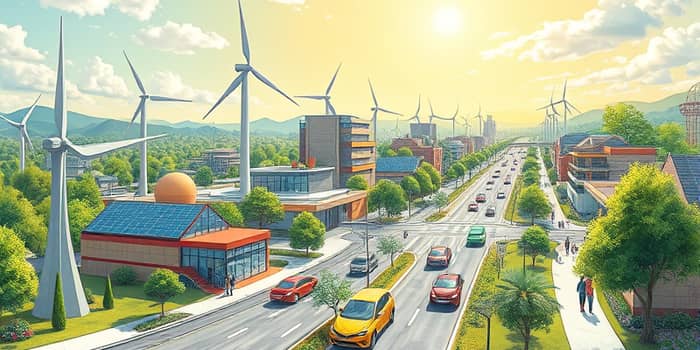
From boardrooms to communities, the green economy is rapidly becoming the beating heart of global prosperity, offering unprecedented opportunities for innovation, job creation, and ecological stewardship.
The scale of sustainable enterprise has reached astonishing levels. In 2024, the global green economy has surpassed USD 5 trillion in annual value, and analysts believe it is projected to exceed $7 trillion by 2030. Alternative forecasts paint a picture of even faster growth, with some markets already at USD 7.92 billion in 2024 climbing at a compound annual growth rate (CAGR) of 15.63% to nearly USD 30 billion by 2033.
Green revenues have outpaced traditional sectors, expanding at twice as fast as conventional revenues since 2020. Companies deriving more than half of their sales from green initiatives command a 12–15% premium on their valuations, reflecting investor confidence in sustainable business models.
This dynamic expansion underscores a fundamental shift: ecological responsibility now drives economic advantage, creating a new paradigm where purpose and profit are inseparable.
Capital is flowing into green solutions at record levels. In 2024, China alone invested USD 659 billion in clean energy—50% more than any other nation—solidifying its leadership in solar, wind, battery production, and green technology patents.
Global adaptation measures—such as flood management, climate-resilient materials, and advanced cooling systems—account for over 20% of green investment, translating to roughly USD 1.1 trillion annually. Since 2010, key technologies have seen remarkable cost declines:
These efficiencies now enable 55% of potential emissions reductions to be achieved with cost-competitive solutions, while only 20% require minor premiums and 5% depend on changes in consumer behavior.
The green transition is set to reshape labor markets. By 2030, an estimated 14.4 million roles will be directly impacted, with a net gain of 9.6 million new jobs despite the phase-out of older positions.
Demand for green skills is surging: vacancies will leap from 67 million in 2025 to 241 million by 2030—a 260% increase compared to just 0.8% growth in the overall workforce. Professionals equipped with sustainability expertise have 54.6% higher hiring rates globally, and 80.3% higher in the United States, often commanding premium salaries.
This transformative wave extends beyond traditional “green” roles: today, 53% of hires in non-green job titles require sustainability competencies.
Several industries are accelerating faster than the rest:
Within technology and media, green postings soared 60% in 2024, reflecting a broader integration of environmental principles across corporate functions.
Green companies consistently outperform peers by securing a lower cost of capital and attracting diversified funding—ranging from public subsidies to equity injections. Regulatory frameworks are evolving to reward sustainability, building ecosystems where green startups thrive.
Technological maturation and cost efficiencies form powerful growth accelerators, allowing innovators to capture market share and deliver robust financial returns while driving environmental impact.
Despite its promise, the green economy faces hurdles:
Addressing these risks requires coordinated policy support, robust training programs, and targeted social protections to ensure no community is left behind.
Guiding the green economy are five foundational principles that align growth with ecological limits:
Organizations that embrace these principles position themselves for enduring success and positive environmental impact.
Today, leadership is tested by rapid change. While China is ushering much of green innovation eastward, Europe and North America maintain critical strengths in regulatory design, research excellence, and capital markets.
CEOs and policymakers who make bold moves—investing in low-carbon infrastructure, re-skilling workforces, and fostering public-private partnerships—will steer their organizations and economies toward lasting resilience.
Looking past 2026, the intersection of AI and sustainability promises new avenues for efficiency and impact. Geopolitical shifts will influence supply chains for critical minerals, while financial institutions ramp up green financing targets—such as the European Bank for Reconstruction and Development’s goal to abate 40 million tonnes of GHG via sustainable pathways.
Regions that invest in next-generation green skills and technologies will capture a disproportionate share of the resulting growth and innovation.
To navigate and contribute to this transformation, stakeholders can take decisive actions:
The green economy is not merely a trend—it is a fundamental shift in how we define and achieve prosperity. By harnessing innovation, empowering workforces, and upholding ecological principles, we can build a future where economic growth and environmental stewardship advance hand in hand.
This moment offers a rare opportunity: to reimagine markets, redefine success, and renew our planet. Those who seize it will shape the world for generations to come.
References