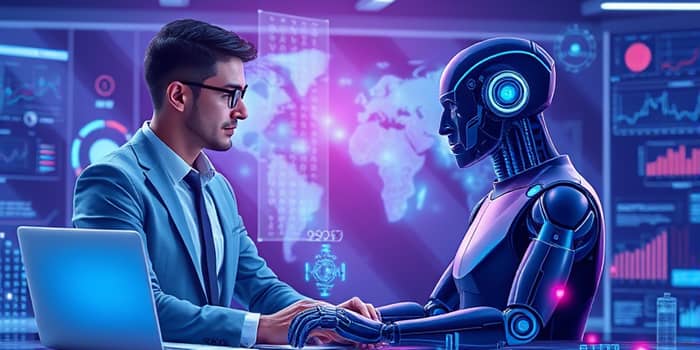
In an era where technology rapidly evolves, the partnership between humans and artificial intelligence is not just a concept—it’s a transformative reality reshaping how we work, innovate, and grow. This article delves into the profound impact of human adaptability and accountability alongside AI's precision, offering practical insights for enterprises, employees, and policymakers seeking sustainable gains.
The shift from automation to augmentation signals that AI is no longer a solitary agent but a collaborator, augmenting human skills and judgment. Enterprises that embrace symbiotic workflows with AI-driven tools report not only higher throughput but also greater agility in problem solving and innovation. By focusing on teamwork rather than replacement, organizations can unlock levels of performance that neither humans nor machines could achieve alone.
Quantifying the benefits of human-AI teams reveals compelling outcomes:
These metrics highlight that when AI is harnessed thoughtfully, the combined force of human insight and machine efficiency drives tangible advantages.
While AI adoption raises concerns about displacement, the reality is nuanced. Overall employment in the U.S. has climbed since 2022, yet sectors with high AI exposure faced modest declines. Nearly half of workers believe AI could perform their roles, fueling anxiety even as many organizations report little to no impact on headcounts in recent years. This paradox arises because firms often hesitate to hire amid AI’s potential, not its proven capabilities, creating a lag between investment and workforce adaptation.
Regions with surging AI demand sometimes see fewer entry-level openings, underscoring the need to balance innovation with inclusive hiring practices. Policymakers and business leaders must collaborate to ensure AI augments rather than sidelines talent across experience levels.
AI skills command a significant wage premium, especially in markets where talent is scarce. Job postings seeking AI expertise in the U.K. offer salaries up to 23% higher than average, outpacing traditional degree-based premiums. Beyond pay, AI-focused roles often include superior benefits like remote flexibility and enhanced parental leave.
This disparity reveals that while AI may automate routine tasks, it also complements experienced workers while substituting routine tasks, enriching roles that demand judgment and tacit knowledge.
When human expertise meets AI capabilities, organizations unlock:
Across sectors, practical applications illustrate the synergy’s power. In energy utilities, AI continuously monitors equipment for anomalies, flagging potential failures while human engineers assess the context and authorize interventions. This collaboration reduces downtime and enhances safety.
In marketing and sales, AI-driven analytics process customer behaviors instantly, allowing teams across time zones to adjust campaigns and personalize outreach. Sales cycles shrink as representatives leverage AI-generated insights to close deals swiftly.
For gig workers, AI tools streamline order selection and routing, leading to a 3.16% increase in task throughput and reduced cognitive overload during peak demand periods. This translates into higher earnings and improved job satisfaction.
Despite promising gains, obstacles remain. Skill shortages pose a significant barrier: training programs lag behind evolving AI technologies, leaving many organizations struggling to fill critical roles. Data privacy concerns further complicate human-AI partnerships, as sensitive information must be protected throughout collaborative workflows.
Moreover, entry-level positions may shrink in highly automated contexts, and the AI productivity paradox—where investment doesn’t immediately translate to output—can dampen enthusiasm. Maintaining strong team cohesion and addressing co-worker isolation are essential to sustain collaborative momentum.
To harness the full potential of human-AI synergy, leaders should:
By centering on augmentation over replacement, organizations can cultivate a workforce that leverages the best of both human ingenuity and machine intelligence.
As we navigate the evolving landscape of work and technology, embracing human-AI symbiosis for sustainable growth offers a path to resilience, innovation, and shared prosperity. The future of productivity lies not in sidelining people but in empowering them with intelligent tools that amplify their unique strengths.
References