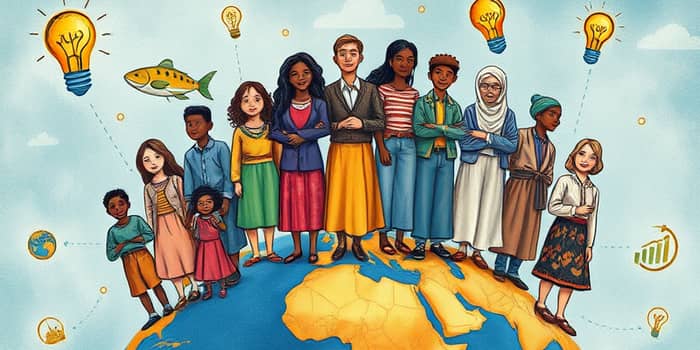
Humanity stands at a crossroads as global population trends reshape our collective destiny. From bustling cities to rural communities, the forces of birth rates, ageing, and migration are crafting a new economic narrative.
While numbers and projections may feel abstract, behind each statistic lies the potential of individual lives, families, and societies striving for a better future. By recognizing the power of these trends, we can design strategies that empower every generation.
As individuals, we hold the power to shape these trajectories. Community engagement, civic participation, and personal development create ripples that influence national outcomes. Your choices today contribute to the economic tapestry of tomorrow.
Fertility rates have fallen below replacement thresholds in most developed nations, while vibrant youth populations persist in Sub-Saharan Africa. China, Europe, and Japan confront shrinking birth rates and accelerating ageing.
These changes lead to unprecedented population ageing pressures, testing pension systems, healthcare infrastructure, and social safety nets. Nations must adapt quickly to sustain prosperity and social cohesion.
The United States and a few emerging markets defy the global slowdown through higher birth rates and continued immigration. Their evolving demographic profiles illustrate how policy choices can influence long-term growth trajectories.
Demographics act like a silent force behind consumption patterns, investment levels, and labour market dynamics. When the working-age ratio declines, it translates into a negative technological shock to growth, reducing output and market dynamism.
Global growth forecasts predict a slowdown to near 3% by 2026, with advanced economies lagging and emerging markets providing the bulk of expansion. Trade fragmentation and policy uncertainties could further tighten growth prospects, underscoring the need for proactive planning.
Some regions can turn demographic change into an asset. Sub-Saharan Africa may enjoy a transformative demographic dividend, boosting annual GDP per capita growth by 0.37 percentage points through 2050. Central Asia and the SEMED region currently benefit from youthful cohorts but face looming headwinds as fertility declines.
Capturing this dividend depends on policy, infrastructure, and human capital investments. Education systems must equip young people with digital skills, critical thinking, and adaptability to meet the demands of tomorrow’s economy.
Technology and migration offer powerful tools to counteract demographic headwinds. By integrating artificial intelligence and encouraging responsible migration, nations can refresh their labour pools and drive productivity gains.
Examples abound: countries that embraced tech hubs and talent visa programs have seen surges in entrepreneurship and economic output. Embracing a global talent strategy can transform potential deficits into sustainable growth engines.
Mitigating demographic challenges demands a holistic approach. No single policy will suffice. Instead, leaders must blend social, economic, and technological initiatives to build resilience.
Firms that adopt continuous workforce learning initiatives gain a competitive edge. By reskilling teams and nurturing diverse leadership, businesses can thrive amid demographic transitions.
The journey toward sustainable growth is both collective and personal. Governments, businesses, and individuals must collaborate to build inclusive economies that value every age group.
On a community level, creating intergenerational programs fosters mutual learning and social cohesion. Schools, workplaces, and civic organizations can host mentorship networks that bridge age divides, unlocking shared expertise.
Climate change intersects with ageing and migration trends as younger generations spearhead the green economy and sustainability sectors, creating new career pathways and strengthening national resilience.
For individuals, cultivating financial literacy and wellness habits ensures preparedness for longer lifespans. Embracing lifelong learning and health-conscious lifestyles empowers citizens to contribute meaningfully at every stage of life.
Ultimately, demographics are not destiny. They represent a canvas on which we can paint a future defined by innovation, inclusion, and shared prosperity. By understanding the human factor, we seize the opportunity to write a new chapter of global economic growth.
Now is the time for bold vision, strategic collaboration, and compassionate leadership. Together, we can harness the power of demographic trends to forge a world where every person can thrive—today and for generations to come.
References