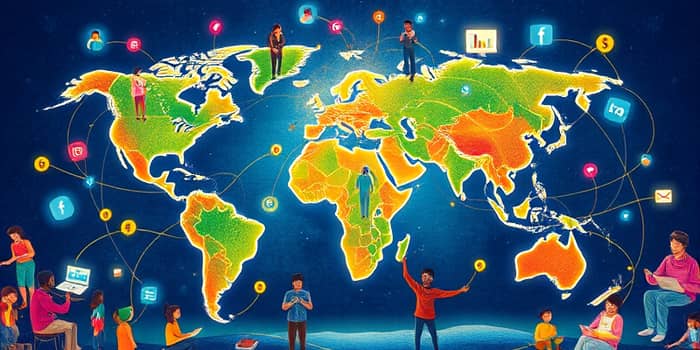
In an era defined by rapid digital transformation, social media platforms have become powerful engines driving not only communication but also global economic confidence. From commerce and advertising to political discourse and financial moods, the digital realm shapes how individuals and businesses perceive and interact with the economy.
With 5.66 billion active users worldwide, representing nearly 69% of humanity, social media’s influence is undeniable. Platforms like Facebook, YouTube, Instagram, and TikTok serve as hubs where information, trends, and emotions converge. Internet penetration has climbed to 73.2%, while social media usage grows almost 5% annually, adding over 250 million users in a single year.
This rapid expansion fuels shifts in consumer behavior, marketing strategies, and the cross-border flow of opinions—ultimately molding economic sentiments at every level.
Brands have turned to social platforms for their unparalleled reach. In 2025, global social media ad spend reached $276.7 billion, nearly a third of all digital advertising, and is projected to hit $300 billion in 2026. This investment represents just over 1% of world GDP, highlighting the strategic value companies place on these channels.
Return on investment varies by platform: Facebook leads with 28% of marketers citing highest ROI, followed by Instagram (22%) and YouTube (12%). This distribution underscores how different audiences and content formats drive value across industries.
The rise of social commerce illustrates a fundamental shift in shopping behavior. In the next five years, one in seven global consumers plans to shop primarily through social platforms. Video-driven commerce—especially live streams and short-form clips—now commands the largest share of social e-commerce revenue.
As digital storefronts proliferate, social media is redefining trust and convenience, encouraging shoppers to browse, engage, and buy within a unified, immersive environment.
The power of influencers has eclipsed traditional digital advertising in many sectors. In 2025, brands spent more on influencer marketing than on paid ads, fueling a $32.5 billion market. For each dollar invested, companies saw an average return of $5.78—evidence of the remarkable impact of authentic endorsements.
Top creators collectively earn nearly $720 million annually, and platforms like Instagram and YouTube have become stages where charismatic storytellers translate followings into significant purchasing power. Notably, 61% of consumers trust influencer recommendations, and 70% believe these collaborations yield positive ROI.
Short-form video dominates engagement. On Instagram alone, 139 million Reels are watched every minute. TikTok boasts engagement rates three to five times higher than other platforms, making it a critical arena for brands and content creators. User-generated content, especially authentic reviews and tutorials, amplifies trust and spurs commerce.
This convergence of entertainment and shopping accelerates transactional decisions, driving economic activity directly from feeds and stories.
Social media’s role as an information source carries significant influence over public mood and political outlook. In developing nations, about 77% of users view social platforms positively for democracy, while skepticism is higher in Europe and the United States. YouTube has overtaken Facebook as a news source for 35% of U.S. adults, and TikTok is emerging as a vital channel for younger demographics.
These trends reveal how digital narratives can sway public confidence, market demand, and, ultimately, economic policy.
Key indicators show a robust link between social engagement and economic sentiment. Consumer research, brand interactions, and online reviews all contribute to purchasing decisions, while rising advertising budgets reflect corporate faith in sustained growth. Emerging markets, particularly in Asia and Africa, are driving the next wave of global social adoption, signaling rich opportunities for businesses ready to engage diverse audiences.
Just over a decade ago, only one in four people used social media; today, nearly six in ten are connected. With an average of 28 million new users joining each month, the trajectory is clear: digital platforms will continue to redefine how we shop, socialize, and form opinions.
However, the very channels that drive economic sentiment can also spread misinformation and volatility. To harness social media’s potential, stakeholders—from governments to brands to individuals—must cultivate digital literacy, responsible communication, and transparent practices.
As we navigate the evolving landscape, we hold an unprecedented opportunity to shape global economic sentiments through innovation, inclusivity, and empathy. By recognizing the power of unprecedented connectivity and real-time engagement, we can build a more resilient, informed, and dynamic economic future for all.
References