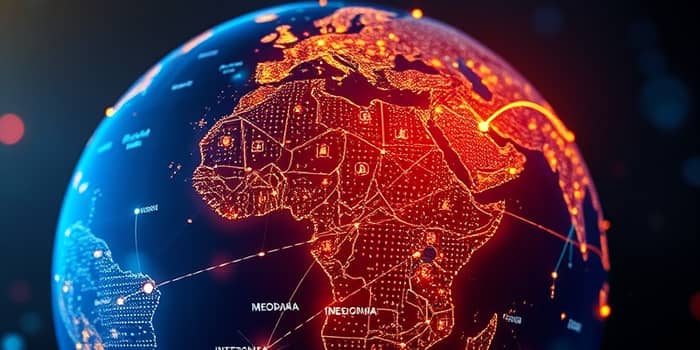
In 2026, the global economy stands at a crossroads, where challenges and opportunities converge in unprecedented ways. This analysis explores the forces shaping our interconnected future and offers practical guidance for navigating complexity.
Forecasts for worldwide expansion cluster between 2.7% and 3.3% annual growth, reflecting both caution and potential. While estimates fall slightly below the pre-pandemic average of 3.2%, they underscore an economy adapting to new constraints.
Variations across institutions reveal the tug of multiple factors:
But behind these averages, regional disparities persist. A clear picture emerges in the table below:
The resurgence of tariffs and retaliatory measures has reshaped global commerce. In 2026, front-loaded trade gains give way to a gradual slowdown of cross-border exchanges.
Businesses must stay agile, diversifying supply chains and engaging in dialogue to mitigate sudden policy shifts.
Amid fragmentation, innovation emerges as a unifying force. Tokenized cross-border payments systems are rolling out across G20 economies, reducing costs and settlement times.
Key technological trends include:
These developments offer firms concrete paths to efficiency and resilience, provided they invest wisely and monitor evolving standards.
Headline inflation is projected to ease from 3.4% in 2025 to roughly 3.1% in 2026, yet volatility endures. Supply bottlenecks, geopolitical flashpoints, and climate shocks keep prices elevated in key sectors.
Energy markets, for instance, see a projected 15% price drop in 2025 and 7% in 2026 before a rebound. Policymakers must balance stimulus with vigilance to preserve purchasing power.
The journey toward sustained expansion is fraught with headwinds, but also supported by powerful undercurrents of adaptation and innovation.
Yet,
For decision-makers, the imperative is clear: embrace collaboration, prioritize sustainable investment, and leverage technological advances to build more inclusive, resilient economies.
Whether you lead a multinational firm, guide a government agency, or navigate financial markets, these tactics can help you thrive:
By acting on these recommendations, organizations can turn uncertainty into opportunity and contribute to a more balanced global recovery.
In an era defined by fragmentation and flux, the global economy’s strength lies in its capacity to adapt and innovate. This interconnected web of opportunity and risk demands vigilance, creativity, and a commitment to shared progress. As we chart the course through 2026 and beyond, the choices we make today will resonate for generations to come.
References