In an era of rising trade barriers, a remarkable phenomenon has emerged: nations are forging new partnerships beyond traditional corridors. This invisible handshake of alternative partnerships is reshaping global economics and offering resilience amid uncertainty.
When the United States imposed sweeping tariffs in 2025, supply chains shuddered and costs soared. Yet, rather than succumbing to isolation, many countries sought creative pathways to maintain commerce and growth.
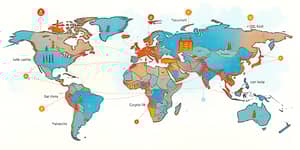
Across Asia, Europe, Latin America, and Africa, governments and businesses negotiated fresh trade pacts, rerouted logistics, and diversified sources. These moves partially offset American tariffs through sector-specific exclusions, strategic pacts, and front-loading shipments and supply rerouting.
Analysts describe this dynamic as the “Invisible Handshake”—a network of agreements operating quietly beneath headline trade wars, reminding us that cooperation often finds a way when formal channels falter.
Global growth forecasts for 2026 hover around 2.7–2.9%, slightly below pre-pandemic norms. Trade expansion is projected at 2.2%, reflecting the dampening effects of higher tariffs and lingering uncertainty.
This concise overview masks a complex mosaic: Europe faces subdued growth near 1.3%, while India and South Asia sustain robust rates around 5.6%. Latin America inches forward at 2.3%, Africa at 4.0%, and advanced economies like Japan and Germany hover below 1% growth.
Despite slower expansion, many regions are bolstered by accelerated AI-powered technological investments and targeted fiscal stimulus, providing buffers against external headwinds.
In this shifting terrain, proactive adaptation is vital. Organizations and governments can embrace several practical tactics to harness the Invisible Handshake:
By weaving these measures into corporate strategies and national policies, stakeholders can build resilience through strategic partnerships and mitigate the cost shocks of protectionism.
The Invisible Handshake offers hope, yet significant challenges remain. Downside risks include stalled USMCA reviews, ballooning fiscal deficits, geopolitical flashpoints, and climate-related disruptions. Overcapacity in sectors like steel and solar may depress prices, while high debt levels constrain policy options.
Ultimately, the Invisible Handshake underscores a fundamental truth: global trade adapts. When formal channels stiffen, innovative alliances emerge, driven by shared interests and mutual benefit.
For businesses, this means embracing agility—investing in technology, exploring new markets, and fostering cross-border collaborations. For policymakers, it means crafting flexible, inclusive trade frameworks that recognize the diverse needs of emerging and established economies alike.
As we navigate 2026 and beyond, the Invisible Handshake will continue to evolve. It reminds us that, even amid friction and barriers, cooperation remains a powerful force—a testament to human ingenuity and the enduring spirit of partnership.
Together, through strategic foresight and collective effort, we can transform trade turbulence into opportunities for growth, stability, and shared prosperity.
References