In an era of unprecedented global connectivity, diaspora remittances stand as a beacon of hope and resilience for millions. Migrants around the world continue to send financial support to their families, forging a powerful bond that transcends borders and fuels development at every level.
These remarkable flows have proven resilient financial flows and networks, maintaining growth through pandemics, recessions, and crises. As economic lifelines, remittances offer not just cash but a tangible symbol of solidarity and care.
Each year, migrants channel nearly $700 billion annually to low- and middle-income countries, a sum that surpasses many forms of external finance. In 2024, remittances to these nations reached between $685 billion and $700 billion, with projections pointing to continued growth into 2025 despite ongoing global challenges.
These transfers have a profound reach: with around 200 million diaspora members sending funds to nearly 800 million relatives, remittances serve as a lifeline for one billion people. The consistent uptick through crises underscores the unwavering commitment of migrant communities to support home economies.
Historically, remittances have proven their mettle as countercyclical forces. During the 2009 global financial crisis, when many economies contracted, diaspora members increased sending to shield their families from hardship. Similar patterns emerged in 2020, as COVID-19 wrought economic damage, yet remittances remained steady pillars of support.
Looking ahead, forecasts suggest sustained expansion into 2025, even in the face of shifting migration flows and policy headwinds. New migration corridors emerging from Africa and Southeast Asia are expected to diversify destinations and deepen support networks.
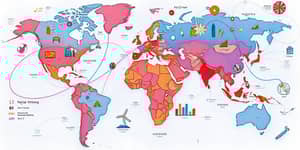
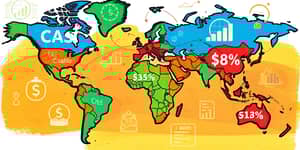
While the scale of global transfers is staggering, regional patterns reveal diverse dependencies and trends. South Asia leads with India alone receiving $137 billion in 2024, followed by strong flows to Bangladesh and Pakistan. In Latin America and the Caribbean, Mexico and Central American nations saw double-digit increases, driven in part by shifts in migration policy and currency strength.
These figures highlight how smaller economies can depend on remittances for a significant share of GDP, stabilizing currencies and offsetting trade deficits.
In South Asia, the confluence of strong labor demand in the Gulf and visa reforms in host countries has supercharged inflows. Bangladesh witnessed record highs as digital wallets became mainstream. Meanwhile, remittances to Pakistan bolstered foreign exchange reserves at a critical juncture.
Latin America’s uptick owes much to a robust U.S. labor market and shifts in deportation policies that prompted migrants to send additional sums during uncertainty. El Salvador and Honduras, where remittances account for over a quarter of GDP, used these funds to finance vital public services.
Sub-Saharan Africa’s story is nuanced: while Nigeria and Ghana lead in volumes, small states like Gambia rely on transfers for more than 20 percent of GDP. Innovations in mobile money have lowered barriers, unlocking new channels for rural households.
At the household level, remittances fund essentials like education, healthcare, and housing. Families are able to invest in small businesses, fostering entrepreneurship and local employment. Such double-digit growth in South Asia has a multiplier effect, driving consumption and local development.
Education, perhaps the most enduring legacy of remittances, has allowed countless young people to pursue higher learning and vocational training. In Kenya, families pooled funds to sponsor scholarships, fueling a new generation of entrepreneurs.
Healthcare spending funded by diaspora money proved decisive during health emergencies, enabling families to afford critical treatments and bolstering national health systems. In Egypt, households used transfer-sourced savings to renovate clinics in underserved areas.
Social remittances—ideas, values, and practices transferred across borders—enrich communities beyond their financial benefit. From new farming techniques to entrepreneurial mindsets, knowledge shared by diaspora members invigorates local innovation.
Remittance flows are shaped by a complex mix of economic, social, and technological factors. The rise of mobile money and fintech platforms has transformed the ease and cost of sending funds. Simultaneously, shifts in global labor markets—from construction in the Gulf to services in Europe—shape sending capacity.
Governments and organizations worldwide are exploring innovative measures to enhance the impact of remittances, bridge gaps, and lower barriers.
Successful models have emerged from collaborations between public entities, private sector partners, and diaspora associations. Italy’s partnership with Senegal and Mali integrates remittance channels with local investment funds, directing a share of inflows into community projects. Mexico’s diaspora bonds have mobilized large-scale infrastructure funding by offering diaspora members favorable bond terms.
Digital identity verification and blockchain pilots are breaking new ground, promising enhanced transparency and security. By reducing compliance costs and fraud risks, these innovations pave the way for inclusive and efficient channels that serve the most remote senders and recipients.
To harness this powerful global force, stakeholders must collaborate across sectors and borders. Financial institutions can invest in user-friendly interfaces; regulators can streamline licensing for new entrants; diaspora organizations can facilitate financial literacy programs. Recipients, too, can leverage funds strategically, co-investing in community enterprises and savings schemes.
The collective effort to optimize remittance ecosystems is a direct investment in global stability and shared prosperity. It is a moral and economic imperative that transcends politics and geography, reminding us of our interconnected destiny.
Emerging trends—such as the integration of remittance data into national financial planning and the use of AI for fraud detection—offer pathways to scale impact. As we map the future, co-creating solutions with diaspora voices ensures that policies remain grounded in lived experience.
Embracing a vision where remittances are not just transfers but catalysts for innovation, we can unlock sustainable development and climate resilience, harnessing resources for green infrastructure and social entrepreneurship.
By championing low-cost, high-impact remittance corridors, we honor the legacy of migrants whose sacrifices fuel progress. The power of diaspora transfers lies not only in the numbers but in the stories of hope they write, echoing across generations. Together, we can transform these flows into a force for inclusive growth and lasting change.
References