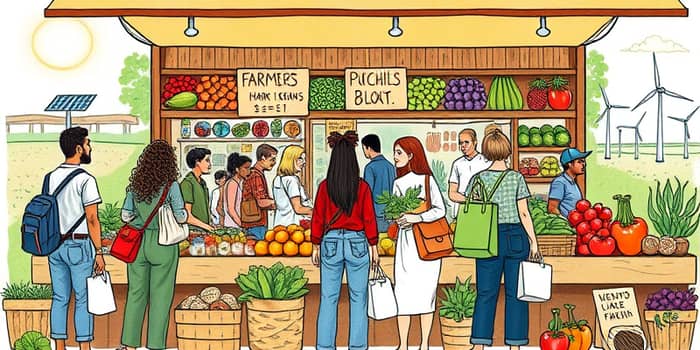
In an era of tightening budgets and growing environmental concerns, the modern consumer is facing a unique crossroads. By merging values-driven buying with smart financial habits, it’s possible to create a lifestyle that supports the planet and your wallet alike. This article explores how you can become a savvy spender with lasting impact, leveraging data-driven insights, practical strategies, and inspiring stories to guide your journey.
Conscious consumption integrates eco-friendly and ethically produced goods into everyday life without sacrificing financial stability. Rather than chasing trends, it encourages thoughtful decision-making that balances environmental impact, social responsibility, and personal budgets.
At its core, this approach asks: What if every purchase served a dual purpose—promoting planetary health while building long-term financial resilience? From choosing local produce to supporting fair-trade initiatives, each choice compounds over time, reducing waste and fostering stronger communities.
Despite economic headwinds, consumers are increasingly prioritizing sustainable options. By 2025, U.S. spending on eco-friendly products is projected to reach $230 billion in retail sales, representing nearly 25% of all retail purchases. This trend is expected to accelerate to $544 billion by 2032, capturing over one-third of the market.
These figures demonstrate that thoughtful spending can coexist with rising living costs, as people recognize the hidden savings in durability, local supply chains, and reduced environmental fees.
Beyond purchasing, consumers are adopting habits that complement conscious buying. In the U.S., the majority of shoppers now bring reusable bags, recycle diligently, and avoid single-use plastics. Globally, more than two thirds of people are willing to cut consumption by half to protect the environment.
By coupling these habits with mindful purchasing, you can reduce waste and cut expenses—turning eco-conscious choices into tangible savings and personal satisfaction.
Integrating conscious consumption into your financial plan requires clear priorities and realistic trade-offs. Start by establishing non-negotiables like housing, utilities, healthcare, and groceries, then allocate a portion of discretionary spending to sustainable options.
For many households, food and beverage expenditures average over $7,100 per year. Shifting even a fraction toward local or carbon-labeled products can drive market growth while preserving your bottom line. Meanwhile, categories like health and beauty, pet care, and household goods each show above-average growth—an opportunity to influence company practices through your wallet.
Consider the following simplified projection to guide your budgeting:
Use this roadmap to set incremental targets—whether it’s increasing your sustainable spend by 5% each year or gradually replacing disposable items with reusable alternatives.
Practical tactics include:
Despite enthusiasm, several obstacles can derail the conscious consumption journey. Greenwashing remains rampant, eroding trust and creating confusion. In North America, willingness to prefer sustainable brands has dipped by over 9% since 2021, underscoring the need for transparent and trustworthy brand commitments.
Economic pressures also prompt many to trade down or deprioritize sustainability. With nearly three quarters of consumers admitting to trading down on essentials, it’s vital to emphasize cost-effective green solutions—like cloth shopping bags, energy-efficient bulbs, and water-saving fixtures—that deliver immediate financial benefits.
Looking forward, the movement is set to intensify around five key pillars:
By staying informed and adaptive, you can navigate these challenges successfully, prioritize essentials and avoid impulses, and ultimately empower your financial and environmental goals.
Conscious consumption isn’t a one-time commitment—it’s a progressive lifestyle shift. Begin by setting attainable milestones, such as replacing one disposable item each month or allocating 10% of your budget to certified eco-goods.
Next, engage with like-minded communities, both online and locally, to share tips, product reviews, and budgeting hacks. Collective action amplifies individual efforts, driving both market demand and corporate accountability.
Finally, reflect regularly on your progress. Celebrate small victories—like reduced utility bills or fewer single-use plastics—and recalibrate priorities as your circumstances evolve. With each mindful purchase, you contribute to a larger movement that marries fiscal prudence with planetary stewardship.
Embrace the role of a mindful consumer shaping tomorrow’s economy. Your choices today ripple into the future—fostering healthier ecosystems, resilient communities, and stronger personal finances.
References