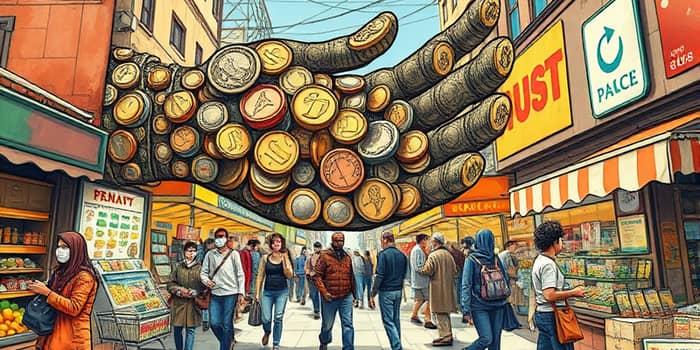
Every day, as you sip your coffee or scroll through prices online, an invisible force is at work behind the scenes. What you pay, how much you save, even whether you splurge on a treat, all bear the imprint of central bank decisions. Understanding this unseen hand can empower you to navigate economic twists and turns with confidence.
In this article, we explore the mechanisms of monetary policy, the real-world impacts on your wallet, and practical steps you can take to stay resilient when borrowing costs climb.
At its core, monetary policy involves the setting of interest rates and other tools by a central bank to manage inflation and growth. When rates rise, borrowing becomes costlier, influencing both lenders and consumers.
Economists describe the process through three main channels: the direct effect on borrowing costs, the intertemporal substitution channel, and income effects from labor markets. Higher rates discourage immediate spending and encourage saving, leading to intertemporal substitution of consumption channel impacts.
But the reality is never so linear. Policy changes ripple through credit, employment, asset prices, and even consumer sentiment. Recognizing these channels helps you anticipate how your own spending power might shift.
Recent research using credit card data shows clear patterns: a 1 percentage point rate hike cuts credit card spending by nearly 9 percent, while revolving balances drop by about 4 percent. Yet transaction spending often remains unchanged.
Timing matters. Shocks to short-term rates transmit rapidly, while changes in 2-year yields take around six months to fully influence spending. Long-term rate moves, however, often show negligible direct effects once shorter maturities are accounted for.
As borrowing costs rise, higher borrowing costs and cautious consumption become the norm. Households cut back on restaurant meals and vacations, while spending on staples like groceries may even inch up as consumers reallocate budgets.
History offers mixed lessons. In 1994 and 1999, consumption eventually peeled back as predicted, though with varying lags. The 2004 tightening saw spending rise, defying theory. In 2014, consumption hovered near trend, and in 2021–22, it stayed about 2% above trend thanks to strong high-income spending.
These episodic differences highlight that context—income distribution, credit availability, and asset prices—shapes outcomes. Consumers dependent on credit see quicker cutbacks; those with healthy balances shift to paying down debt without trimming spending as sharply.
Not all purchases feel the squeeze equally. Discretionary goods—dining out, entertainment, travel—take the brunt. Essentials like groceries or utilities often see spending rise or stay steady. This reflects households shift spending patterns toward necessities when credit tightens.
Income and credit scores matter too. Higher-income earners, with more non-essential spending power, reduce outlays more during tightenings. Conversely, lower-score borrowers adjust balances or cut essentials earlier, constrained by limited alternatives.
No matter where you fall on the spectrum, you can take control of your finances during monetary tightening. Adopting targeted strategies now can shield you from rising rates and help you come out stronger.
While short-term tactics help, cultivating resilience is key. Diversify income through side gigs or passive investments. Keep credit utilization low and maintain an emergency fund to withstand sudden shocks.
Commit to prudent financial habits for the long term, such as automated savings, periodic budget reviews, and ongoing debt reduction. These practices compound benefits over time and buffer you against policy shifts.
Monetary policy evolves with economic conditions. Follow central bank announcements, but don’t panic at every rate headline. Instead, focus on how changes affect your borrowing and saving costs.
Leverage technology: use budgeting apps, rate-tracking tools, and community forums to stay ahead. Being informed allows you to adjust spending plans and seize opportunities, even in uncertain times.
Ultimately, while the unseen hand of monetary policy shapes the backdrop of our financial lives, you hold the reins by making deliberate choices. With awareness, adaptability, and smart habits, you can thrive regardless of the interest rate environment.
References