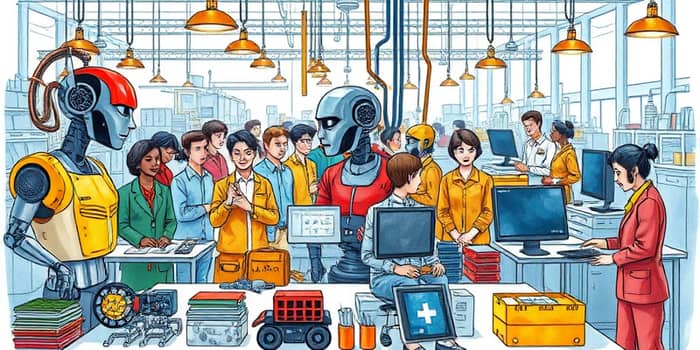
In an era defined by rapid technological advancement and social transformation, labor markets are undergoing a profound metamorphosis. From AI-driven automation to shifting demographic profiles, the very nature of work is being reimagined on a global scale.
As organizations and individuals alike grapple with the impending shifts in employment, it becomes essential to blend inspiration with practical guidance. By understanding emerging trends and adopting agile strategies, businesses can secure lasting success while empowering workers to thrive.
One of the most seismic changes on the horizon is the wholesale redesign of jobs through task decomposition and algorithmic assignment. Roles that once required a single professional now break into micro-tasks handled by humans or intelligent systems.
Organizations are leveraging foundational data about workflows and skills to determine which activities should remain human-led and which can be automated. While blunt force automation threatens many entry-level white-collar functions, new avenues emerge where AI augments human ingenuity.
Despite widespread recognition of AI’s impact, only 17% of employees report active upskilling in response to these changes, and a startling 71% haven’t received any AI training in the past year. To bridge this gap, employers must invest in comprehensive learning frameworks.
By embedding human and AI-driven task collaboration into daily routines, organizations can cultivate ethical judgment, emotional intelligence, and advanced technical competencies. Personalized AI tutors and adaptive platforms can democratize learning, but without leadership commitment, the benefits risk never reaching the front lines.
As automation erodes traditional office roles, forecasts suggest that 12 million U.S. workers will need to switch occupations by 2030. Conversely, industries such as advanced manufacturing, energy infrastructure, and skilled trades face looming shortages, with 600,000 positions already unfilled.
Embracing skilled trades and infrastructure growth opens new pathways to stable, high-wage careers. Partnerships between employers and vocational institutions can expand apprenticeships and internships, ensuring a steady pipeline of talent for the jobs AI cannot replicate.
The coming decade will also be shaped by a multigenerational workforce dynamics and diversity, as four living generations collaborate alongside digital natives and seasoned veterans. Urbanization will intensify: by 2030, an estimated 4.9 billion people will live in cities, driving competition for skilled labor.
Rising healthcare costs are prompting workforce mobility—35% of employees would switch jobs for better benefits. Meanwhile, rigid Return-to-Office mandates have lengthened hiring cycles by 23%, demonstrating the necessity of flexible hybrid models that respect individual needs.
The following table highlights key statistics underpinning this transformation:
Beyond immediate trends, several macro-level forces will steer labor markets toward unpredictable horizons. Leaders must anticipate and adapt to these cross-cutting influences:
To navigate this complex landscape, C-suite and HR executives should embrace continuous learning as a corporate imperative and foster a culture of experimentation. Key priorities include:
Translating strategy into impact requires disciplined execution. Organizations can future-proof their workforces by:
By implementing holistic reskilling strategies for resilience, businesses not only protect their competitive edge but also uplift employees, communities, and the global economy. The path forward demands courage, insight, and unwavering commitment.
Together, employers and workers can transform disruption into opportunity, forging a future where technology amplifies human potential and every individual finds purpose in the evolving world of work.