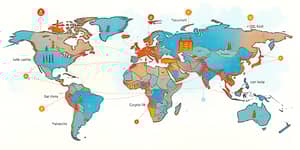
Emerging markets (EMs) stand at a historic inflection point, ready to reshape the global economic landscape. Fueled by robust expansion, strategic resource endowments and evolving geopolitical dynamics, they offer an unprecedented opportunity for investors, policymakers and businesses alike. This article explores the defining trends, sectoral prospects and policy imperatives required to convert promise into prosperity for all stakeholders.
Emerging markets are projected to achieve 4% year-on-year growth in both 2025 and 2026, surpassing the global average of 3.3% in 2026. This expansion is driven by strong consumption, export diversification and productive investment. In 2025, EMs navigated tariff pressures and geopolitical tensions through agile supply-chain adjustments and monetary easing.
Inflation is expected to fall to around 5% by 2026, particularly across Asia, where prudent central bank policies and rising reserves have bolstered confidence. Currencies of key EMs appreciated against the dollar, reducing financing costs and attracting fresh capital. A sample of 28 EMs recorded 4% growth in the first three quarters of 2025 (3.7% excluding China), with 40% of them showing stable or accelerating momentum.
Asia remains the growth engine, led by electronics and AI component exports from Taiwan and Vietnam. A moderate oil and gas surplus, combined with disciplined fiscal measures, points towards sustainable expansion rather than overheating. For investors, this environment presents favorable financing conditions and resilient equity markets able to withstand future shocks.
The intensifying US–China rivalry over critical resources for AI and energy underscores the strategic importance of EMs. Copper, cobalt, nickel, lithium and rare earths have become the new battleground, vital for electric vehicles, wind turbines and advanced data centers. China’s $57 billion investment in mineral projects across twenty EMs demonstrates its long-term intent to secure supply chains.
However, EMs are no longer passive recipients of external aid. Countries such as India, Brazil, Mexico and Vietnam are asserting institutional autonomy and diversified systems by balancing ties with both Western and Eastern powers. Diversification strategies include partnering on semiconductor manufacturing, renewables infrastructure and digital technology hubs.
US tariffs in early 2025 accelerated EM exports to North America, but subsequent trade rerouting to alternative markets—especially within Asia—has reinforced the region’s resilience. Ongoing dialogues between Brazil, India and other EMs highlight a shift from conditional aid to equitable, investment-driven partnerships.
Emerging markets offer a spectrum of high-potential themes, shaped by technological change and sustainability imperatives. Smart investors can capitalize on long-term secular trends by focusing on strategic areas.
Despite the compelling outlook, EMs must address challenges that threaten long-term stability. Inequality, environmental sustainability and political unpredictability can undermine gains if left unchecked.
For investors, a patient approach combining selective equity exposures with local-currency debt can balance risk and reward. Businesses should prioritize partnerships in innovation hubs and resource-rich corridors. Policymakers must champion reforms that align fiscal discipline with social inclusion and environmental stewardship.
By adopting a new playbook centered on sustainable policies, emerging markets can transform their powerful growth dynamics into lasting prosperity. The coming decade offers a rare window to reshape global trade, technology and finance in ways that benefit millions of people.
At this pivotal moment, the world’s attention has turned to EMs not just as sources of commodities, but as architects of the next economic order. Their success will hinge on collaboration, vision and unwavering commitment to shared progress.
References