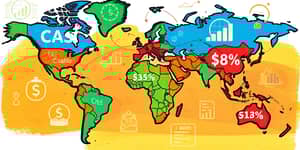
Global economic narratives shape public opinion, drive policy debates, and influence individual choices. But beneath simple explanations often lie complex structural dynamics at play that defy catchy headlines.
In this article, we journey through ten enduring myths—from inflation misconceptions to free trade skepticism—and confront each with empirical evidence and reasoned analysis.
Oversimplified stories thrive in media soundbites and political rhetoric. Conflicting data interpretations further cloud reality, leaving many to rely on consumer anecdotes or singular headlines.
By dissecting the roots of these beliefs, we can foster a more nuanced dialogue and craft policies informed by evidence rather than emotion.
Consumers fixate on everyday items like groceries and snack prices—snickers bars jumping from €2 to €3—while overlooking broader forces. In fact, durable goods prices fell by 2022.
Inflation emerges from persistent post-pandemic demand surge patterns and supply chain adjustments, not simply money supply expansions or headline grocery costs.
Proponents argue tariffs shield domestic firms and reduce deficits, imagining foreign exporters bear the cost. Reality: tariffs function as hidden consumer taxes.
When competition shrinks, both imported and local goods become pricier, even after tariffs lift. Supply chains also suffer from reduced global manufacturing flexibility.
Global integration is likened to a natural law that boosts all economies evenly. Yet millions face displacement, land loss, and weakened local industries.
While top incomes have soared—U.S. CEOs earning over 400 times factory worker wages—real wages for many remain below 1970s living standards.
American exceptionalism credits inherent strength for higher growth. But U.S. performance often mirrors that of Europe when adjusted for government spending and policy cycles.
Deficit-driven expansions and volatile fiscal stimulus dependencies obscure underlying vulnerabilities in income distribution and debt loads.
Critics dismiss trickle-down, claiming only transfers lift the poorest. Contrary to that view, four decades of World Bank studies show proportional income gains for lower-income groups during growth episodes.
China’s reforms, for example, accelerated GDP per capita by over 4% annually, dramatically reducing poverty rates.
Skeptics highlight localized job losses, arguing theory diverges from practice. Yet broad data reveals freer trade reforms consistently drive higher growth and poverty reduction.
Embracing comparative advantage unleashes innovation and expands markets, delivering benefits far beyond initial disruptions.
GDP and productivity rates overlook gig economy dynamism, digital service impacts, and improved capital utilization.
For instance, the U.K.’s silent efficiency gains in asset use are barely reflected in headline figures, despite boosting real output.
Accepting inequality as the price of progress is a false choice. Policy frameworks can pair trade liberalization with social safety nets and worker retraining.
Innovative models—such as inclusive supply chain certifications—demonstrate that fairness and growth can advance together.
Popular belief holds that sovereign debt competes for finite savings, starving private enterprise. Modern monetary realities paint a different picture: currency-issuing governments cannot involuntarily default.
Understanding endogenous bank credit creation clarifies that public investment often catalyzes, rather than displaces, private sector activity.
Unfettered expansion raises environmental costs that frequently exceed economic gains. Yet critics who champion socialism overlook capitalism’s historic role in eradicating child labor and poverty through rising prosperity.
Well-calibrated growth strategies can balance social welfare, environmental stewardship, and long-term innovation.
Debunking these myths equips policymakers, businesses, and individuals to craft grounded strategies. Key recommendations include:
Bridging the gap between perception and reality demands collaboration across governments, academia, and civil society. Only then can we steer global economies toward inclusive and resilient futures.
References